Dinner · Part 2 of 3: Instructions
Breton Slow Cooker Seafood Stew Step-by-step instructions
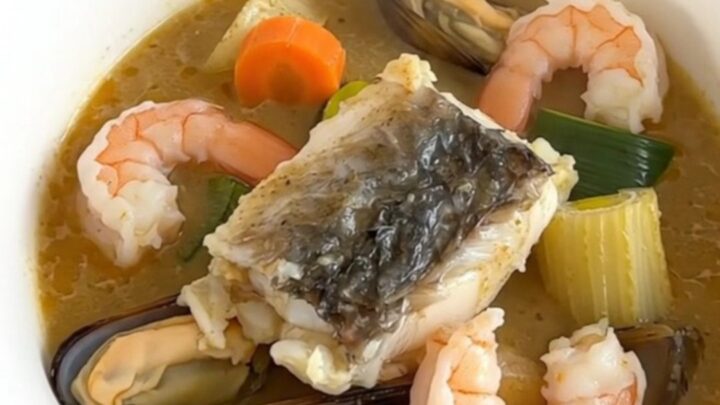
- Prep
- Cook
- Total
- Serves
- 4
Before you start
Before starting, ensure all seafood is fresh or properly thawed. Wash the leeks thoroughly to remove any hidden grit between the layers. Dice the carrots into uniform pieces to ensure they cook at the same rate as the leeks.
Have your slow cooker ready on a flat, stable surface near an outlet, and clear enough counter space to organize your ingredients before assembly.
Ingredients at a glance (7)
- 1 lb cod fillets, cut into large chunks
- 1 lb seafood cocktail mix (shrimp, mussels, squid)
- 2 stalks leeks, thinly sliced
- 2 medium carrots, diced
- 1 cube fish stock cube
- 1/2 cup heavy cream
- 1/2 cup dry hard cider
Instructions
Layering the base
- Layer the ingredientsPlace the cod chunks and the seafood cocktail mix into the bottom of the slow cooker. Ensure they are spread out in an even layer to promote consistent cooking throughout the process.Look for The base of the slow cooker should be covered with the fish and shellfish mix.Tip Ensure the seafood is completely thawed if frozen before adding to the cooker.
At this stage, the slow cooker should be filled with the raw seafood and vegetable layers. The ingredients should be distributed evenly to ensure that the heat permeates the entire dish.
Check that you have not added too much liquid, as the vegetables and seafood will release their own moisture as they cook.
Adding aromatics
- Add aromatics and seasoningScatter the sliced leeks and diced carrots over the seafood. Take the fish stock cube and crumble it evenly over the top of the vegetables to ensure the flavors distribute during the cooking cycle.Look for Vegetables should cover the seafood layer, with crumbled stock visible on top.Tip Slice leeks thinly to ensure they soften perfectly during the long, slow cook time.
The leeks and carrots should be spread evenly over the fish, with the crumbled stock cube dispersed across the top. This layer acts as a flavor infusion zone. Ensure no large clumps of stock cube remain, as this ensures the seasoning dissolves evenly into the liquid during the cooking cycle.
Final cooking
- Add liquids and finish cookingWhisk the heavy cream and cider together in a measuring cup, then pour the mixture over the contents of the slow cooker. Cover and cook on low for 3 hours. Ensure the fish and shellfish reach 145°F (63°C) before serving.Look for The sauce should be bubbling gently and the fish should be opaque and flake easily.Safe temperature 145°F (63°C) internal temperature (fish)Tip Do not overcook the seafood, as it can become rubbery if kept in the slow cooker too long.
Once the cream and cider mixture is added, the stew is ready for the slow cooking phase. The liquid should just barely cover the ingredients. As it cooks, the kitchen will begin to smell savory and aromatic. Ensure the lid is securely closed to maintain the necessary temperature for safe cooking.
Common mistakes
A common mistake is overcrowding the slow cooker or using fish that is too delicate, which can disintegrate during the long cooking time.
Avoid lifting the lid frequently, as this causes significant heat loss and extends the cooking time, potentially leading to uneven results. Additionally, ensure the cream and cider are well-mixed before adding, as this helps create a uniform sauce consistency.
How to tell it’s done
The stew is finished when the fish is completely opaque and flakes easily with a fork. The seafood cocktail, including any shrimp or mussels, should be firm and cooked through.
Use a digital thermometer to ensure the internal temperature of the thickest fish pieces reaches at least 145°F (63°C), which is the standard safety threshold for fish and shellfish.
- Fish: 145°F (63°C) in the thickest part
- Shellfish: 145°F (63°C) in the thickest part
Up next · Part 3 of 3
2 variations · storage & make-ahead · 3 answers · printable card
Tips, FAQ & printable recipe (Part 3)← Back to the ingredients (Part 1)