Dinner · Part 2 of 3: Instructions
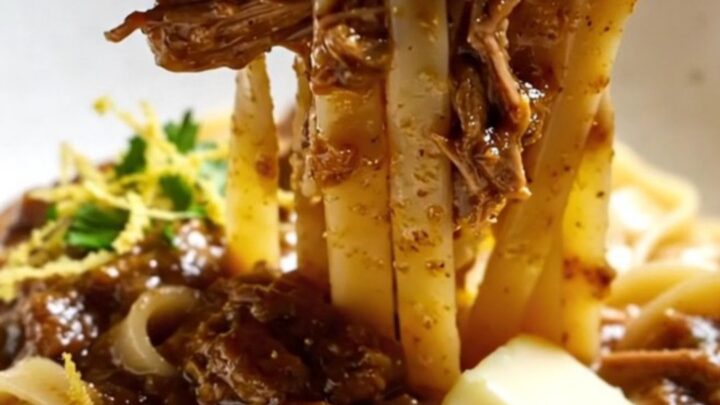
Barolo-Braised Short Rib Ragu over Fresh Tagliatelle Step-by-step instructions
- Prep
- Cook
- Total
- Serves
- 4
Before you start
Before starting, take the short ribs out of the refrigerator and let them sit at room temperature for about 30 minutes — this helps them sear evenly. Pat them thoroughly dry with paper towels, as excess moisture will prevent browning. Prep the mirepoix: dice the carrot, celery, and onion into small, even pieces so they cook at the same rate.
Measure out the tomato paste and pour the Barolo wine into a measuring cup. Set the oven rack to the middle position and preheat the oven to 325°F (160°C). Have a large pot of salted water ready for the pasta, and prepare the gremolata by zesting a lemon and chopping fresh parsley.
Ingredients at a glance (11)
- 800 g bone-in beef short ribs
- 1 medium carrot, diced
- 1 stalk celery, diced
- 1 medium onion, diced
- 3 tbsp tomato paste
- 350 ml Barolo red wine
- 400 g fresh tagliatelle
- 30 g butter
- grated Parmigiano-Reggiano, for serving
- 1 tsp lemon zest
- 2 tbsp chopped fresh parsley
Instructions
Sear and Build Flavor
- Sear the Short RibsPat the short ribs dry with paper towels. Heat a Dutch oven over medium-high heat until shimmering. Add the short ribs in a single layer, working in batches if needed, and sear without moving until deeply browned on all sides, about 3–4 minutes per side. Transfer the ribs to a plate and set aside.Look for The ribs should be mahogany brown and crusty on all sides.Tip Do not crowd the pan; searing in batches ensures proper browning.
- Cook the MirepoixReduce the heat to medium. Add the diced carrot, celery, and onion to the same pot. Cook, stirring occasionally, until the vegetables have softened and started to turn golden, about 6–8 minutes. Scrape up any browned bits from the bottom of the pot as the vegetables release their moisture.Look for The vegetables should be tender and lightly caramelized at the edges.Tip A pinch of salt helps draw out the vegetables' moisture.
- Add Tomato Paste and WineAdd the tomato paste and stir to coat the vegetables. Cook for 1–2 minutes until the paste darkens and smells slightly sweet. Pour in the Barolo wine, scraping the bottom of the pot to release any browned bits. Bring the wine to a simmer and let it reduce by half, about 5 minutes.Look for The wine should be reduced and slightly syrupy, with the alcohol aroma gone.Tip The reduction concentrates the wine's flavor and deepens the sauce.
At the end of this phase, the short ribs should be deeply browned on all sides with a rich crust. The mirepoix will have softened and turned golden, and the tomato paste will have darkened to a rusty red. The wine will have reduced into a glossy, aromatic liquid that smells intensely fruity and slightly sweet.
The bottom of the pot should be free of stuck-on bits, as they have been deglazed into the sauce. The kitchen will smell of caramelized beef and warm spices, and the wine's alcohol will have cooked off, leaving behind a concentrated, savory base.
Braise and Shred
- Return the Ribs to the PotReturn the seared short ribs to the Dutch oven, nestling them into the wine and vegetables. Add enough water to come about halfway up the sides of the ribs. Bring the liquid to a gentle simmer, then cover the pot with a tight-fitting lid.Look for The liquid should be gently bubbling, not boiling hard.Tip A tight lid keeps the steam in, ensuring even braising.
- Braise in the OvenTransfer the covered Dutch oven to a preheated 325°F (160°C) oven. Braise for 3 hours, or until the meat is fork-tender and nearly falling off the bone. Carefully remove the pot from the oven and let it rest for 10 minutes.Look for The meat should shred easily with a fork and the bones should slide out cleanly.Safe temperature 145°F (63°C) internal temperature (steaks, chops and roasts)Tip The rest allows the meat to reabsorb some juices, making it even more succulent.
- Shred the MeatUsing tongs, transfer the short ribs to a cutting board. When cool enough to handle, remove the bones and discard any excess fat. Use two forks to shred the meat into bite-sized pieces, discarding any gristle.Look for The meat should pull apart into tender strands with little resistance.Tip Do not over-shred; keep some larger chunks for texture.
- Skim and Simmer the SauceSkim any excess fat from the surface of the braising liquid. Return the shredded meat to the pot and bring the sauce to a gentle simmer over medium heat. Let it cook uncovered for 10–15 minutes until the sauce has thickened slightly and the flavors meld.Look for The sauce should coat the back of a spoon and the meat should be glistening.Tip If the sauce seems thin, let it simmer a few minutes longer; if too thick, add a splash of water.
After three hours in the oven, the short ribs should be so tender that the bones slip out with barely a nudge. The meat will have pulled back from the bone and look slightly shrunken, but it will be glistening with moisture. The braising liquid will have reduced and thickened, taking on a deep mahogany color. When you lift the lid, the steam will smell intensely beefy and winey. The meat should shred into moist, tender strands with no resistance. Skim off any excess fat, and the sauce should be rich and velvety, ready to be tossed with pasta.
Toss and Serve
- Cook the TagliatelleBring a large pot of generously salted water to a boil. Add the fresh tagliatelle and cook according to the package directions, typically 2–3 minutes, until al dente. Reserve about 1 cup of pasta water before draining.Look for The pasta should be tender but still have a slight bite in the center.Tip Fresh pasta cooks quickly; watch it closely to avoid overcooking.
- Toss with Butter and SauceDrain the tagliatelle and add it to the pot with the ragu. Add the butter and toss everything together over low heat, using tongs to coat the pasta evenly with the sauce. If the mixture seems dry, add a splash of the reserved pasta water to loosen it.Look for The pasta should be glossy and evenly coated with the ragu.Tip The butter adds richness and helps the sauce cling to the noodles.
- Finish with GremolataIn a small bowl, combine the lemon zest and chopped parsley. Spoon the ragu-topped tagliatelle into warm bowls, sprinkle generously with grated Parmigiano-Reggiano, and finish with a pinch of the gremolata over each serving.Look for The gremolata should be bright and fresh, contrasting with the rich ragu.Tip Add the gremolata just before serving to keep it vibrant.
In this final phase, the fresh tagliatelle will cook in just a few minutes, turning tender but still retaining a slight bite. When tossed with the ragu and butter, the pasta will become glossy and evenly coated, with the sauce clinging to every ribbon.
The gremolata adds a bright, citrusy note that cuts through the richness, and the Parmigiano-Reggiano melts into the hot pasta, creating a creamy finish. The final dish should look luxurious: deep red-brown sauce, golden pasta, and flecks of green parsley and yellow zest. The aroma is irresistible.
Common mistakes
One common mistake is not searing the short ribs long enough. The crust is essential for deep flavor, so do not rush it — wait until the meat releases from the pan easily before flipping. Another is overcrowding the pot during the sear; work in batches if necessary to avoid steaming the meat. Skipping the wine reduction can leave the sauce tasting raw and alcoholic; let it simmer until it is syrupy. Finally, be careful not to overseason, as the reduction of wine and the cheese both add salt. Taste as you go, and add salt gradually.
How to tell it’s done
The short ribs are done when they are fork-tender: a fork should slide into the meat with almost no resistance, and the meat should easily pull apart into shreds. The internal temperature of the meat should read at least 145°F (63°C) on an instant-read thermometer, but because it is braised, it will be far above that — the goal is tenderness, not a specific temperature.
After shredding, the sauce should coat the back of a spoon and cling to the pasta. The tagliatelle should be al dente, with a slight bite in the center. Taste and adjust seasoning with salt before serving.
- Steaks, chops and roasts: 145°F (63°C) in the thickest part, then a 3-minute rest
Up next · Part 3 of 3
4 variations · storage & make-ahead · 5 answers · printable card
Tips, FAQ & printable recipe (Part 3)← Back to the ingredients (Part 1)