Dinner · Part 3 of 3: Tips & recipe card
Blistered Tomato Gnocchi with Molten Brie in Garlic Butter Skillet Tips, FAQ & printable recipe
- Prep
- Cook
- Total
- Serves
- 4
Tips for success
Use a firm block of whole milk mozzarella and grate it just before cooking. Freshly grated cheese melts into a smoother, more even layer than pre-shredded cheese, which often contains starch that dulls the finish. Chilling the block for ten minutes makes the grating cleaner and keeps the strands from clumping together under the box grater.
Keep the heat controlled once the cheese goes on. Medium heat with a lid is enough to melt the mozzarella and brie without scorching the base of the skillet. Watch the edges: when they bubble, the cheese is ready. If the bottom starts to brown too quickly, move the skillet slightly off the burner and let the top finish melting.
Variations
- Extra garlic: Add more thinly sliced garlic to the butter, cooking it gently until fragrant so it turns golden and sweet without burning. This version gives a stronger flavour and a richer, more savoury finish to the whole skillet.
- Grape tomatoes: Swap the ruby cherry tomatoes for grape tomatoes. They are slightly larger and a little firmer, so give them an extra minute in the skillet until they split and blister along the skin.
- Camembert swap: Replace the brie with Camembert, rind removed and cut into pieces. The cheese melts similarly and keeps a soft, buttery centre, with a slightly earthier taste that pairs well with basil and Parmesan.
- Fresh herbs: Use fresh thyme or oregano in place of the dried herb blend. Add it with the garlic so it releases its aroma into the butter, and keep the basil for the finish to preserve its bright, green flavour.
Storage and make-ahead
- Fridge
- Store leftovers in a covered container and refrigerate within two hours of cooking. Reheat gently before eating.
- Reheat
- Reheat slices in a skillet over medium-low heat with a splash of water, covered, until the cheese softens again.
Leftovers keep best in a covered container in the refrigerator, and they should be cooled for no more than two hours at room temperature before they go in. The gnocchi firm up as they cool, and the cheese sets into a denser layer, so the texture changes.
Store the basil and the extra Parmesan separately if you have any left over, since basil darkens once it is chilled and dressed. Do not leave the skillet out on the counter while it cools.
This dish is best cooked just before serving, because the molten cheese and the crisp Parmesan lose their character as they sit. You can get ready in advance by grating the mozzarella and Parmesan, cutting the brie into pieces, and slicing the garlic up to a few hours ahead.
Keep the grated cheeses covered in the refrigerator and the garlic in a small bowl with a damp paper towel. Cut the brie just before you start, since it firms up when cold and is harder to slice neatly. With the prep done, the cooking takes under twenty minutes, so the skillet can go from stove to table while the cheese is still stretchy.
Serving ideas
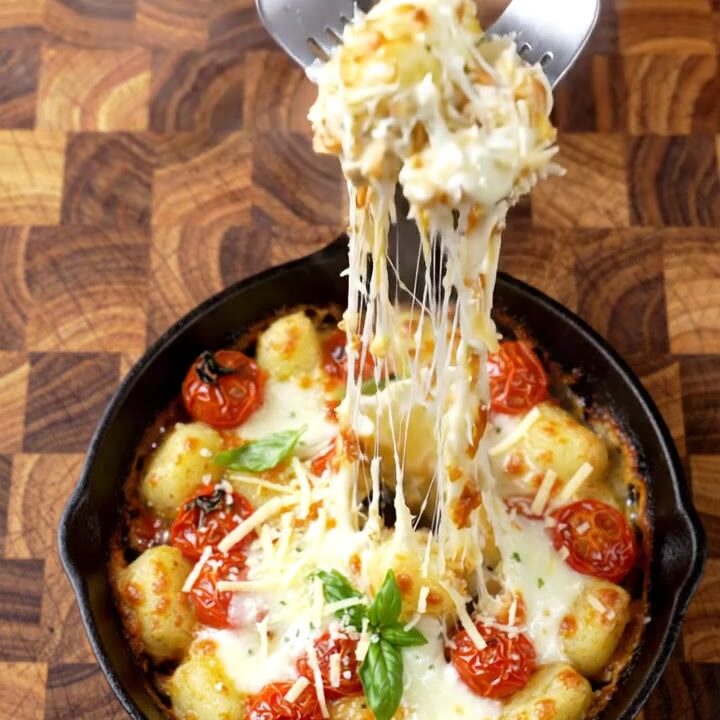
Serve the skillet straight from the stove while the cheese is still bubbling and stretchy. A wooden spoon or a sturdy serving spoon works well, and each portion should include a few blistered tomatoes, some golden gnocchi and a generous piece of molten brie.
Pull a spoonful to show the stretch, then scatter a few extra basil leaves across the top. A simple green salad with a sharp vinaigrette is a good partner, because the acidity cuts through the richness of the cheese.
For a relaxed dinner for four, set the skillet in the centre of the table with a few warm bread slices alongside for scooping up the garlic butter.
Offer extra grated Parmesan at the table for anyone who likes more salt and a crisper edge. Plates should be warm and the basil should be added at the last moment, so the leaves stay bright and fragrant when the dish is served.
Frequently asked questions
Can you use pre-shredded mozzarella for this skillet?
Why do the cherry tomatoes need to burst before the cheese goes on?
Can this skillet be made without brie?
How do you keep the gnocchi from sticking to the cast iron skillet?
What is the best way to get a long cheese stretch when serving?
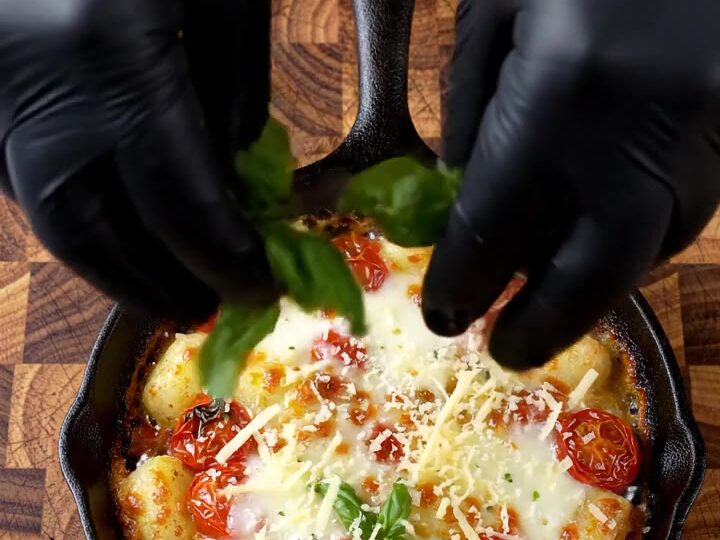
Blistered Tomato Gnocchi with Molten Brie in Garlic Butter Skillet
Ingredients
- 1 pint ruby cherry tomatoes, about 2 cups
- 4 cloves garlic cloves
- 1 lb potato gnocchi, shelf-stable or fresh
- 4 tbsp unsalted butter
- 1 tsp dried Italian herb blend, such as oregano and thyme
- 4 oz whole milk mozzarella, firm block, grated on a box grater
- 2 oz aged Parmesan, finely grated, plus extra for finishing
- 4 oz brie, rind removed, cut into pieces
- fresh basil leaves for serving
- kosher salt and black pepper to taste
Instructions
- Rinse the cherry tomatoes and pat them dry. Thinly slice the garlic cloves. Grate the firm block of whole milk mozzarella and the aged Parmesan on the large holes of a box grater, then cut the brie into pieces. Keep the cheeses in separate piles so they are easy to scatter.
- Melt the butter in the cast iron skillet over medium-high heat. Add the gnocchi in a single layer and cook, turning now and then, until golden on several sides. Add the garlic, herb blend, salt and pepper, then stir in the cherry tomatoes. Cook until the tomatoes burst and blister.
- Lower the heat to medium. Scatter the grated mozzarella and the brie pieces evenly over the gnocchi and tomatoes. Cover the skillet and cook for 2 to 3 minutes, until the cheeses melt into a molten layer.
- Scatter the fresh basil leaves and the grated Parmesan over the bubbling skillet. Let the top crisp for about 1 minute, then take the skillet to the table. Lift a portion with a spoon to pull a long, crispy cheese stretch.
Estimated nutrition per serving
- Calories
- 780
- Protein
- 32 g
- Carbohydrates
- 62 g
- Fat
- 44 g
- Fiber
- 4 g
- Sugar
- 6 g
- Sodium
- 1300 mg
Next recipe

Queso Fundido Skillet Cheesy Sweet Potato Bake in One Pan
See the recipe → →This recipe is based on a short cooking video and is published under the pen name Clara Weller. It was checked before publication, but errors can slip through. Nutrition, when shown, is an estimate. Read more in our editorial policy and on our food safety page.
More recipes to try
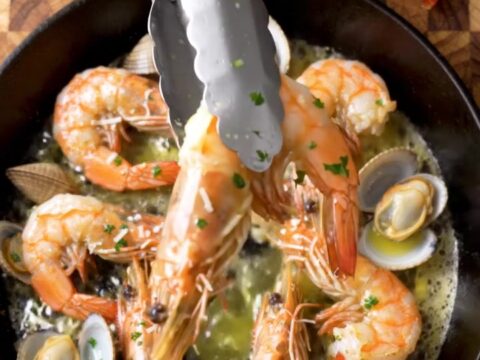
Garlic Butter Clams and Prawns in White Wine, One Skillet in Minutes
Total time: 27 min
Coconut Curry Prawns in One Skillet: Quick, Glossy and Ready in 30 Minutes
Total time: 27 min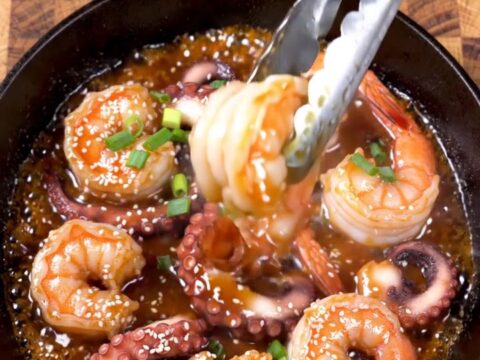
Honey Gochujang Charred Octopus and Shrimp Skillet in One Pan
Total time: 35 min
Cheesy Polenta Fries with Marinara: Crispy, Gooey and Ready in One Skillet
Total time: 30 min
French Onion Rigatoni with Gruyère in One Skillet
Total time: 1 h 20 min