Dinner · Part 2 of 3: Instructions
Blackened Mahi-Mahi Sandwiches with Avocado Crema Step-by-step instructions
- Prep
- Cook
- Total
- Serves
- 4
Before you start
Before you begin cooking, ensure all your components are ready. Prepare the avocado crema by blending the avocado, lime, and sour cream until smooth, then store it in the refrigerator to keep it cool. Prepare your mango cabbage slaw and keep it chilled.
Have your spices measured and mixed in a small bowl for quick access. Ensure your cast-iron skillet is clean and placed on the stove, ready to be heated, and have your brioche buns sliced and ready to be toasted just before serving.
Ingredients at a glance (8)
- 4 fillets 6-ounce mahi-mahi fillets
- 3 tbsp melted butter
- 1.5 tbsp smoked paprika, cayenne, thyme, garlic, and oregano blend
- 1 whole avocado
- 1 lime, juiced
- 1/2 cup sour cream
- 4 brioche buns, toasted
- 2 cups mango cabbage slaw, prepared
Instructions
Preparation of Components
- Prepare the Crema and SlawCombine the avocado, lime juice, and sour cream in a blender or food processor. Blend until smooth and creamy, then set aside in the refrigerator. Prepare the mango cabbage slaw by tossing the ingredients together in a bowl and keep chilled until assembly time.Look for The mixture should be completely smooth with no large chunks of avocado remaining.Tip Keep the lime juice fresh by squeezing it right before blending to maintain the bright flavor.
The avocado crema should have a velvety, uniform consistency without any lumps. It should be vibrant green and smell fresh and citrusy from the lime. The mango slaw should be crisp and well-combined, with the flavors of the mango and cabbage already melding together.
Everything should be chilled in the refrigerator until the final assembly, ensuring the temperature contrast between the hot fish and cold toppings is maintained.
Blackening the Mahi-Mahi
- Season and Sear the FishBrush each mahi-mahi fillet with melted butter on both sides. Generously coat the fish with the smoked paprika, cayenne, thyme, garlic, and oregano spice blend. Heat a cast-iron skillet over high heat until it reaches 475°F (246°C). Carefully place the fillets in the hot skillet and sear for 2.5 minutes per side until the internal temperature reaches 145°F (63°C).Look for The fish should have a dark, charred crust on the outside while remaining flaky and white on the inside.Safe temperature 145°F (63°C) internal temperature (fish)Tip Ensure the skillet is truly smoking hot before adding the fish to achieve the best blackening effect.
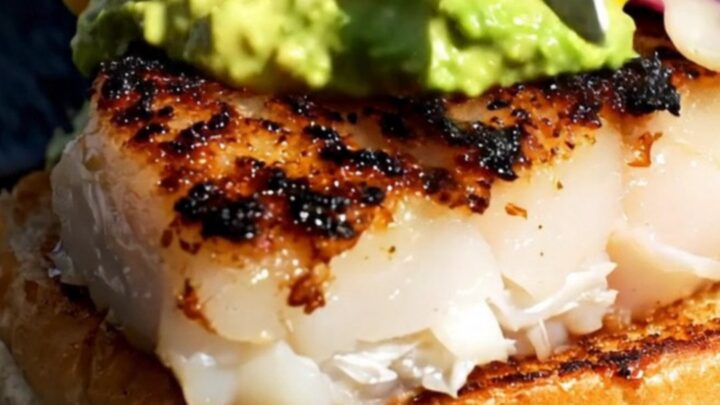
The fish should develop a dark, aromatic crust on both sides as the spices toast in the butter. The kitchen will smell smoky and fragrant. When checked with a fork, the flesh should be firm yet tender, and the internal temperature must reach 145°F (63°C). The fillets should look charred and appetizing, having successfully sealed in the juices during the short, high-heat cooking process in the cast-iron skillet.
Final Assembly
- Assemble the SandwichesToast the brioche buns until golden brown. Spread a generous amount of the avocado crema on the bottom bun. Place the blackened mahi-mahi fillet on top, followed by a heap of mango cabbage slaw. Close the sandwich and serve immediately while the fish is hot and the bun is crisp.Look for The sandwich is ready to serve when the crema begins to slightly melt against the warm, freshly seared fish.Tip Toasting the brioche bun adds a necessary crunch that complements the soft texture of the fish and creamy avocado.
The toasted brioche buns should be golden brown and warm to the touch, providing a sturdy base for the sandwich. The avocado crema should spread easily over the bun, and the fish should sit securely under the heap of slaw. The final sandwich should look visually appealing, with a clear contrast between the dark blackened fish, the bright green crema, and the colorful mango slaw, ready to be enjoyed immediately.
Common mistakes
A common mistake is overcrowding the skillet, which lowers the pan temperature and causes the fish to steam rather than sear, preventing the desired crust from forming. Always cook in batches if necessary.
Another error is not heating the skillet long enough; if the pan is not at 475°F (246°C), the spices will not blacken properly, leading to a lackluster flavor. Finally, avoid overcooking the fish, as mahi-mahi can quickly become tough and dry if left on the heat for too long past the 145°F (63°C) mark.
How to tell it’s done
The mahi-mahi is perfectly cooked when the flesh is opaque, white, and flakes easily with a fork. Using an instant-read thermometer is the most reliable way to ensure safety and quality.
Insert the thermometer into the thickest part of the fillet; the fish is done when it reaches an internal temperature of 145°F (63°C). The exterior should be dark and charred from the spices, providing a firm, flavorful crust that contrasts beautifully with the tender, juicy interior of the fish.
- Fish: 145°F (63°C) in the thickest part
Up next · Part 3 of 3
2 variations · storage & make-ahead · 3 answers · printable card
Tips, FAQ & printable recipe (Part 3)← Back to the ingredients (Part 1)