Dinner · Part 3 of 3: Tips & recipe card
Biang Biang Noodles with Sizzling Chili Oil in 40 Minutes Tips, FAQ & printable recipe
- Prep
- Cook
- Total
- Serves
- 2
Tips for success
The single biggest upgrade is oil temperature. Heat the oil until it just smokes, around 400°F (205°C), and pour it the moment it gets there. Too cool, and the spices taste flat and greasy; too hot for too long, and the garlic burns.
A small, deep saucepan gives a controlled stream, and pouring in a slow spiral across the center of the spice mound blooms everything evenly.
When pulling the belts, think rhythm rather than strength: stretch gently, slap once, stretch again. The slap against the counter is what compresses the gluten and builds the signature bounce, so do not skip it out of caution. If a belt tears, press the ends together with a wet finger and keep going; the seam disappears in the boiling water.
Variations
- Tomato and egg topping: Skip the dry spices and top the drained belts with scrambled eggs cooked soft with smashed tomatoes, a little garlic and a pinch of salt, then finish with the same black vinegar and soy sauce drizzle.
- Extra mala fire: Double the Sichuan peppercorns and add a teaspoon of doubanjiang to the spice mound before the pour. The extra ferment deepens the heat and makes the tingle noticeably stronger.
- Rolled-and-cut shortcut: Roll the rested dough into a thin sheet instead of pulling, dust generously, and cut 2-inch ribbons with a knife. The texture is softer than slapped belts, but the sauce and timing stay identical.
- Pork crumble version: Brown a few ounces of ground pork with the garlic and scallions in a spoonful of the oil, spoon it over the noodles, then proceed with the smoking-oil pour as written for a heartier bowl.
Storage and make-ahead
- Fridge
- Refrigerate noodles and chili oil in separate airtight containers for up to 2 days; the belts soften as they sit.
- Freezer
- Freeze the raw dough, well wrapped, for up to 1 month; thaw overnight in the refrigerator before pulling.
- Reheat
- Reheat noodles in simmering water for 30 seconds, drain well, and re-sizzle with a fresh spoonful of hot oil and spices.
Biang Biang noodles are at their best minutes after the sizzle, when the belts are glossy and the chili oil is still fragrant. Leftovers keep surprisingly well for a day, but the noodles drink up the sauce and soften.
Store the noodles and any remaining oil separately if possible, and always cool everything for no more than 2 hours before it goes into the refrigerator.
The dough is the make-ahead workhorse: it can be mixed, kneaded, oiled and wrapped up to 24 hours in advance and held in the refrigerator, where slow resting actually improves its stretch.
Let it sit at room temperature for 20 minutes before pulling. Every topping can also be prepped a day ahead and stored in small containers, so the cooking day is only pulling, boiling and the sizzle pour, about 15 minutes start to finish.
Serving ideas
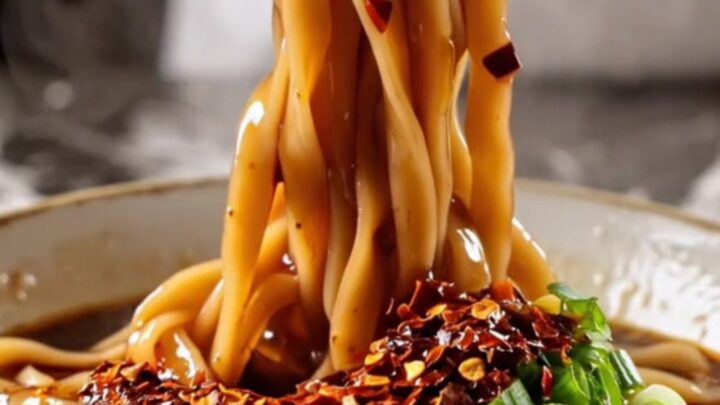
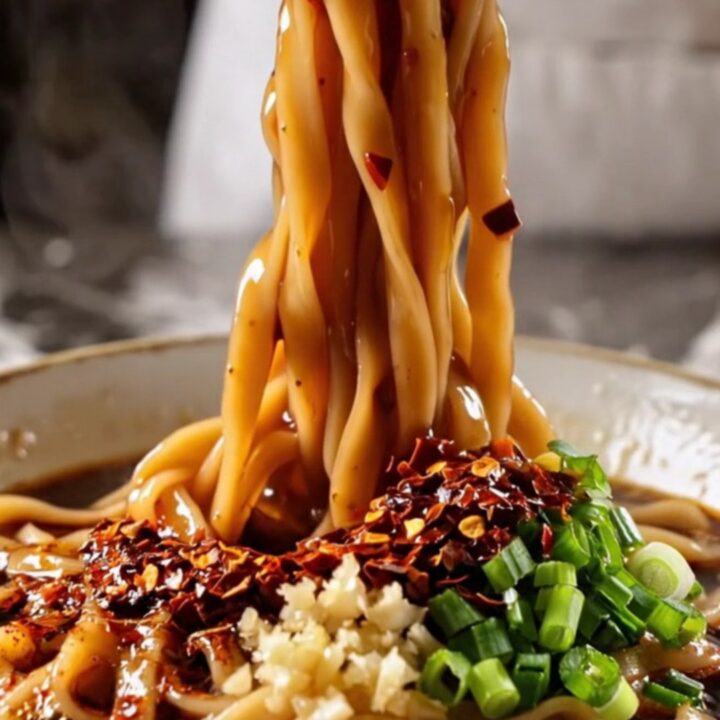
Serve the noodles in wide, shallow bowls straight from the tossing bowl, twirled high with chopsticks so the belts drape in glossy folds and the bok choy peeks out in green contrast.
Set extra crushed chili flakes and a small dish of the bloomed chili oil on the table for anyone who wants more heat, and put cold drinks within reach; the mala tingle builds with every bite.
As a full meal, the dish needs nothing else, but it also sits happily beside simple companions: cucumber salad with a little vinegar, steamed dumplings, or a bowl of clear broth to sip between fiery mouthfuls. Offer napkins generously and warn guests to toss their own portion, since the oil at the bottom of the bowl is the most intensely flavored part.
Frequently asked questions
Can the dough be made ahead of time?
What if the noodles keep tearing when pulled?
How hot should the oil be for the pour?
Can dried wide noodles be used instead of pulling the dough?
Why pour the vinegar and soy sauce down the sides of the bowl?
Biang Biang Noodles with Sizzling Chili Oil in 40 Minutes
Ingredients
- 2 cups all-purpose flour, plus more for dusting
- 3/4 cup warm water
- 1/2 tsp kosher salt
- 2 tbsp vegetable oil, for the dough
- 4 baby bok choy, halved
- 1 tbsp ground cumin
- 2 tbsp crushed red pepper flakes
- 1 tsp Sichuan peppercorns, finely ground
- 4 cloves garlic, minced
- 3 scallions, thinly sliced
- 1/4 cup canola oil (60 ml), heated to 400°F
- 3 tbsp Chinkiang black vinegar
- 3 tbsp soy sauce
Instructions
- Stir the kosher salt into the warm water until dissolved. Put the flour in a large mixing bowl, pour in the salted water a little at a time, and mix with chopsticks or a wooden spoon until shaggy clumps form. Press the clumps together into a rough, stiff ball with your hands, adding a spoonful of water only if dry crumbs remain.
- Knead the dough on the counter for 8 to 10 minutes, folding the far edge over and pushing away with the heel of your hand. It starts rough and resistant, then turns smooth and slightly elastic. Shape it into a log, brush all over with the vegetable oil, and wrap it tightly in plastic or cover the bowl.
- Let the oiled, covered dough rest at room temperature for 30 minutes. The pause relaxes the gluten so the belts stretch long and wide instead of snapping back. While it rests, mince the garlic, slice the scallions, grind the Sichuan peppercorns, and measure the cumin and chili flakes into one small bowl so the sizzle step moves fast.
- Cut the rested log into 4 equal pieces. Working one piece at a time and keeping the others covered, roll each into a thick cigar about 4 inches long, then flatten it into a wide oval with your palms and a rolling pin, about 1/4 inch thick. Press a chopstick firmly down the center to mark a fold line.
- Hold an oval at both ends, stretch it gently outward, then slap it down against the counter once or twice so it lengthens. Continue pulling and slapping until you have a ribbon 2 inches wide and roughly 2 feet long, then tear it down the center crease or leave it whole. The slap is what gives the noodle its signature bounce.
- Bring a large pot of water to a rolling boil. Drop in the pulled noodles one by one and stir so they do not stick; they cook in 2 to 3 minutes and float when done. Add the halved bok choy for the final minute, then lift everything out with a spider and transfer straight to a heatproof serving bowl, shaking off excess water.
- Scatter the cumin, chili flakes, ground Sichuan peppercorns, minced garlic and sliced scallions evenly over the hot noodles, piling them in the center so the oil will hit them all at once. Keep the pile compact; a wide, thin scattering blooms unevenly and can scorch at the edges of the bowl.
- Pour the canola oil into a small saucepan and heat over medium-high until it shimmers, thins out and just begins to smoke, about 400°F (205°C), 3 to 4 minutes. Work at the stove with the serving bowl nearby, because the pour must happen the moment the oil is ready for the boldest bloom.
- Stand back slightly and pour the smoking oil in a slow, steady stream directly over the spice mound. It will crackle violently and bloom into a deep red, fragrant chili oil in seconds. Let the sizzling settle for about 15 seconds before touching the bowl, and tilt it once so every noodle glistens.
- Drizzle the black vinegar and soy sauce down the sides of the bowl, then toss everything with tongs or chopsticks until every wide belt is coated in glossy red oil. Serve immediately, twirling the noodles high with chopsticks while the steam is still rising and the bok choy is bright green.
Estimated nutrition per serving
- Calories
- 620
- Protein
- 16 g
- Carbohydrates
- 90 g
- Fat
- 21 g
- Fiber
- 5 g
- Sugar
- 4 g
- Sodium
- 1450 mg
Next recipe

Crockpot Million Dollar Kielbasa and Potatoes (Dump-and-Go)
See the recipe → →This recipe is based on a short cooking video and is published under the pen name Clara Weller. It was checked before publication, but errors can slip through. Nutrition, when shown, is an estimate. Read more in our editorial policy and on our food safety page.
More recipes to try

Grandma's Crockpot Pork Roast with Creamy Gravy
Total time: 8 h 15 min
Buttery Cracker Pork Chop Bake — One Pan, Easy Dinner
Total time: 58 min
Slow Cooker Sweet Tea Chicken Thighs: Dump-and-Go Dinner
Total time: 6 h 15 min
Crockpot Cheesy Ham and Hash Browns — Dump-and-Go Dinner
Total time: 4 h 20 min
Crockpot Pork Chops Florentine: 5-Minute Prep, Creamy Parmesan Sauce
Total time: 4 h 13 min