Dinner · Part 1 of 3: Ingredients
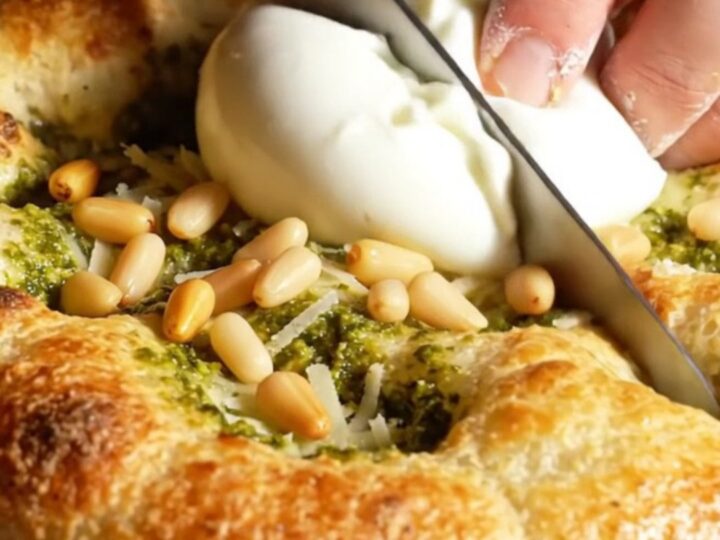
Basil Pesto and Burrata Focaccia with Crispy Crust
- Prep
- Cook
- Total
- Serves
- 8
Elevate your bread game with this stunning basil pesto and burrata focaccia. This recipe combines the aromatic intensity of Genovese pesto with the luxurious creaminess of fresh burrata cheese, resulting in a show-stopping dish that is surprisingly easy to create.
Perfect for weekend brunches or as a sophisticated appetizer, this focaccia promises a crispy, golden crust and a soft, airy interior that will disappear from the table in minutes.
Making high-quality focaccia at home becomes a simple pleasure with this method. By using a pre-made dough, you skip the long fermentation process while still achieving that artisanal result.
The secret lies in the dimpling technique, which creates deep pockets for the basil pesto to settle into, ensuring every bite is packed with savory, herbaceous flavor. Finishing the bread with cold, creamy burrata and toasted pine nuts provides a beautiful textural contrast that elevates the dish to a professional standard.
Ingredients
Focaccia
- 600 g focaccia dough, store-bought or made ahead
- 4 tbsp Genovese basil pesto
Topping
- 2 balls burrata cheese
- 2 tbsp pine nuts, toasted
Why this recipe works
The method of dimpling the dough with fingers is essential for creating the classic focaccia texture. These indentations not only create the characteristic uneven surface but also serve as reservoirs for the pesto and olive oil, ensuring that the flavors penetrate deep into the crumb rather than just sitting on the surface. This technique guarantees a flavorful, moist bread with a crispy exterior.
Baking at a high temperature of 450 degrees Fahrenheit is crucial for the Maillard reaction, which gives the focaccia its deep golden color and crunchy crust.
This high heat also creates enough steam to puff the dough quickly, resulting in an airy and light interior structure. The combination of high heat and proper oiling is the foundation for achieving the perfect balance between a crisp bottom and a tender center.
Notes and substitutions
For the best results, use a high-quality Genovese basil pesto. If making your own, ensure the basil is fresh and the olive oil is high-grade to achieve the most vibrant color and flavor.
The dough should be a standard, high-hydration focaccia recipe, whether store-bought or prepared ahead. Always ensure the dough is well-oiled before adding any toppings to prevent sticking and to enhance the crispness of the bottom crust.
A cast-iron pan is an excellent choice for this recipe as it distributes heat evenly and helps develop a superior crust. If a cast-iron pan is not available, a heavy-duty rimmed baking sheet will also produce great results. Ensure the burrata is chilled before tearing it over the hot bread, as this contrast in temperature between the warm, crispy crust and the cold, creamy cheese is a defining feature of this dish.
- Burrata cheese: Fresh mozzarella cheese can be used if burrata is unavailable, though it will have a firmer texture.
- Pine nuts: Chopped walnuts or slivered almonds provide a similar crunch if pine nuts are not available.
Equipment
- Baking sheet
- Cast-iron pan
- Pastry brush
- Knife
Up next · Part 2 of 3
3 steps · 25 min of cooking · what to look for at each stage
Step-by-step instructions (Part 2)