Appetizers · Part 3 of 3: Tips & recipe card
Authentic Xiao Long Bao Soup Dumplings Tips, FAQ & printable recipe
- Prep
- Cook
- Total
- Serves
- 4
Tips for success
When pleating the dumplings, start by holding the edge of the dough circle with your non-dominant hand and using your dominant thumb and index finger to create small, overlapping folds. Rotate the dumpling as you go, keeping the pleats uniform and tight.
The goal is to gather the dough toward the center, creating a small, sturdy knot at the very top. Practice makes perfect, so do not be discouraged if your first few attempts are not perfectly uniform.
The temperature of your steaming water is critical. Use a large pot or wok and ensure the water is at a rolling boil before placing the steamer basket on top.
The steam needs to be constant and vigorous to melt the aspic into broth without overcooking the delicate dough. If the heat is too low, the dough will become rubbery before the aspic melts, compromising the texture and the essential soup element of the dish.
Variations
- Crab and Pork Filling: Add 50g of fresh, cooked crab meat to the pork mixture for a luxurious seafood twist. The sweetness of the crab complements the rich pork broth perfectly, creating a refined and elegant flavor profile that is highly prized in traditional Chinese cuisine.
- Spicy Chili Oil Finish: For those who prefer a bit of heat, drizzle the finished dumplings with a small amount of homemade chili oil. The spicy, aromatic notes add a bold contrast to the delicate soup, making for an exciting variation on the classic preparation.
Storage and make-ahead
- Fridge
- Store in an airtight container for up to 2 days.
- Freezer
- Freeze uncooked dumplings on a tray, then transfer to a bag for up to 1 month.
- Reheat
- Steam refrigerated or frozen dumplings until heated through, about 8 to 10 minutes for frozen.
If you have leftovers, allow them to cool to room temperature for no more than 2 hours before transferring them to an airtight container. Keep the container in the refrigerator to maintain freshness.
Note that the texture of the dough may change slightly upon refrigeration, so consume within 1 to 2 days for the best experience. Reheat thoroughly before serving to ensure the internal filling is hot and safe to eat.
You can prepare the pork filling and the aspic separately a day in advance. Keep them in the refrigerator until you are ready to assemble. The dough circles can also be made ahead of time, but keep them well-covered in the refrigerator to prevent drying.
Assembly is best done just before steaming, as the raw dumplings can become sticky or lose their shape if left sitting for too long before they are cooked.
Serving ideas
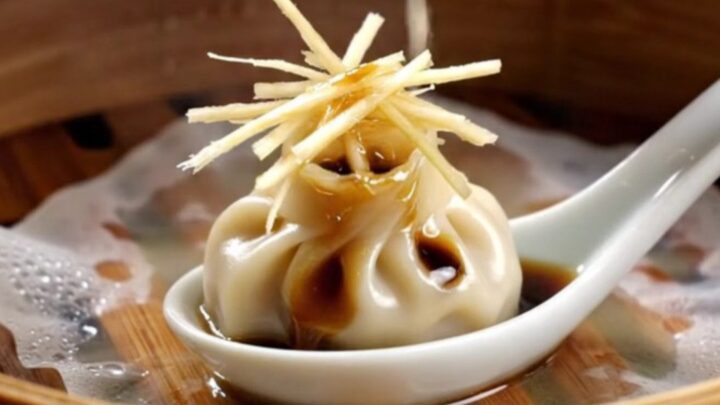
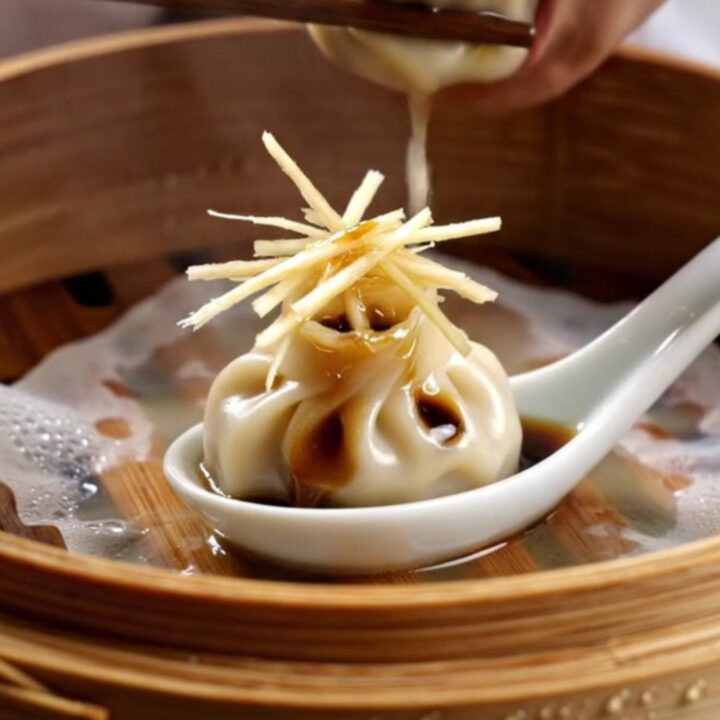
Serve the Xiao Long Bao immediately after their brief rest while they are still hot. Place them on a shallow spoon to catch any broth that might escape when you take the first bite. The traditional way to enjoy them is to dip the dumpling into a mixture of julienned fresh ginger and black Chinkiang vinegar, which provides a bright, acidic contrast to the savory, fatty pork broth inside.
When eating, carefully lift the dumpling by the pleated top with your chopsticks and place it onto a soup spoon. Take a small nibble of the side to release a bit of the steam, then slurp the hot broth before eating the rest of the dumpling. This method ensures you do not burn your mouth and allows you to enjoy the full flavor profile of the soup and the tender pork filling.
Frequently asked questions
Why is the aspic necessary for soup dumplings?
Can the pleating be simplified?
How can the dumplings be prevented from sticking to the steamer?
Authentic Xiao Long Bao Soup Dumplings
Ingredients
- 180 g heritage pork, seasoned
- 120 g pork-skin aspic cubes
- 120 g dough circles, rolled thin
- Fresh ginger, julienned, for serving
- Black Chinkiang vinegar, for serving
Instructions
- In a chilled mixing bowl, combine the seasoned heritage pork with the pork-skin aspic cubes. Mix gently until the ingredients are well incorporated, ensuring the aspic remains in distinct, small cubes for even distribution. Keep this mixture cold until the moment of assembly to maintain the integrity of the aspic, which is essential for creating the signature soup center during the steaming process.
- Take one paper-thin dough circle and place a small portion of the pork and aspic mixture in the center. Use your fingers to create rapid, precise pleats around the edges, sealing the dumpling tightly at the top to prevent any leakage. Aim for at least 18 pleats, which provides the necessary structural support for the delicate skin while allowing it to hold the hot broth inside during steaming.
- Place the assembled dumplings into a bamboo steamer lined with parchment paper. Steam over a pot of roaring boiling water for exactly 6 minutes, ensuring the internal temperature reaches at least 145°F (63°C). Remove the steamer from heat and let the meat rest for at least 3 minutes before serving. Top with julienned fresh ginger and a drizzle of black Chinkiang vinegar, and serve while still pleasantly hot.
Estimated nutrition per serving
- Calories
- 320
- Protein
- 14.5 g
- Carbohydrates
- 22 g
- Fat
- 18 g
- Fiber
- 1 g
- Sugar
- 0.5 g
- Sodium
- 450 mg
Next recipe
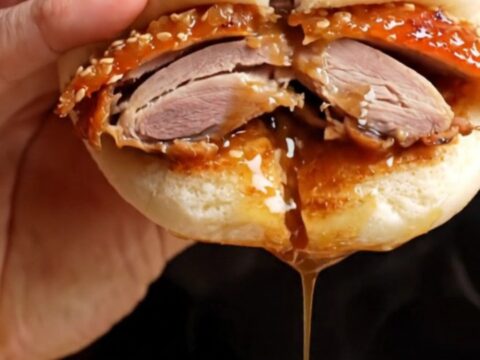
Crispy Peking Duck Bao Sliders in 10 Minutes
See the recipe → →This recipe is based on a short cooking video and is published under the pen name Clara Weller. It was checked before publication, but errors can slip through. Nutrition, when shown, is an estimate. Read more in our editorial policy and on our food safety page.
More recipes to try
Crystal Shrimp Har Gow with Sizzling Garlic Chili Crisp
Total time: 35 min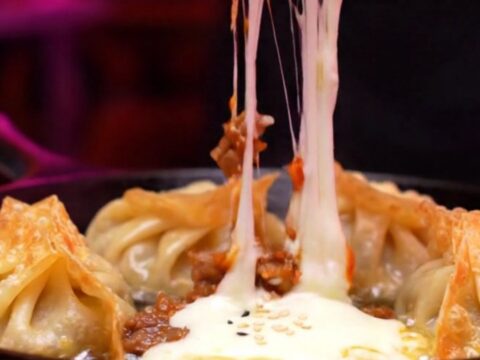
Crispy Gochujang Bulgogi Mandu with Molten Cheese
Total time: 22 min
Crispy Pan-Fried Rice Paper Dumplings with Smoky Tofu Filling
Total time: 21 min
Crispy Crab Rangoon Tacos With Sweet Chili Drizzle
Total time: 21 min
Whipped Ricotta and Roasted Fig Tartines
Total time: 14 min