Dinner · Part 2 of 3: Instructions
Authentic Wood-Fired Neapolitan Burrata Pizza Step-by-step instructions
- Prep
- Cook
- Total
- Serves
- 1
Before you start
Before beginning, ensure all ingredients are at the appropriate temperatures. The dough should be brought to room temperature 30 minutes prior to stretching, while the burrata should remain chilled until the final assembly to maintain its structural integrity.
Preheat the oven with the pizza stone inside for at least one hour. Prepare all toppings in advance, slicing the prosciutto into manageable ribbons and washing the arugula, ensuring it is completely dry to prevent a soggy crust. Having a clear, organized workspace allows for a smooth transition from stretching to firing.
Ingredients at a glance (6)
- 280 g cold-fermented pizza dough
- 1/2 cup crushed San Marzano tomatoes
- 1 ball fresh burrata cheese
- 2 oz Parma prosciutto, thinly sliced
- 1 handful baby arugula
- 1 tbsp extra virgin olive oil
Instructions
Dough Preparation
- Prepare the DoughDust a clean work surface lightly with flour. Gently stretch the 280 grams of cold-fermented dough into a circular shape, maintaining the air in the outer rim to create a light, airy crust. Ensure the dough is uniform in thickness before proceeding to the topping stage.Look for The dough should be elastic and easy to stretch without tearing.Tip Let the dough sit at room temperature for 30 minutes before stretching for better elasticity.
The dough should be soft, elastic, and free of any large tears. When stretched, it should hold its shape and show small air bubbles within the rim. If the dough snaps back too aggressively, let it rest for another ten minutes before continuing, as the gluten needs to relax to allow for a thin, even base without any thick, chewy spots.
High-Heat Firing
- Top and FireSpread the crushed San Marzano tomatoes evenly over the dough, leaving an inch border for the crust. Carefully slide the pizza onto a preheated stone or steel in an oven set to 850 degrees Fahrenheit. Bake for exactly ninety seconds until the crust is puffed and leopard-spotted.Look for The crust should show dark, charred spots and the sauce should be bubbling.Tip Ensure your oven is fully preheated for at least an hour to maintain the required high heat.
At the end of the firing phase, the pizza should look vibrant, with a puffed, charred crust and bubbling tomatoes. The aroma should be reminiscent of freshly baked bread combined with the sweet acidity of the tomatoes. If the crust is not browning, ensure the stone was placed high enough in the oven to take advantage of the ambient heat and the broiler if needed.
Final Assembly
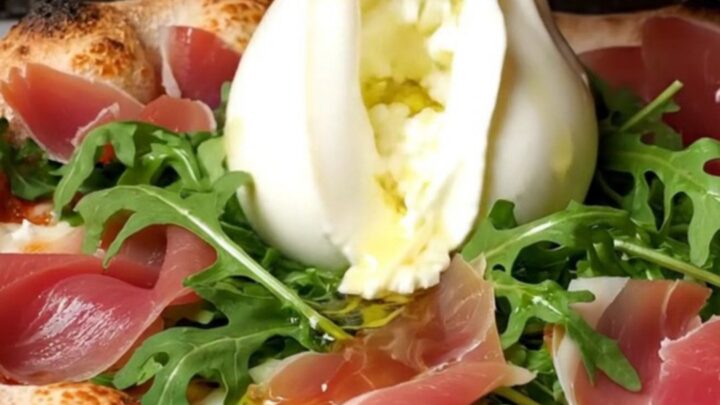
- Add Fresh ToppingsRemove the hot pizza from the oven. Immediately drape the ribbons of Parma prosciutto over the hot surface. Scatter the baby arugula on top, then place the fresh burrata ball in the center. Carefully tear the burrata open to release the creamy center and drizzle with extra virgin olive oil.Look for The burrata should begin to melt slightly from the residual heat of the pizza.Tip Use a sharp knife or scissors to cut the pizza carefully to avoid dragging the delicate toppings.
The final assembly is complete when the burrata is placed centrally and torn open, allowing the creamy stracciatella to spill over the hot pizza. The prosciutto should be draped loosely to create volume, and the arugula should remain fresh and crisp.
The final result should look like a professional artisan creation, with a clear contrast between the hot, charred crust and the cool, creamy cheese.
Common mistakes
A common error is overloading the pizza with too many toppings, which creates moisture and prevents the crust from crisping correctly. Another mistake is failing to preheat the stone sufficiently; if the surface is not hot enough, the bottom of the crust will remain pale and doughy.
Avoid using a rolling pin, as this crushes the air pockets that are vital for an authentic Neapolitan crust. Finally, ensure the oven is at the highest possible setting, as a lower temperature will dry out the dough instead of creating the signature airy, blistered finish.
How to tell it’s done
The pizza is done when the crust is golden brown and displays characteristic dark, leopard-spotted charring on the edges. The cheese should be melted and bubbling, and the base should be firm enough to hold its shape when lifted.
Because the cooking time is extremely short, watch the pizza closely through the oven window after the first minute. There is no internal temperature requirement for this vegetarian-focused assembly, as the focus is on the texture of the crust and the state of the tomato sauce.
Up next · Part 3 of 3
2 variations · storage & make-ahead · 3 answers · printable card
Tips, FAQ & printable recipe (Part 3)← Back to the ingredients (Part 1)