Dinner · Part 1 of 3: Ingredients
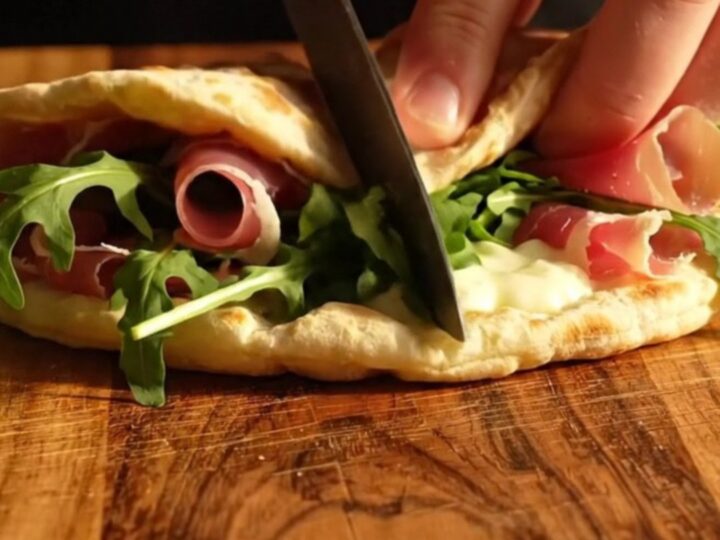
Quick Italian Piadina with Squacquerone and Prosciutto
- Prep
- Cook
- Total
- Serves
- 4
Warm Italian Piadina folded with melted cheese is street-food heaven! This Romagna-style flatbread is made with a lard-enriched dough that cooks up blistered and golden on a hot griddle. Spread with creamy squacquerone, pile on sweet prosciutto and peppery arugula, then fold into a half-moon for a quick, satisfying meal that feels like a trip to an Italian market.
Piadina is a classic Italian flatbread from the Romagna region, traditionally cooked on a terracotta or cast-iron griddle. This version stays true to the original: a simple dough of flour, lard, salt, and water, rolled thin and cooked until puffed and blistered.
The filling is equally traditional: squacquerone, a soft, spreadable cheese that melts beautifully, prosciutto crudo, and fresh arugula.
The combination of warm bread, creamy cheese, salty meat, and peppery greens is irresistible. This recipe comes together in under an hour, with most of the time spent letting the dough rest. Serve it for lunch, dinner, or even as a snack — it's best eaten warm, straight off the griddle.
Ingredients
- 2 cups all-purpose flour, plus more for dusting
- 1/4 cup lard or shortening, at room temperature
- 1 tsp fine salt
- 3/4 cup warm water
- 8 oz squacquerone cheese or soft creamy cheese like stracchino or crescenza
- 4 oz prosciutto crudo, thinly sliced
- 2 cups wild arugula, washed and dried
Why this recipe works
The dough is enriched with lard, which adds tenderness and a subtle savory flavor. The fat coats the flour proteins, limiting gluten development, so the flatbread stays soft and pliable rather than tough. Rolling the dough thin and cooking it on a screaming-hot griddle creates steam, which puffs the bread and gives it those characteristic blistered spots.
Using a high heat is essential for the texture. The quick cooking time means the outside gets crisp and charred in places while the inside remains soft and chewy.
The squacquerone cheese is spread on the hot bread so it melts into a creamy layer, binding the filling together without making the bread soggy. The result is a balanced bite with contrasting temperatures and textures.
Notes and substitutions
Squacquerone is a soft, fresh cow's milk cheese from Romagna. It has a tangy, milky flavor and a texture that spreads like a thick cream. If you can't find it, stracchino or crescenza are excellent substitutes. Even a soft mozzarella that has been drained and torn will work in a pinch. The cheese should be at room temperature so it melts quickly on the hot flatbread.
The dough is forgiving, but the key is to roll it thin. A thickness of about 1/8 inch ensures even cooking and a nice crisp-tender texture.
Use a well-floured surface and a rolling pin, and don't worry if the rounds aren't perfect circles — rustic is part of the charm. Cook them one at a time to ensure even heat. If you don't have a cast-iron griddle, a heavy skillet works just as well.
- squacquerone cheese: Use stracchino, crescenza, or a soft fresh mozzarella that has been drained and torn into pieces.
- lard: Substitute with cold butter or a neutral vegetable shortening for a slightly different flavor but similar texture.
- prosciutto crudo: Try cooked ham, coppa, or even grilled vegetables for a vegetarian option.
Equipment
- Mixing bowl
- Rolling pin
- Cast-iron griddle or flat skillet
- Spatula
- Pastry brush (optional)
Up next · Part 2 of 3
5 steps · 15 min of cooking · what to look for at each stage
Step-by-step instructions (Part 2)