Dinner · Part 1 of 3: Ingredients
Cacio e Pepe in 8 Minutes: Silky Roman Pasta
- Prep
- Cook
- Total
- Serves
- 2
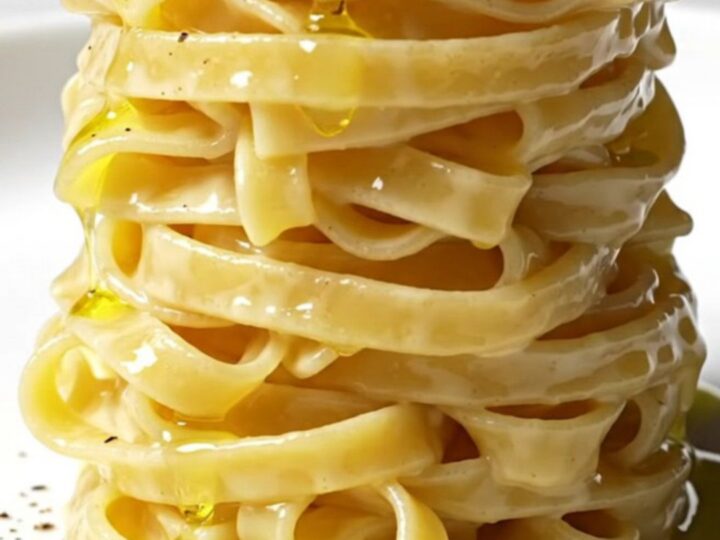
Three ingredients, one skillet, and 8 minutes stand between you and the silkiest Cacio e Pepe you have ever twirled. This Roman classic relies on toasted Sarawak peppercorns, sharp Pecorino Romano, and starchy pasta water that binds them into a glossy, velvety sauce. Fresh tonnarelli, with its porous texture, grabs every drop of the emulsion, so each strand is coated in a peppery, cheesy embrace. No cream, no butter, no shortcuts — just technique and timing.
Cacio e Pepe — literally 'cheese and pepper' — is the ultimate test of a pasta cook's skill. The magic happens in the skillet: toasted pepper releases its floral heat, starchy water loosens the Pecorino, and vigorous tossing aerates the mixture until it transforms into a creamy sauce that clings to every strand.
The video shows the process in real time: 2 tablespoons of crushed Sarawak peppercorns toasted dry, 120 milliliters of pasta water, and 120 grams of micro-grated Pecorino. The pasta is tossed at 65°C (149°F), the temperature where the cheese and starch bind perfectly. The result is a dish that is at once simple and profound, a study in how few ingredients can create so much flavor.
Ingredients
- 12 oz fresh tonnarelli pasta
- 2 tbsp Sarawak black peppercorns, coarsely crushed
- 120 g Pecorino Romano, micro-grated
- 120 ml starchy pasta water
- 1 tsp cold-pressed olive oil, for drizzling
Why this recipe works
The emulsion in Cacio e Pepe is a lesson in starch science. When you toast the peppercorns, their essential oils bloom, releasing a warm, citrusy aroma that infuses the entire dish. The starchy pasta water acts as a bridge: its dissolved starch thickens the sauce and helps the Pecorino melt into a smooth, glossy coating rather than clumping into strings.
Tossing the pasta vigorously at 65°C (149°F) incorporates air, which lightens the sauce and gives it that signature silky texture. The result is a sauce that clings to the pasta like a velvet glove, not a puddle in the bottom of the bowl.
The choice of pasta matters. Fresh tonnarelli, a square-cut egg pasta from Rome, has a rough, porous surface that captures the sauce beautifully. Its slightly chewy bite stands up to the bold flavors of the pepper and cheese.
The video's method — toasting the pepper first, then building the emulsion in the same skillet — layers flavors without adding a single extra ingredient. By the time the pasta hits the pan, the pepper has already infused the oil and water, so every strand carries the full aroma of the spice. This technique is the difference between a good Cacio e Pepe and a transcendent one.
Notes and substitutions
Sarawak peppercorns, from the Malaysian state of the same name, are prized for their mild heat and complex, floral aroma. If you cannot find them, any high-quality black peppercorn works — just crush them coarsely right before toasting to maximize their fragrance.
Pecorino Romano is non-negotiable for authentic flavor; its sharp, salty bite is what makes the dish sing. Micro-grating the cheese ensures it melts smoothly without clumping. Fresh tonnarelli is available at many Italian markets and some supermarkets; if you use dried pasta, reduce the amount to about 8 ounces (225 grams) and adjust the cooking time.
The equipment is minimal: a large pot, a dry stainless skillet, and a microplane or fine grater. A whisk helps incorporate the cheese into the water, but a wooden spoon works too. The key is to keep the heat moderate — if the pan is too hot, the cheese will seize and turn grainy. If it is too cool, the sauce will not thicken. The video shows the pasta being tossed at 65°C (149°F), a temperature that allows the starch to swell and the cheese to melt into a creamy emulsion. Trust the process and adjust the heat as needed.
- Sarawak black peppercorns: Any high-quality black peppercorns, such as Tellicherry, work well. The key is to crush them coarsely just before toasting.
- fresh tonnarelli pasta: If fresh tonnarelli is unavailable, use dried tonnarelli or spaghetti. Adjust cooking time and use about 8 oz (225 g) dried pasta.
- Pecorino Romano: Parmigiano-Reggiano can be substituted, but the flavor will be less sharp and salty. For authenticity, stick with Pecorino.
- cold-pressed olive oil: Any extra-virgin olive oil works for the final drizzle.
Equipment
- Large pot for pasta
- Dry stainless skillet
- Microplane or fine grater
- Tongs or pasta fork
- Wooden spoon or whisk
Up next · Part 2 of 3
5 steps · 8 min of cooking · what to look for at each stage
Step-by-step instructions (Part 2)