Dinner · Part 1 of 3: Ingredients
Apple Cider Honey Hickory Baby Back Ribs: Slow-Cooker Fall-Off-the-Bone
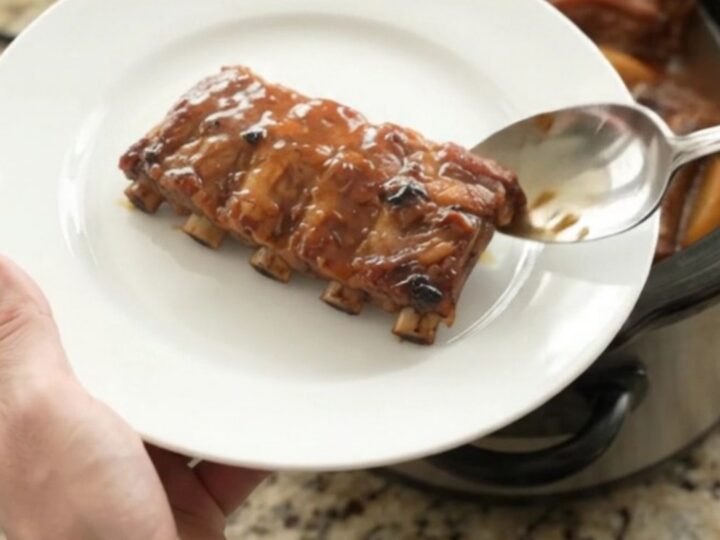
- Prep
- Cook
- Total
- Serves
- 6
This slow-cooker recipe turns pork baby back ribs into a deeply caramelized, fall-off-the-bone dinner with almost no effort. Sweet Honeycrisp apples and tart apple cider braise the meat while honey hickory barbecue sauce reduces into a sticky glaze.
Just layer everything in the crockpot, set the timer, and let the slow cooker do the work. The result is tender ribs with a rich, fruity, smoky flavor that tastes like it simmered all day — because it did.
These slow-cooker baby back ribs are a set-and-forget dinner that delivers big flavor. The combination of sliced apples, unfiltered apple cider, and honey hickory barbecue sauce creates a sweet-tangy braising liquid that keeps the pork moist and infuses it with autumn warmth.
As the ribs cook low and slow, the apples break down into a soft, cider-spiked compote that mingles with the sauce into a glossy glaze. Serve the ribs straight from the crockpot or give them a quick broil for extra caramelization. This is the kind of meal that makes a weeknight feel special with minimal fuss.
Ingredients
- 4 lb pork baby back ribs
- 2 Honeycrisp apples, cored and sliced
- 1 cup unfiltered apple cider
- 1 1/2 cups honey hickory barbecue sauce
Why this recipe works
Cooking baby back ribs in a slow cooker on LOW for 6 to 8 hours breaks down the collagen in the meat, turning it incredibly tender without drying it out. The enclosed environment traps steam, keeping the ribs moist while the surrounding liquid concentrates flavor. The apples and cider add natural sweetness and a gentle acidity that balances the rich pork and smoky barbecue sauce.
The honey hickory barbecue sauce acts as both a flavor layer and a glaze. As it simmers with the cider and apple juices, it thickens and caramelizes, clinging to the ribs as they cook. The final broil (optional but recommended) creates a slightly charred, sticky exterior that contrasts with the tender interior, giving the dish the texture and appearance of long-smoked barbecue.
Notes and substitutions
Use the best-quality baby back ribs you can find; look for racks with even meat coverage and minimal exposed bone. Honeycrisp apples hold their shape during long cooking, but any crisp, sweet apple will work.
Unfiltered apple cider adds a cloudy, robust apple flavor; filtered cider or apple juice is a fine substitute. The honey hickory barbecue sauce is the backbone of the flavor, so choose one you enjoy eating straight from the jar.
This recipe is endlessly adaptable. Swap the barbecue sauce for a spicy chipotle version for heat, or use a mustard-based sauce for a tangier finish.
If you prefer a thicker glaze, remove the ribs when tender and simmer the remaining liquid on the stovetop until reduced, then brush it over the meat before serving. The apples can be scooped out and served alongside the ribs or mashed into a chunky compote.
- Honeycrisp apples: Any crisp, sweet apple such as Fuji, Gala, or Pink Lady works well.
- Honey hickory barbecue sauce: Use your favorite store-bought BBQ sauce with a tablespoon of honey stirred in for a similar effect.
- Unfiltered apple cider: Regular apple cider or even apple juice can be used; unfiltered gives a richer flavor.
- Pork baby back ribs: St. Louis-style ribs also work; increase cooking time by 1 hour if using them.
Equipment
- 6-quart slow cooker
- Cutting board
- Chef's knife
- Measuring cups
- Serving fork
- White dinner plate
Up next · Part 2 of 3
4 steps · 6 h of cooking · what to look for at each stage
Step-by-step instructions (Part 2)