Dinner · Part 3 of 3: Tips & recipe card
Antakya Tray Kebab with Charred Peppers Tips, FAQ & printable recipe
- Prep
- Cook
- Total
- Serves
- 6
Tips for success
For the most even cooking, press the meat into the tray with slightly wet hands—this prevents sticking and helps create a smooth, uniform layer. If you prefer a spicier kebab, add a pinch of red pepper flakes or a finely minced fresh chili to the meat mixture.
The pepper paste is key to the authentic flavor; seek it out at Middle Eastern markets or online, as it has a distinct, slightly sweet and smoky taste that tomato paste alone doesn’t replicate.
When slicing the kebab, use a sharp knife and cut through the meat and vegetables in one clean motion to avoid tearing. If the tray has a lot of juices, spoon them over the slices before serving.
To warm lavash, wrap it in foil and heat in a 350°F oven for 5-10 minutes, or heat each piece in a dry skillet for 30 seconds per side. This makes the bread pliable and enhances its flavor.
Variations
- Spicy Version: Add 1 teaspoon of red pepper flakes or 1/2 teaspoon of cayenne to the meat mixture. Use spicy green peppers like jalapeños or serranos, and consider adding a drizzle of hot sauce before serving.
- Cheese-Topped: After baking, sprinkle 1 cup of shredded mozzarella or crumbled feta over the top and return to the oven for 5 minutes until melted. This adds a creamy, salty contrast to the spiced meat.
- Vegetarian Option: Replace the ground meat with 1 1/2 cups of cooked lentils or a plant-based ground meat substitute. Add an extra tablespoon of olive oil to the mixture to keep it moist, and reduce the baking time to 20 minutes.
- Herb-Infused: Add 1 teaspoon of dried oregano or thyme to the meat mixture, and use fresh mint or cilantro instead of parsley. This adds a different aromatic dimension while keeping the dish rooted in Middle Eastern flavors.
Storage and make-ahead
- Fridge
- Leftover kebab can be refrigerated for up to 3 days in an airtight container. Reheat gently to avoid drying out.
- Freezer
- Freeze cooked kebab wedges in a single layer on a baking sheet, then transfer to a freezer bag for up to 2 months.
- Reheat
- Reheat in a 350°F oven for 10-15 minutes, or in a skillet over medium heat until hot. The lavash should be warmed separately.
Store leftover kebab wedges in an airtight container in the refrigerator for up to 3 days. Keep the lavash separate to prevent it from becoming soggy. Reheat the kebab in a 350°F oven for 10-15 minutes, or in a skillet over medium heat until warmed through. The flavor actually deepens overnight, so leftovers are a treat.
The seasoned meat mixture can be prepared up to 24 hours in advance and kept covered in the refrigerator. When ready to bake, press it into the tray, add the tomatoes, peppers, and sauce, and bake as directed.
The assembled kebab can also be refrigerated for a few hours before baking; just add a few extra minutes to the cooking time if starting from cold.
Serving ideas
Serve the kebab hot from the oven, sliced into wedges and wrapped in warm lavash. Offer additional lavash on the side, along with a simple salad of sliced cucumbers, tomatoes, and red onion with a lemon-olive oil dressing. A dollop of plain yogurt or a sprinkle of sumac would be a nice addition, though the video does not include them.
For a family-style meal, place the whole tray in the center of the table and let everyone slice their own portions.
The charred peppers are especially delicious when eaten with the meat, so encourage guests to include them in their wraps. This dish also pairs well with rice pilaf or bulgur, but the lavash wrap is the classic way to enjoy it.
Frequently asked questions
Can this kebab be made ahead of time?
What is pepper paste and where can it be found?
Can this recipe be made without lamb?
What type of green peppers work best?
How can the kebab be kept from drying out?
Antakya Tray Kebab with Charred Peppers
Ingredients
- 1 1/4 lb ground beef and lamb mix (20% fat)
- 1 large onion, finely minced
- 1 red bell pepper, minced
- 1/4 bunch fresh parsley, minced
- 4 cloves garlic, minced
- 1 tbsp pepper paste
- 1 tsp ground cumin
- 1 tsp black pepper
- 1 tsp salt
- 2 tomatoes, sliced
- 4 green peppers (such as Anaheim or Italian frying peppers)
- 1 tbsp tomato paste
- 100 ml warm water
- Warm lavash bread, for serving
Instructions
- In a large bowl, combine the ground beef and lamb mix, minced onion, minced red bell pepper, minced parsley, minced garlic, pepper paste, cumin, black pepper, and salt. Knead the mixture with your hands for 2 to 3 minutes until the seasonings are evenly distributed and the mixture feels slightly sticky and cohesive.
- Lightly butter or oil a round metal tray. Transfer the seasoned meat mixture to the tray and press it evenly into a thin, flat layer that covers the bottom completely. Wet your palms with water to prevent sticking and to smooth the surface.
- Arrange the tomato slices over the meat layer in a single layer, overlapping slightly. Place the whole green peppers on top, spacing them evenly. In a small bowl, whisk the tomato paste with the warm water until smooth. Pour the tomato sauce evenly over the top of the meat and vegetables.
- Preheat the oven to 425°F (220°C). Place the tray in the oven and bake for 25 minutes, until the meat is cooked through and the top is sizzling and lightly charred in spots. The internal temperature of the meat should reach 160°F (71°C).
- Remove the tray from the oven and let it rest for 5 minutes. Use a sharp knife to slice the kebab into triangular wedges, like a pizza. The meat should be firm but juicy, and the vegetables should be tender.
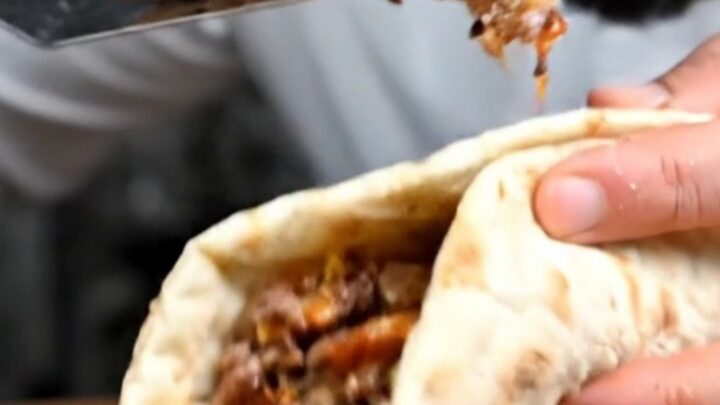
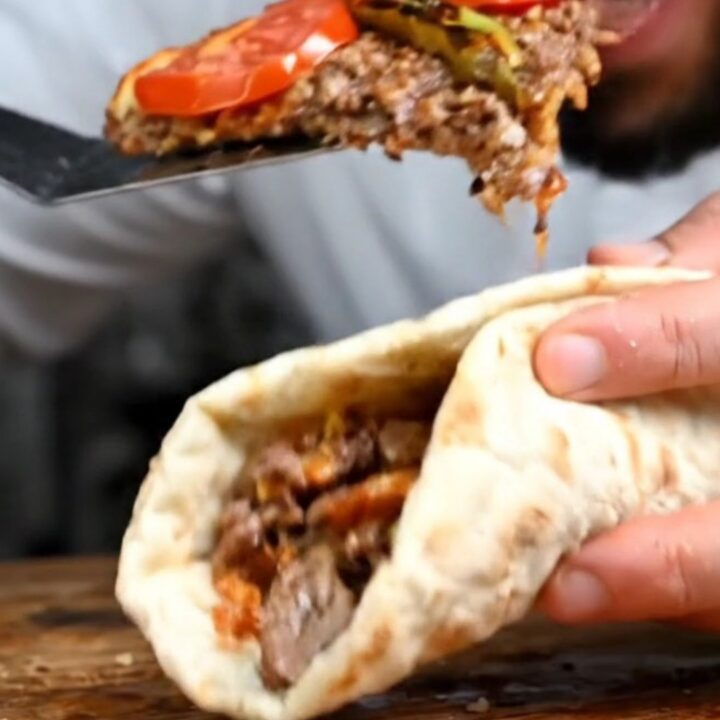
- Warm the lavash bread according to package directions. Place a slice of kebab on a piece of lavash, add any extra peppers or tomatoes from the tray, and wrap it like a burrito. Serve immediately, with additional warm lavash on the side.
Estimated nutrition per serving
- Calories
- 420
- Protein
- 28 g
- Carbohydrates
- 18 g
- Fat
- 26 g
Next recipe

Sticky Sweet Chili Glazed Meatballs with Rice
See the recipe → →This recipe is based on a short cooking video and is published under the pen name Clara Weller. It was checked before publication, but errors can slip through. Nutrition, when shown, is an estimate. Read more in our editorial policy and on our food safety page.
More recipes to try

Crispy Smashed Fingerling Potatoes with Lemon Herb Chimichurri
Total time: 50 min
Crispy Turkish Spinach & Cheese Filo Roll (Ispanaklı Börek)
Total time: 1 h 5 min
Crispy Birria Grilled Cheese with Consommé Dip
Total time: 18 min
Crispy Nashville Hot Chicken Mac & Cheese Waffle Cone
Total time: 30 min
Crispy Turkish Sucuklu Kaşarlı Gözleme: Hand-Rolled Stuffed Flatbread
Total time: 1 h 39 min