Dinner · Part 2 of 3: Instructions
A5 Wagyu Katsu Sando: Luxurious Crispy Sandwich Step-by-step instructions
- Prep
- Cook
- Total
- Serves
- 2
Before you start
Before you begin, bring the steak to room temperature by letting it sit out for about 30 minutes. Pat it dry with paper towels and season generously with sea salt. Set up your breading station: three shallow dishes for flour, egg yolk, and panko.
Have a deep-fry thermometer and a wire rack ready. Whisk the sauce ingredients together and set aside. Slice the milk bread if not pre-sliced. Finally, heat the oil in a deep skillet or pot to 375°F (190°C).
Ingredients at a glance (9)
- 6 oz A5 Wagyu striploin steak, 1 inch thick
- sea salt, to taste
- 1/4 cup all-purpose flour
- 1 large egg yolk
- 1 cup fresh Japanese nama panko
- 2 cups neutral oil, for frying
- 2 tbsp tonkatsu sauce
- 1 tsp red miso mayonnaise
- 4 slices crustless Japanese milk bread (shokupan)
Instructions
Breading and Sauce
- Season and Bread the WagyuSeason the A5 Wagyu striploin generously on all sides with sea salt. Set up a breading station: place the flour in a shallow dish, the egg yolk in a bowl, and the panko in another dish. Dredge the steak in the flour, shaking off any excess. Dip it into the egg yolk, coating evenly. Press the steak into the panko, making sure every side is covered with a thick, even layer. Gently pat the panko to adhere, then set the breaded steak on a plate.Look for The steak should be fully coated with panko, with no bare spots.Tip Use one hand for dry ingredients and the other for wet to keep the coating neat.
- Mix the Miso Tonkatsu SauceIn a small bowl, whisk together the tonkatsu sauce and red miso mayonnaise until smooth. Set aside. This sauce will be spread on the bread just before assembling the sandwich.Look for The sauce should be a uniform, glossy brown color.Tip Taste the sauce and adjust with a pinch of sugar or extra miso if desired.
The steak should be evenly coated with flour, egg, and panko, with no bare spots. The sauce should be smooth and glossy. The breading station should be tidy, and the steak should be resting on a plate, ready for frying.
Frying and Resting
- Heat the Oil for FryingPour the neutral oil into a deep skillet or heavy pot, filling it to a depth of about 1 inch. Heat over medium-high until the oil reaches 375°F (190°C) on a deep-fry thermometer. Adjust the heat to maintain the temperature.Look for The oil should shimmer and a small breadcrumb dropped in should sizzle immediately.Tip Use a thermometer to keep the oil steady; too hot will burn the panko, too cool will make it greasy.
- Flash-Fry the WagyuCarefully lower the breaded Wagyu into the hot oil. Fry for exactly 60 seconds per side, turning once, until the crust is deep golden brown and crisp. Use tongs to turn the steak gently. The center should remain ruby pink and rare. Let it rest for 3 minutes before slicing.Look for The crust will be golden and crackling; the steak will feel springy when pressed.Safe temperature 145°F (63°C) internal temperature (steaks, chops and roasts)Tip Do not overcrowd the pan; fry in batches if needed. Keep the oil at 375°F.
- Rest the SteakTransfer the fried steak to a wire rack and let it rest for at least 3 minutes. This allows the juices to redistribute and the internal temperature to rise slightly. The center should remain medium-rare, about 145°F (63°C).Look for The steak will release a little juice as it rests; the crust stays crisp.Safe temperature 160°F (71°C) internal temperature (egg dishes)Tip Resting is essential for a tender, juicy bite. Don't skip it.
The oil should be at a steady 375°F. The steak will sizzle as it hits the oil, and the panko will puff and turn golden. After 60 seconds per side, the crust should be deep brown and crisp. The steak, when rested, will feel springy and release a little juice.
Assembling and Serving
- Toast the Milk BreadLightly toast the slices of Japanese milk bread in a toaster or in a dry skillet over medium heat until just golden and crisp on the outside but still soft inside. This adds texture and prevents sogginess.Look for The bread should be lightly browned and fragrant.Tip Toasting only one side is enough; keep the other side soft for a tender bite.
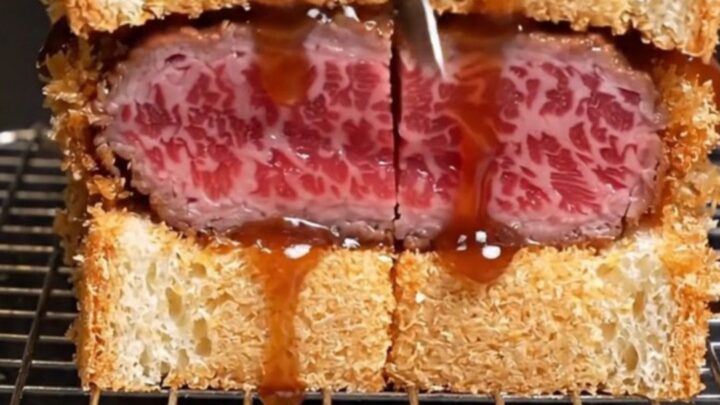
- Assemble the SandwichSpread a generous layer of the miso tonkatsu sauce on the toasted sides of two bread slices. Place the rested Wagyu steak on one slice, then top with the second slice, sauce-side down. Press gently. Using a sharp knife, trim the crusts in four swift cuts and slice the sandwich in half crosswise to show the marbled cross-section.Look for The sandwich holds together neatly, with the pink center visible when cut.Tip Use a serrated knife and a gentle sawing motion to keep the crust intact.
The bread should be lightly toasted, and the sauce spread evenly. The sandwich should hold together when cut, revealing a perfect ruby-pink center. The crust should remain crisp, and the bread should be soft and slightly warm.
Common mistakes
One common mistake is using too low an oil temperature, which makes the panko absorb oil and become greasy instead of crisp. Always use a thermometer and maintain 375°F (190°C). Another is overcooking the Wagyu—since it's so rich, it can quickly become tough and lose its luxurious texture.
Stick to 60 seconds per side. Also, avoid pressing down on the steak while frying, as that can squeeze out juices and make the crust uneven. Finally, don't skip the rest; it's essential for a juicy result.
How to tell it’s done
The Wagyu katsu is done when the crust is deep golden brown and crisp, and the internal temperature reaches 145°F (63°C) for medium-rare.
The center should be ruby pink and warm, not raw. Use an instant-read thermometer inserted from the side to check the temperature without piercing the crust too much.
After resting for at least 3 minutes, the temperature will rise slightly, so you can pull it off the heat at 140°F (60°C) if you prefer a rarer center. The steak should feel firm yet springy when pressed.
- Steaks, chops and roasts: 145°F (63°C) in the thickest part, then a 3-minute rest
- Egg dishes: 160°F (71°C) in the thickest part
Up next · Part 3 of 3
4 variations · storage & make-ahead · 5 answers · printable card
Tips, FAQ & printable recipe (Part 3)← Back to the ingredients (Part 1)