Dinner · Part 1 of 3: Ingredients
A5 Wagyu Katsu Sando: Luxurious Crispy Sandwich
- Prep
- Cook
- Total
- Serves
- 2
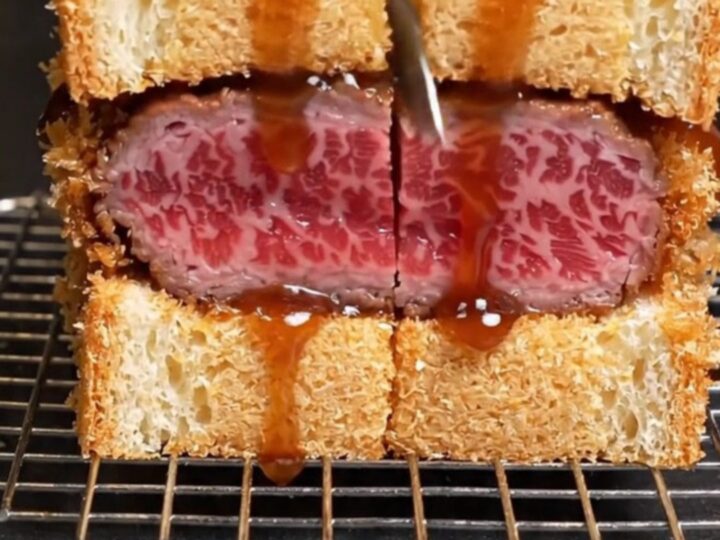
This A5 Wagyu katsu sando is the epitome of indulgence: a slice of ultra-marbled, ruby-rare beef encased in a shattering golden panko crust, cradled by pillowy Japanese milk bread and a tangy miso tonkatsu sauce. It's a sandwich that feels like a celebration, yet comes together in minutes. The key is a lightning-fast fry that keeps the Wagyu luscious and rare, while the crust turns crisp and deep gold. Whether for a special dinner or a solo treat, this is a dish that commands attention.
Katsu sando is a beloved Japanese convenience store classic, but this version takes it to an entirely different level. Using A5 Wagyu—the most marbled beef in the world—elevates the humble sandwich into a luxurious experience.
The secret is a quick flash-fry at high heat, which creates a crisp panko shell while the interior stays warm and rare. The sauce, a blend of tonkatsu sauce and red miso mayo, adds a savory, tangy kick that balances the richness of the beef. This recipe is surprisingly simple, making it achievable for a weeknight or a special occasion.
Ingredients
- 6 oz A5 Wagyu striploin steak, 1 inch thick
- sea salt, to taste
- 1/4 cup all-purpose flour
- 1 large egg yolk
- 1 cup fresh Japanese nama panko
- 2 cups neutral oil, for frying
Sauce
- 2 tbsp tonkatsu sauce
- 1 tsp red miso mayonnaise
- 4 slices crustless Japanese milk bread (shokupan)
Why this recipe works
The method here is all about contrast and temperature. A5 Wagyu is incredibly rich, with a high fat content that melts at a low temperature. By flash-frying the breaded steak for just 60 seconds per side, the exterior becomes deeply golden and crunchy, while the center remains at a perfect medium-rare—ruby pink and tender.
This quick cooking prevents the fat from rendering out completely, keeping the beef juicy and luxurious. The crust, made from fresh nama panko, is airy and shatters with each bite, providing a textural counterpoint to the buttery softness of the beef.
The sauce and bread are chosen to complement, not overpower. Miso tonkatsu sauce adds a savory, slightly sweet tang that cuts through the richness of the Wagyu. The Japanese milk bread is soft and slightly sweet, with a fine crumb that soaks up the sauce without becoming soggy.
Toasting the bread adds a subtle crispness that holds up to the juicy steak. The result is a harmonious balance of textures and flavors—crunchy, tender, savory, and slightly sweet—that makes every bite a memorable experience.
Notes and substitutions
The quality of the beef is paramount. A5 Wagyu is prized for its intense marbling and buttery texture. If you can't find A5, look for a well-marbled ribeye or filet mignon. The steak should be about 1 inch thick to ensure it cooks evenly and stays rare in the center. Fresh nama panko, which is coarser and more moist than regular panko, creates a lighter, flakier crust. If you only have regular panko, it will still work, but the texture will be slightly denser.
For the sauce, use a good-quality tonkatsu sauce, which is a thick, fruity, savory condiment. The red miso mayonnaise adds a fermented umami depth; if you don't have it, mix white miso with regular mayonnaise.
The milk bread, or shokupan, is essential for the authentic texture—its softness and slight sweetness are key. If you can't find it, brioche or a soft white bread can be a substitute, though the flavor will differ slightly. The oil for frying should be neutral, like canola or vegetable, to let the beef shine.
- A5 Wagyu striploin: Ribeye or filet mignon, preferably well-marbled, for a similar rich texture.
- Fresh nama panko: Regular panko breadcrumbs, though the crust will be slightly less airy.
- Red miso mayonnaise: Mix 1 teaspoon white miso with 1 tablespoon regular mayonnaise.
- Tonkatsu sauce: Mix 2 tablespoons ketchup, 1 teaspoon Worcestershire sauce, and 1/2 teaspoon soy sauce.
Equipment
- Deep skillet or heavy pot
- Deep-fry thermometer
- Tongs
- Wire rack
- Sharp chef's knife
- Cutting board
- Small bowl for egg wash
- Shallow dish for flour and panko
Up next · Part 2 of 3
7 steps · 4 min of cooking · what to look for at each stage
Step-by-step instructions (Part 2)