Dinner · Part 2 of 3: Instructions
5-Minute Pourable Gözleme Batter Flatbread Step-by-step instructions
- Prep
- Cook
- Total
- Serves
- 4
Before you start
Before you start, make sure you have all your ingredients ready: flour, water, salt, cheese, scallions, and butter. Whisk the batter in a large bowl until smooth—this takes just a couple of minutes. Shred the cheese if needed and slice the scallions.
Have your skillet or griddle heating over medium-high heat. Keep a spatula and pastry brush nearby. The batter can be made ahead and stored in the refrigerator for up to a day, but it’s best to cook the flatbreads fresh for the crispiest results.
Ingredients at a glance (6)
- 2 cups all-purpose flour
- 2 cups lukewarm water
- 1 tsp fine sea salt
- 1 1/2 cups shredded kaşar cheese (or mozzarella)
- 1/2 cup thinly sliced scallions (green parts only)
- 3 tbsp unsalted butter, melted (for brushing)
Instructions
Whisk and Heat
- Whisk the Pourable BatterIn a large mixing bowl, combine the all-purpose flour, lukewarm water, and fine sea salt. Whisk vigorously until the mixture is completely smooth and has the consistency of a thin pancake batter. There should be no lumps. The batter should be pourable and spread easily.Look for The batter is thin, smooth, and free of lumps, similar to crepe batter.Tip If the batter seems too thick, add a tablespoon of water at a time until it flows easily.
- Heat the SkilletPlace a large nonstick skillet or griddle over medium-high heat. Let it heat for a couple of minutes until a drop of water sizzles and evaporates immediately. You want a hot surface to get those golden leopard spots.Look for The skillet is hot enough when a drop of water dances and evaporates quickly.Tip Do not add oil to the pan; the batter will cook without sticking if the pan is properly heated.
The batter should be completely smooth and thin, like a crepe batter. The skillet should be hot enough that a drop of water sizzles and evaporates immediately. You’re ready to move on when the batter pours easily and the pan is smoking slightly.
Cook and Fold
- Pour the BatterLadle about 1/2 cup of the batter onto the center of the hot skillet. Immediately tilt the pan in a circular motion to spread the batter into a thin, even round, about 8 inches in diameter. Work quickly so the batter sets evenly.Look for The batter spreads into a thin round and begins to set at the edges.Tip Use a ladle or measuring cup with a spout for even pouring.
- Add Cheese and ScallionsSprinkle a generous handful of shredded kaşar cheese and a scattering of sliced scallions over one half of the cooked flatbread, leaving a small border at the edge. The cheese should be evenly distributed but not overflowing.Look for The cheese begins to melt slightly as it hits the warm surface.Tip Don't overfill—too much filling makes folding messy.
- Fold and PressUsing a spatula, carefully fold the empty half of the flatbread over the filling to form a half-moon shape. Press down gently with the spatula to seal the edges and help the cheese melt. The crust should crackle slightly as you press.Look for The flatbread folds neatly into a half-moon and the edges stick together.Tip Press firmly but gently to avoid tearing the thin crust.
- Cook Until GoldenBrush the top of the folded flatbread with some of the melted butter. Cook for 1 to 2 minutes until the bottom is deep golden with toasted leopard spots. Flip carefully and brush the other side with butter. Cook for another 1 to 2 minutes until both sides are golden and crispy.Look for Both sides are golden brown with darker spots, and the crust feels crisp.Tip Adjust the heat if the flatbread browns too quickly—it should sizzle but not burn.
The flatbread should be golden on the bottom and the edges should be crisp. When you fold it, the cheese should start to melt and the edges should stick together. The surface should be bubbling and sizzling as the butter melts.
Finish and Serve
- Slice and ServeTransfer the cooked flatbread to a cutting board. Let it rest for a minute, then slice into wedges with a sharp knife. The crust should crunch audibly as you cut. Serve hot, with a glass of Turkish tea if desired.Look for Slicing produces a crisp crunch and the cheese is stretchy and molten.Tip Cut into 4 to 6 wedges for easy serving.
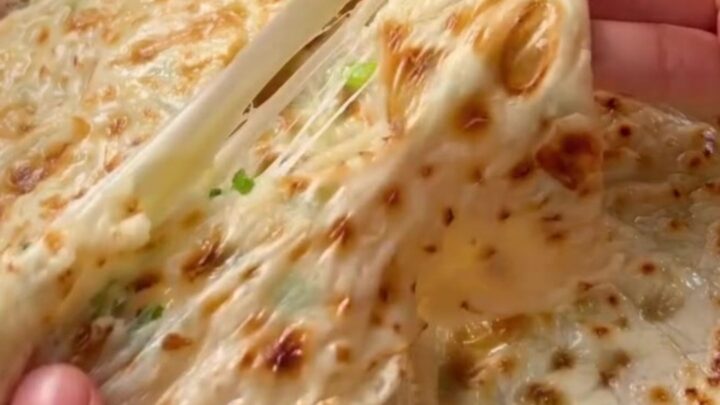
The flatbread should be deep golden brown on both sides, with visible leopard spots. The crust should feel crisp and crackle when pressed. The cheese should be fully melted and stretchy when you cut into it. Serve immediately while hot.
Common mistakes
One common mistake is making the batter too thick, which results in a dense, doughy flatbread. Stick to the ratio of equal parts flour and water, and whisk thoroughly to eliminate lumps.
Another mistake is not heating the skillet enough—if the pan isn’t hot, the batter will absorb oil and become greasy instead of crisp.
Also, be careful not to overfill the flatbread; too much filling can cause it to burst during cooking. Finally, don’t skip the butter brushing—it’s what gives the crust its golden color and crispy texture.
How to tell it’s done
The flatbread is done when both sides are deep golden brown with darker leopard spots, and the crust feels crisp to the touch. When you press the center, it should feel firm, not doughy. The cheese inside should be fully melted and stretchy.
If you cut into the flatbread, the cheese should pull into long ribbons, and the crust should crackle audibly. The internal temperature of the flatbread should be at least 165°F (74°C) if you want to ensure the cheese is fully melted and hot.
Up next · Part 3 of 3
4 variations · storage & make-ahead · 5 answers · printable card
Tips, FAQ & printable recipe (Part 3)← Back to the ingredients (Part 1)