Appetizers · Part 2 of 3: Instructions
Golden Jumbo Lump Crab Cake Sliders with Old Bay Remoulade Step-by-step instructions
- Prep
- Cook
- Total
- Serves
- 4
Before you start
Before starting, set out all your ingredients and let the crab meat chill until ready to use. If using fresh crab, pick through it carefully to remove any bits of shell. Beat the egg in a small bowl and crush the saltine crackers into fine crumbs.
Have your skillet and clarified butter ready, and toast the brioche buns just before serving so they stay warm. A fish spatula will make flipping the crab cakes much easier.
Ingredients at a glance (10)
- 12 oz jumbo lump blue crab meat
- 2 tbsp mayonnaise
- 1 large egg, beaten
- 1 tsp Dijon mustard
- 1 1/2 tsp Old Bay seasoning
- 3 tbsp crushed saltine crackers
- 3 tbsp clarified butter
- 8 mini brioche buns, split and toasted
- Butter lettuce leaves, for serving
- Old Bay remoulade, for serving
Instructions
Phase 1: Prepare the Crab Mixture
- Fold the Crab MixtureIn a large bowl, gently fold the jumbo lump crab meat with the mayonnaise, beaten egg, Dijon mustard, Old Bay seasoning, and crushed saltine crackers. Use a rubber spatula and work in a folding motion, being careful not to break up the crab lumps. The mixture should just come together; it will look loose but will hold its shape when formed.Look for The mixture holds together when pressed but is not pasty or overmixed.Tip Chill the mixture for 15 minutes before forming if time allows; it makes shaping easier.
- Form the SlidersUsing your hands, gently shape the crab mixture into 8 small patties, about 2 inches wide and 1 inch thick. Press lightly so the patties stay together without compacting the crab. Place them on a plate lined with parchment paper.Look for Patties are uniform in size and hold their shape without cracking.Tip If the mixture feels too wet, add a teaspoon more crushed crackers; if too dry, a tiny bit of mayonnaise.
At the end of this phase, you should have a bowl of crab mixture that looks chunky and appetizing, with visible lumps of crab throughout. The binder should be evenly distributed but not overpowering.
When you press a small amount between your fingers, it should hold together without being mushy. The mixture will be soft, but that's exactly what you want for tender crab cakes.
Phase 2: Sear the Crab Cakes
- Heat the Clarified ButterPlace a large skillet over medium heat and add the clarified butter. Heat until the butter shimmers and a small pinch of cracker crumbs sizzles immediately when dropped in. The butter should be hot but not smoking, about 375°F (190°C) if using a thermometer.Look for The butter shimmers and a test crumb sizzles within a second.Tip Clarified butter has a high smoke point, so it won't burn at this temperature.
- Pan-Sear the Crab CakesCarefully place the crab cakes in the hot butter, leaving space between them. Cook for 3 minutes without moving, until the bottom is deep golden brown and crisp. Use a fish spatula to flip them gently, then cook for another 3 minutes until the second side is equally browned and the cakes are heated through to 145°F (63°C) in the center.Look for Both sides are deep golden brown and the cakes feel firm to the touch.Safe temperature 145°F (63°C) internal temperature (shellfish)Tip Resist the urge to flip early; the crust needs time to form and release naturally.
- Drain on Paper TowelsTransfer the cooked crab cakes to a plate lined with paper towels to absorb any excess butter. Let them rest for 1 minute while you assemble the sliders.Look for The crab cakes are crisp on the outside and moist inside.Safe temperature 160°F (71°C) internal temperature (egg dishes)Tip Do not cover them; steam will soften the crust.
The kitchen will smell richly of butter and Old Bay. The crab cakes should be deeply browned on both sides, with a crisp, craggy surface that glistens with butter. When you press gently on a cake, it should feel firm but yield slightly. The internal temperature should read 145°F (63°C). The cakes should release easily from the pan and hold their shape when transferred.
Phase 3: Assemble and Serve
- Toast the Brioche BunsIf the brioche buns are not already toasted, place them cut-side down in the same skillet over medium heat for 30 to 60 seconds, until golden and lightly crisp. Remove and set aside.Look for The cut sides are golden and smell buttery.Tip You can wipe the skillet with a paper towel first to remove any browned bits.
- Assemble the SlidersPlace a butter lettuce leaf on the bottom half of each toasted bun. Set a crab cake on top, then spoon or spread a generous amount of Old Bay remoulade over the crab cake. Cap with the top bun and serve immediately.Look for The sliders are stacked neatly and the remoulade is visible.Tip Serve warm so the crab cakes stay crisp and the buns remain soft.
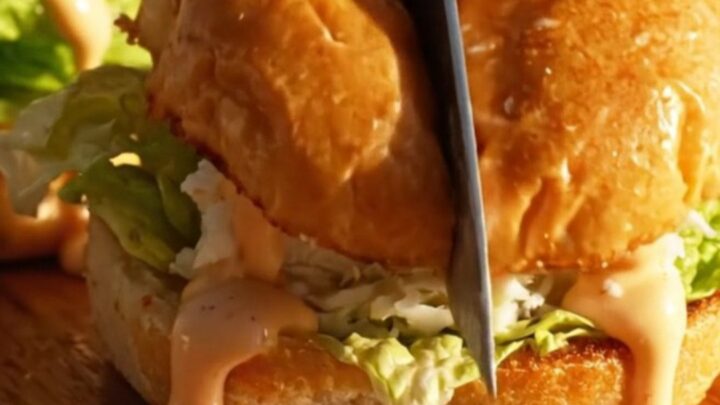
The sliders are assembled and ready to serve. The brioche buns are lightly toasted, the lettuce is crisp, and the remoulade adds a creamy, tangy finish. The crab cakes are still warm and crisp. The presentation is inviting, with the golden crab visible between the bun halves. Serve immediately so the buns stay soft and the crab cakes remain crunchy.
Common mistakes
One common mistake is overmixing the crab mixture, which breaks up the lumps and turns the cakes into a paste. Fold gently until just combined. Another is using too much binder; the mixture should be loose and barely hold together.
If the cakes fall apart in the pan, the mixture is too wet, so add a bit more crushed crackers next time. Finally, be patient when searing: give the cakes time to form a crust before flipping, or they will stick and break.
How to tell it’s done
The crab cakes are done when they are deep golden brown on both sides and feel firm to the touch. The internal temperature should reach 145°F (63°C) for food safety.
To check, insert an instant-read thermometer into the center of one cake; it should read at least 145°F. The cakes will continue to carry over slightly as they rest, so be careful not to overcook them. The crust should be crisp and the center moist and opaque.
- Shellfish: 145°F (63°C) in the thickest part
- Egg dishes: 160°F (71°C) in the thickest part
Up next · Part 3 of 3
4 variations · storage & make-ahead · 5 answers · printable card
Tips, FAQ & printable recipe (Part 3)← Back to the ingredients (Part 1)