Dinner · Part 2 of 3: Instructions
Wok-Charred Drunken Noodles with Chicken and Thai Basil Step-by-step instructions
- Prep
- Cook
- Total
- Serves
- 2
Before you start
Before starting, gather all ingredients and have them prepped and within reach. Slice the chicken, separate the noodles, pound the garlic and chilies, and whisk the sauce.
Heat the wok over high heat for several minutes until it's smoking. Ensure your workspace is clear and you have a spatula ready. This dish cooks fast, so mise en place is crucial.
Ingredients at a glance (11)
- 6 cloves garlic
- 5 red bird's eye chilies
- 3 tbsp oyster sauce
- 2 tbsp fish sauce
- 1 tbsp dark soy sauce
- 1 tbsp palm sugar
- 350 g boneless skinless chicken thighs, sliced
- 400 g wide fresh rice noodles
- 40 g Thai holy basil leaves
- Blistered baby corn, for serving
- Red chili rings, for serving
Instructions
Prep and Aromatics
- Pound the AromaticsIn a mortar and pestle, pound the garlic cloves and red bird's eye chilies into a coarse paste. Set aside. In a small bowl, whisk together the oyster sauce, fish sauce, dark soy sauce, and palm sugar until the sugar dissolves.Look for The garlic and chilies form a rough, fragrant paste with some texture remaining.Tip Pounding releases more flavor than chopping. Use a rocking motion with the pestle.
- Prepare the Noodles and ChickenIf using fresh wide rice noodles, gently separate them with your fingers so they don't clump. Slice the chicken thighs into thin, bite-sized pieces. Have all ingredients within reach of the wok.Look for Noodles are loose and ready to stir-fry; chicken slices are uniform for even cooking.Tip Keep the noodles at room temperature so they don't stick together when hitting the hot wok.
The garlic-chili paste is fragrant and coarse. The sauce is whisked until smooth. The chicken is sliced and the noodles are separated. The wok is heating up and ready for action. Everything is in place for a quick stir-fry.
High-Heat Stir-Fry
- Heat the Wok to SmokingPlace a carbon-steel wok over high heat and let it get smoking hot, about 230°C (450°F). Add a swirl of oil and tilt the wok to coat the sides. The oil should shimmer and just begin to smoke.Look for The wok emits a light smoke; a drop of water flicked in evaporates instantly.Tip A properly seasoned wok is key. If the wok isn't smoking, the noodles won't get that char.
- Sear the ChickenAdd the sliced chicken to the wok in a single layer. Let it sear undisturbed for 1–2 minutes until browned on one side, then stir-fry for another minute until the chicken is cooked through and reaches 165°F (74°C).Look for Chicken is golden brown on the edges and no longer pink inside.Safe temperature 165°F (74°C) internal temperature (poultry)Tip Don't overcrowd the pan; give the chicken room to brown rather than steam.
- Add the Pounded AromaticsPush the chicken to one side of the wok. Add the pounded garlic-chili paste to the empty space and stir-fry for 20–30 seconds until fragrant. Then toss everything together.Look for The aroma of garlic and chilies becomes intense and pungent.Tip Stir-fry the paste briefly to avoid burning; it should become aromatic, not bitter.
- Toss in the Noodles and SauceAdd the wide rice noodles to the wok, then pour the sauce mixture over the top. Toss and stir-fry vigorously for 2–3 minutes, letting the noodles char slightly on the edges. Use a spatula to lift and flip the noodles continuously.Look for Noodles are coated in glossy sauce with charred spots appearing on the edges.Tip Keep the heat high; the goal is to achieve wok hei, the smoky flavor from high-heat stir-frying.
- Finish with Thai BasilAdd the Thai holy basil leaves to the wok and toss for 30 seconds until they wilt. The basil should be fragrant and just softened, not fully cooked.Look for Basil leaves are wilted but still bright green and aromatic.Tip Adding basil at the end preserves its peppery flavor and vibrant color.
The wok is smoking, the chicken is seared and cooked through, and the aromatics are fragrant.
The noodles are glossy with charred edges and the basil is just wilted. The kitchen smells of smoke, garlic, and basil — the hallmark of wok hei.
Serve and Garnish
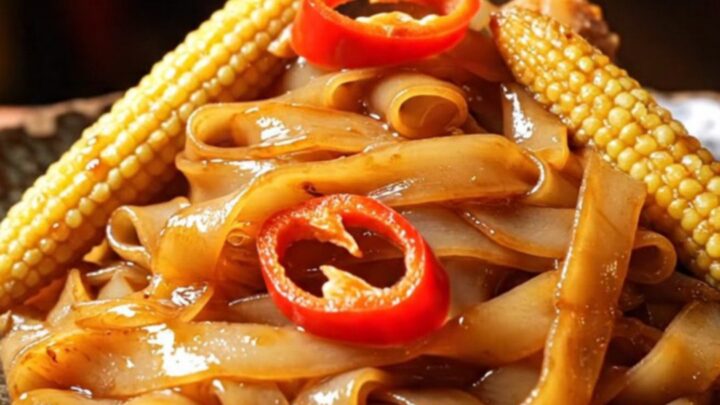
- Plate and GarnishTransfer the noodles to a serving plate. Top with blistered baby corn and red chili rings for extra heat and texture. Serve immediately while hot.Look for The dish is glossy, smoky, and garnished with vibrant red and green.Tip Have plates ready before you start cooking; this dish waits for no one.
The noodles are plated with blistered baby corn and red chili rings. The dish is vibrant, glossy, and steaming. The charred edges and fresh basil make it look straight from a night market. Serve immediately for the best texture and flavor.
Common mistakes
A common mistake is not heating the wok enough, resulting in steamed rather than charred noodles. Another is overcrowding the pan, which lowers the temperature and causes the chicken to boil.
Avoid adding the basil too early, as it will lose its flavor. Also, don't stir-fry for too long; the noodles should remain slightly chewy, not soft.
How to tell it’s done
The dish is done when the chicken is fully cooked and reaches an internal temperature of 165°F (74°C), the noodles are coated in sauce with charred edges, and the basil is wilted but still green.
The aroma should be smoky and fragrant. Taste a noodle for seasoning; it should be salty, sweet, and spicy with a distinct char flavor.
- Poultry: 165°F (74°C) in the thickest part
Up next · Part 3 of 3
4 variations · storage & make-ahead · 5 answers · printable card
Tips, FAQ & printable recipe (Part 3)← Back to the ingredients (Part 1)