Desserts · Part 2 of 3: Instructions
Whole Lemon Loaf with Citrus Glaze Step-by-step instructions
- Prep
- Cook
- Total
- Serves
- 10
Before you start
Preheat the oven to 350°F (175°C). Grease and flour a 9x5-inch loaf pan, or line with parchment paper for easy removal. Wash the lemon thoroughly and chop it into chunks, removing any seeds.
Measure all ingredients and have them ready. Set up a blender and a mixing bowl. Let the eggs and milk come to room temperature for a smoother batter.
Ingredients at a glance (10)
- 1 whole seeded lemon, unpeeled, chopped
- 3 large eggs
- 1 cup granulated sugar
- 1/2 cup milk
- 1/2 cup vegetable oil
- 2 cups all-purpose flour
- 1 packet baking powder (about 2 1/2 tsp)
- 1 packet vanilla sugar (about 2 tsp)
- 1 cup powdered sugar
- 2 tbsp freshly squeezed lemon juice
Instructions
Blend and Mix
- Blend the wet ingredientsPreheat the oven to 350°F (175°C). Grease and flour a 9x5-inch loaf pan. In a blender, combine the chopped whole lemon (seeds removed), eggs, granulated sugar, milk, and vegetable oil. Blend until completely smooth, about 30 seconds. The mixture should be bright yellow and aromatic.Look for The puree is smooth with no visible lemon chunks.Tip Make sure the lemon is thoroughly blended; any large pieces will create bitter pockets.
- Combine dry ingredientsPour the lemon puree into a large mixing bowl. Sift the all-purpose flour, baking powder, and vanilla sugar over the wet mixture. Whisk gently until just combined, being careful not to overmix. The batter should be smooth and thick enough to form a ribbon when lifted.Look for The batter is lump-free and falls in a thick ribbon.Tip Sifting removes lumps and aerates the flour for a lighter crumb.
- Pour into the panPour the batter into the prepared loaf pan and smooth the top with a spatula. Bake for 50 to 60 minutes, or until a toothpick inserted into the center comes out clean. The internal temperature of the loaf should reach 200°F (93°C) for a fully baked crumb.Look for The top is golden brown and the loaf springs back when pressed.Safe temperature 160°F (71°C) internal temperature (egg dishes)Tip If the top browns too quickly, tent loosely with foil after 30 minutes.
The lemon puree is smooth and fragrant, with no visible chunks. The batter is thick, glossy, and falls off the whisk in a ribbon. The aroma is intensely citrusy and sweet. The batter is ready to pour into the pan.
Bake and Cool
- Cool the loafRemove the loaf from the oven and let it cool in the pan for 10 minutes. Then transfer to a wire rack to cool completely, about 1 hour. This step is essential before glazing so the glaze doesn't melt into the warm loaf.Look for The loaf is cool to the touch and no steam rises from the center.Tip Cooling completely prevents the glaze from soaking in and becoming sticky.
- Make the glazeIn a small bowl, whisk together the powdered sugar and lemon juice until smooth. The glaze should be thick and opaque, but still pourable. If it's too thick, add a few drops of lemon juice; if too thin, add more powdered sugar.Look for The glaze is white and thick enough to hold a ribbon shape for a second.Tip Use freshly squeezed lemon juice for the brightest flavor.
The loaf is golden brown, risen with a slight crack down the center. A toothpick comes out clean.
The kitchen smells of baked lemon. The loaf cools completely on a wire rack, and the glaze is thick, white, and pourable.
Glaze and Slice
- Glaze the loafOnce the loaf is completely cool, drizzle the glaze in generous zigzag ribbons over the top. Let the glaze set for at least 15 minutes before slicing. This allows the glaze to firm up slightly, creating a glossy crust.Look for The glaze is set and no longer sticky to the touch.Tip For a thicker glaze, let it set longer or add a bit more powdered sugar.
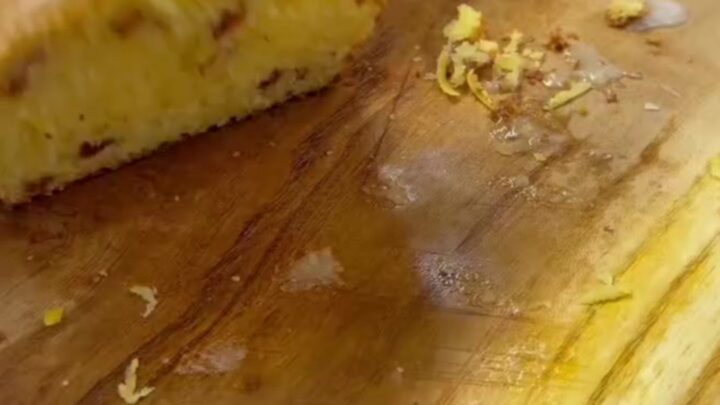
- Slice and serveSlice the loaf with a serrated knife into thick, even slices. The crumb should be vibrant yellow, moist, and tender. Serve immediately or store in an airtight container for up to 3 days.Look for The slices show a moist, yellow crumb with a glossy glaze.Tip Use a serrated knife and gentle sawing motion to avoid crushing the loaf.
The glaze has set into a glossy, crackly crust. Slicing reveals a moist, yellow crumb with no dry spots. The texture is tender and springy. The loaf is ready to serve.
Common mistakes
Overmixing the batter can develop gluten and make the loaf tough. Mix just until the flour is incorporated. Not blending the lemon enough leaves bitter chunks.
Blend until completely smooth. Skipping the cooling step before glazing causes the glaze to melt and soak in, leaving a sticky mess. Let the loaf cool completely on a wire rack.
How to tell it’s done
The loaf is done when a toothpick inserted into the center comes out clean or with only a few moist crumbs. The top should be golden brown and spring back when pressed gently.
The internal temperature of the loaf should read 200°F (93°C) on an instant-read thermometer. If the top browns too quickly, tent with foil for the last 15 minutes.
- Egg dishes: 160°F (71°C) in the thickest part
Up next · Part 3 of 3
4 variations · storage & make-ahead · 5 answers · printable card
Tips, FAQ & printable recipe (Part 3)← Back to the ingredients (Part 1)