Drinks · Part 2 of 3: Instructions
Warm Crockpot Cranberry Apple Cider Step-by-step instructions
- Prep
- Cook
- Total
- Serves
- 8
Before you start
Before beginning, ensure the slow cooker is clean and placed on a flat, heat-resistant surface near an electrical outlet. Wash the fresh cranberries and oranges thoroughly under cold running water to remove any debris. Using a sharp knife and a stable cutting board, slice the oranges into even rounds, removing any visible seeds if possible.
Have all ingredients measured and ready to ensure the assembly process is quick and efficient. Verify that there is enough space in the slow cooker for all ingredients without filling it past the maximum capacity line, which typically allows for a few inches of headspace to prevent splashing.
Ingredients at a glance (4)
- 2 oranges, sliced into rounds
- 2 cups fresh cranberries
- 4 whole cinnamon sticks
- 8 cups apple cider
Instructions
Layering the fruit
- Layer the aromaticsPlace the orange slices in the bottom of the slow cooker to create a flavorful base. Scatter the fresh cranberries evenly over the citrus slices to ensure they infuse the liquid during the heating process.Look for Orange slices are at the bottom and cranberries are distributed on top.Tip Using a slow cooker ensures a slow, even infusion of the fruit flavors.
At this stage, the slow cooker should contain a neat, even layer of orange slices at the base, topped with a vibrant scatter of fresh cranberries.
Ensure the fruit is evenly distributed so that the flavors will integrate properly once the cider is added. The setup should look organized, with no overcrowding, providing a clean foundation for the liquid and spices to follow.
Adding spice and liquid
- Add spice and ciderAdd the whole cinnamon sticks to the slow cooker on top of the fruit. Carefully pour the apple cider over the ingredients, ensuring everything is submerged for maximum flavor extraction.Look for All ingredients are added and the cider covers the fruit and spices.Tip Ensure the cinnamon sticks are fully immersed in the liquid.
The cinnamon sticks should be tucked among the cranberries so they are fully submerged in the apple cider. Once the cider is poured in, verify that the liquid covers the fruit entirely. The contents should look settled, with the aromatics beginning to interact with the cider. Check that the lid is properly seated to start the slow, controlled heating process.
Heating and serving
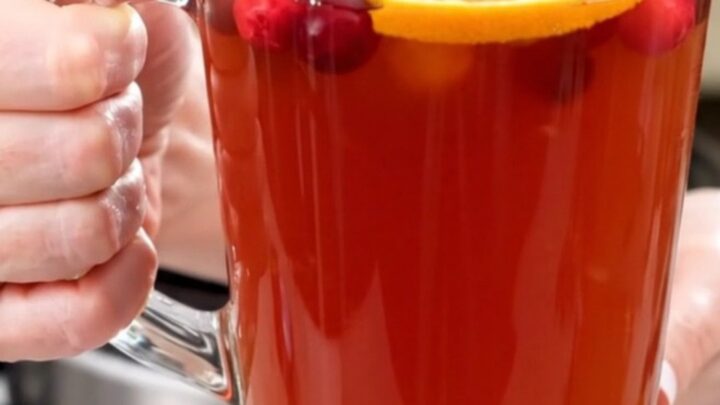
- Heat and serveCover the slow cooker and heat on low for three hours. Once finished, ladle the hot cider into mugs and garnish each serving with a fresh orange slice if desired.Look for The cider is hot, aromatic, and steaming.Tip Keep the slow cooker on the warm setting if serving over an extended period.
After three hours, the cider should be deeply fragrant and steaming. The cranberries will be soft and the orange slices will have infused the cider with their bright citrus notes. Ladle the cider carefully into heat-proof mugs, ensuring a consistent mix of the infused liquid. Check that the temperature is hot enough for serving, providing a comforting experience.
Common mistakes
Avoid overfilling the slow cooker, as this can lead to spills and uneven heating. Do not use ground cinnamon instead of whole sticks, as it will create a gritty texture and make the cider cloudy.
Ensure the slow cooker lid remains securely in place throughout the heating process to prevent the loss of aromatics through steam. Finally, do not leave the cider on the high setting for the entire duration, as this can cause the liquid to reduce too much and become overly concentrated or burnt.
How to tell it’s done
The cider is ready when the liquid is steaming and fragrant, and the cranberries have softened significantly, with some potentially bursting. The orange slices should appear slightly translucent as they release their juices into the cider.
Use a ladle to check the consistency; the cider should be clear and aromatic. There is no protein to cook, so no internal temperature check is required, but ensure the liquid is heated throughout to a temperature that is pleasant for drinking, typically around 160°F.
Up next · Part 3 of 3
2 variations · storage & make-ahead · 3 answers · printable card
Tips, FAQ & printable recipe (Part 3)← Back to the ingredients (Part 1)