Desserts · Part 2 of 3: Instructions
Viral Whole-Lemon Blender Cake with Walnuts Step-by-step instructions
- Prep
- Cook
- Total
- Serves
- 10
Before you start
Preheat the oven to 350°F (175°C). Line a 9x5-inch loaf pan with parchment paper, leaving overhang on the long sides for easy removal. Wash and slice the lemon into wedges.
Measure all ingredients and have them ready. Toast the walnuts if not already toasted, and chop them coarsely. Set out a blender and a large mixing bowl.
Ingredients at a glance (11)
- 1 whole bright-yellow lemon, washed and sliced into wedges
- 3 large eggs
- 1 cup vegetable oil
- 1 cup whole milk
- 1 cup granulated sugar
- 2 1/2 cups all-purpose flour
- 1 packet baking powder (about 2 1/2 tsp)
- 1 cup chopped toasted walnuts
- 1 cup powdered sugar
- 3 tbsp fresh lemon juice
- 1 tbsp softened butter
Instructions
Blend and Mix
- Blend the lemon mixturePreheat the oven to 350°F (175°C). Line a 9x5-inch loaf pan with parchment paper, leaving overhang on the long sides. Place the whole lemon wedges, eggs, vegetable oil, whole milk, and granulated sugar in a blender. Blend on high until completely smooth and pale yellow, about 30 to 45 seconds. Stop and scrape down the sides to ensure no lemon chunks remain.Look for The mixture should be velvety smooth, with no visible lemon pieces or pulp.Tip Wash the lemon well before slicing; you'll be using the entire peel.
- Fold in the dry ingredientsPour the blended mixture into a large mixing bowl. Add the all-purpose flour, baking powder, and chopped toasted walnuts. Fold gently with a silicone spatula just until no dry streaks remain. Do not overmix; the batter should be thick but pourable.Look for The batter should be thick and slightly lumpy, with walnuts evenly distributed.Tip Fold in a figure-eight motion to avoid developing gluten, keeping the cake tender.
After blending, the mixture should be a smooth, pale yellow liquid with no visible lemon pieces. When you add the dry ingredients, the batter will be thick and slightly lumpy, with walnuts evenly distributed. The aroma should be fresh and citrusy, with a hint of nuttiness from the toasted walnuts.
Bake to Golden
- Bake the loafPour the batter into the prepared loaf pan and smooth the top. Dip a knife in softened butter and score a neat line down the center of the batter. Bake at 350°F (175°C) for 55 to 65 minutes, until the top is golden and cracked and a toothpick inserted into the center comes out clean or with a few moist crumbs.Look for The cake will rise into a high domed crown with a deep golden crack down the middle.Safe temperature 160°F (71°C) internal temperature (egg dishes)Tip If the top browns too quickly, tent loosely with foil after 40 minutes.
The cake will rise into a high dome, and the butter score will create a deep crack down the center. The top will turn a rich golden brown, and the kitchen will fill with the warm scent of lemon and toasted nuts.
A toothpick inserted into the center should come out clean, and the cake should feel springy to the touch.
Glaze and Finish
- Glaze and coolWhile the cake is still hot from the oven, whisk the powdered sugar with the fresh lemon juice in a small bowl until smooth. Pour the glaze over the hot cake, spreading it to the edges so it cascades down the sides. Let the cake cool in the pan for 10 minutes, then transfer to a wire rack to cool completely before slicing.Look for The glaze will turn translucent and glossy as it sets on the warm crust.Tip For a thicker glaze, add a little more powdered sugar; for thinner, add more lemon juice.
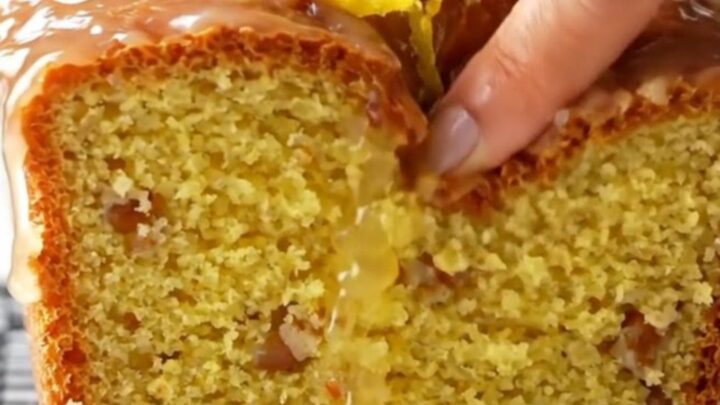
The glaze will sizzle slightly as it hits the hot cake, then set into a translucent, glossy coating that drips down the sides. The cake should be cool enough to handle but still warm inside. When sliced, the crumb should be bright yellow, moist, and tender, with visible walnut flecks.
Common mistakes
Overmixing the batter after adding the flour can develop gluten and result in a tough, dense cake. Fold gently until just combined. Another common mistake is under-blending the lemon—if the mixture isn't completely smooth, you'll end up with bitter chunks in the cake.
Blend until no pieces remain. Finally, don't skip the butter score line; it helps the cake crack evenly and creates a beautiful crown.
How to tell it’s done
The cake is done when the top is deeply golden and cracked, and a toothpick inserted into the center comes out clean or with a few moist crumbs. The internal temperature should register at least 160°F (71°C) in the center.
If the top browns too quickly, tent with foil. Let the cake cool in the pan for 10 minutes before glazing; the glaze will soak into the warm cake, creating a moist, flavorful crust.
- Egg dishes: 160°F (71°C) in the thickest part
Up next · Part 3 of 3
4 variations · storage & make-ahead · 5 answers · printable card
Tips, FAQ & printable recipe (Part 3)← Back to the ingredients (Part 1)