Breakfast · Part 2 of 3: Instructions
Viral Fluffy Japanese Soufflé Pancakes Step-by-step instructions
- Prep
- Cook
- Total
- Serves
- 2
Before you start
Before you begin, ensure all your ingredients are measured and ready to go. The process moves quickly once the meringue is whipped, so having your griddle warmed to 300°F (150°C) in advance is crucial.
Make sure your mixing bowls are clean and dry, particularly the one used for the egg whites, as any trace of fat or moisture will prevent the whites from reaching the necessary stiff peaks required for that signature height.
Ingredients at a glance (10)
- 2 eggs, separated
- 2 tbsp whole milk
- 1 tsp vanilla extract
- 30 g cake flour
- 2 tbsp superfine sugar
- 1/8 tsp cream of tartar
- 2 drops water
- 1 pat whipped salted butter
- 2 tbsp maple syrup
- 1 tsp powdered sugar
Instructions
Custard Base Preparation
- Prepare the Custard BaseIn a medium mixing bowl, whisk the egg yolks with the milk, vanilla extract, and cake flour until the mixture is completely smooth and pale. Ensure there are no lumps of flour remaining in the custard base.Look for The mixture should be perfectly smooth and pale yellow.Tip Sift the cake flour before adding to the yolks to prevent clumps.
The custard base should be perfectly smooth, pale, and free of any lumps. It serves as the flavorful foundation for the pancakes, so ensure the vanilla and flour are fully incorporated. It will have a thick, pourable consistency that is ready to be lightened by the meringue.
Meringue Creation
- Whip the MeringueIn a separate chilled copper or glass bowl, whip the egg whites with the cream of tartar and superfine sugar using an electric mixer until glossy, stiff, upright peaks form. Do not overbeat, as the meringue should remain stable but not dry.Look for Peaks should stand straight up without drooping when the beaters are lifted.Safe temperature 160°F (71°C) internal temperature (egg dishes)Tip Ensure your bowl and beaters are free of any fat or oil residue.
The meringue is ready when it forms stiff, glossy peaks that hold their shape perfectly when the whisk is removed. It should look like thick, whipped cream. This is the most critical stage for volume, so check that it is stable and not grainy or weeping liquid.
Folding and Steaming
- Fold, Pipe, and CookGently fold the meringue into the yolk batter in three batches using a silicone spatula to maintain volume. Pipe the batter onto a warm, lidded non-stick griddle at 300°F (150°C), add two drops of water, cover, and steam for five minutes. Gently flip the pancakes, then finish cooking until set to 160°F (74°C).Look for The pancakes should wobble when the pan is nudged.Safe temperature 160°F (71°C) internal temperature (egg dishes)Tip Be extremely gentle during the folding process to keep the air bubbles intact.
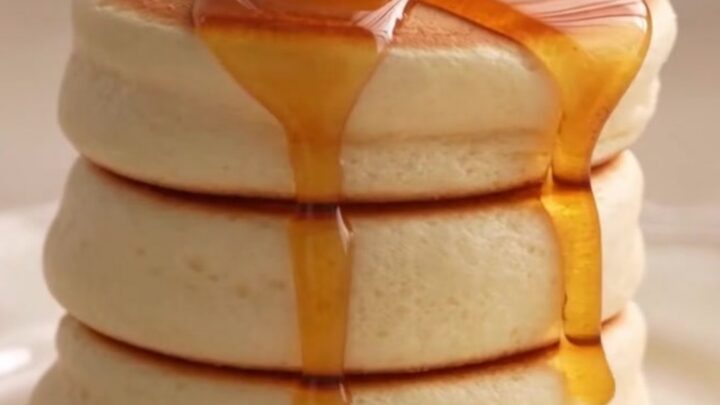
The final batter should be thick and airy, looking like a light, fluffy cloud. Once piped, the pancakes will rise beautifully under the lid. When done, they will be golden brown on the bottom, set on the sides, and exhibit that signature wobble when the griddle is gently shaken.
Common mistakes
A common mistake is over-mixing the batter during the folding stage, which deflates the air bubbles and results in flat, dense pancakes.
Another error is failing to create stiff peaks with the meringue; if the peaks are soft or runny, the pancakes will lack the structural integrity to rise.
Finally, cooking at too high a temperature will burn the bottom before the center sets, so maintain a steady, low heat throughout.
How to tell it’s done
The pancakes are done when they have risen to a tall, stable height and feel firm yet springy to the touch. When you insert a toothpick into the center, it should come out clean.
Internally, the eggs should reach 160°F (74°C) to be considered fully cooked through. Serve them immediately after cooking to enjoy the maximum wobble and fluffiness before they begin to naturally deflate as they cool.
- Egg dishes: 160°F (71°C) in the thickest part
Up next · Part 3 of 3
2 variations · storage & make-ahead · 3 answers · printable card
Tips, FAQ & printable recipe (Part 3)← Back to the ingredients (Part 1)