Breakfast · Part 2 of 3: Instructions
Viral Caramelized Croissant Waffle Hack Step-by-step instructions
- Prep
- Cook
- Total
- Serves
- 2
Before you start
Before beginning, ensure that your waffle iron is placed on a stable, heat-resistant surface. Allow the iron to reach the required temperature of 185 degrees Celsius before adding the pastries. Prepare a small shallow bowl for the turbinado sugar to make the coating process quick and efficient.
Have your toppings, such as the whipped cream and cookie butter, measured and ready to go, as the croffles are best served immediately after coming off the heat to preserve the crispness of the caramelized exterior.
Ingredients at a glance (5)
- 2 proofed all-butter croissants
- 30 grams coarse raw turbinado sugar
- 1/4 cup whipped cream
- 25 grams melted cookie butter
- 1 tbsp crushed biscuits
Instructions
Coating the Croissants
- Prepare the croissantsRoll each proofed butter croissant thoroughly in the coarse raw turbinado sugar. Ensure that every flaky, laminated layer is evenly coated with the sugar crystals to guarantee a deep, uniform caramelization during the cooking process.Look for The surface of the croissant should be completely covered in sugar crystals.Tip Press the sugar firmly into the dough layers to ensure it sticks well.
The croissants should look completely coated with a thick, sparkling layer of turbinado sugar. Ensure there are no bare spots on the dough, as these areas will not caramelize properly in the iron. Check that the sugar is pressed firmly into the crevices of the pastry so it does not fall off during the transfer to the hot waffle iron.
Cooking the Croffles
- Press the wafflesPlace the sugar-coated croissants into a preheated waffle iron set to 185 degrees Celsius. Close the lid carefully and press down firmly to ensure the dough spreads into the grid pattern. Cook for exactly three minutes until the butter sizzles and the sugar melts into a glassy, golden finish.Look for The waffle iron should show steam escaping as the butter sizzles.Tip Avoid opening the waffle iron too early, as this can tear the delicate dough.
Listen for the steady sizzle of butter as the croissants press into the hot iron. The smell of caramelizing sugar should be apparent within the first minute of cooking. After three minutes, the croffles should have expanded and taken on a firm, rigid structure with a dark golden-brown grid pattern across the entire surface.
Final Topping
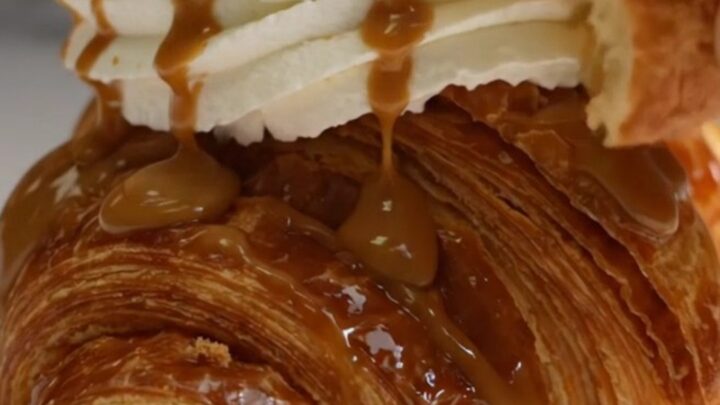
- Final assemblyCarefully remove the hot croffles from the iron and place them on a serving plate. Immediately drizzle the melted cookie butter over the top. Add a generous dollop of whipped cream and finish by sprinkling the crushed biscuits over the entire dish before serving while still warm.Look for The cookie butter should be warm and pourable.Tip Serve immediately to maintain the contrast between the crispy shell and flaky interior.
The croffles should be removed carefully and immediately topped while still steaming. The cookie butter should be drizzled in thin ribbons to allow for a beautiful presentation.
Ensure the whipped cream is added just before serving so it does not melt excessively, maintaining the temperature contrast between the warm pastry and the cold, airy cream.
Common mistakes
A common mistake is using a waffle iron that is not hot enough, which prevents the sugar from caramelizing into a crisp crust and may cause the pastry to stick to the plates. Another error is over-crowding the iron; always cook one or two at a time to ensure even heat distribution.
Avoid using croissants that lack sufficient butter, as the lack of fat will prevent the necessary sizzle and result in a dry, unappealing texture that fails to crisp properly under pressure.
How to tell it’s done
The croffles are done when the exterior has achieved a deep, golden-brown color and the sugar has melted into a glassy, uniform shell. The butter should have sizzled out during the process, leaving the crust firm to the touch.
When pressed with a fork, the surface should offer a distinct, crackling resistance. There is no internal temperature requirement for this pastry, but visually confirming the caramelized grid pattern is the best way to ensure the perfect texture.
Up next · Part 3 of 3
2 variations · storage & make-ahead · 3 answers · printable card
Tips, FAQ & printable recipe (Part 3)← Back to the ingredients (Part 1)