Dinner · Part 2 of 3: Instructions
Velvety Coconut Red Lentil Dal for Easy Weeknight Dinners Step-by-step instructions
- Prep
- Cook
- Total
- Serves
- 6
Before you start
Before you begin, ensure all your ingredients are measured and ready. Dice the onion finely to ensure it softens completely during the cooking process. Mince the garlic and grate the fresh ginger using a microplane or fine grater to release maximum flavor.
Rinse the red lentils thoroughly under cold running water in a fine-mesh sieve; this step is critical to remove excess starch, which prevents the dal from becoming overly gummy or cloudy during the long slow-cook process.
Ingredients at a glance (13)
- 2 cups split red lentils, rinsed
- 14 oz crushed tomatoes
- 1 onion, diced
- 4 cloves garlic, minced
- 1 tbsp fresh ginger, grated
- 1 tbsp garam masala
- 1 tbsp turmeric powder
- 4 cups vegetable broth
- 14 oz full-fat coconut milk
- 1 tbsp fresh lime juice
- 2 tbsp ghee
- 1 tsp cumin seeds
- 1/4 cup fresh cilantro leaves, for serving
Instructions
Phase 1: Setting up the Base
- Combine IngredientsAdd the rinsed red lentils, crushed tomatoes, diced onion, minced garlic, grated ginger, garam masala, turmeric, and vegetable broth into the slow cooker basin. Stir thoroughly to ensure the spices are evenly distributed throughout the mixture. Place the lid on the slow cooker and ensure it is sealed properly before starting the cooking cycle.Look for All ingredients are combined in the pot.Tip Make sure to rinse the lentils well under cold water until the water runs clear to remove excess starch.
At the end of this phase, all ingredients should be combined in the slow cooker. The mixture will appear layered, with the lentils, tomatoes, and aromatics resting in the vegetable broth. Ensure the lid is securely in place so that the moisture remains trapped inside. The smells should be fresh, with the sharp notes of raw onion, garlic, and ginger dominant before the cooking process begins to mellow and meld them.
Phase 2: The Slow Simmer
- Slow CookSet the slow cooker to the LOW setting and cook for 5 hours. During this time, the lentils will absorb the liquid and soften into a thick, velvety purée. Avoid opening the lid frequently, as this allows heat to escape and increases the cooking time significantly.Look for Lentils are soft and broken down.Tip If the dal looks too thick after 5 hours, add a splash of warm water or broth to reach the desired consistency.
After five hours of cooking, the dal will have transformed significantly. The lentils will have absorbed most of the liquid, creating a thick, golden, and uniform purée.
The harsh aroma of raw aromatics will have been replaced by a deep, earthy, and fragrant spice profile. The mixture should look cohesive and velvety. If it appears dry, you may stir in a small amount of warm water to achieve your preferred consistency.
Phase 3: Finishing Touches
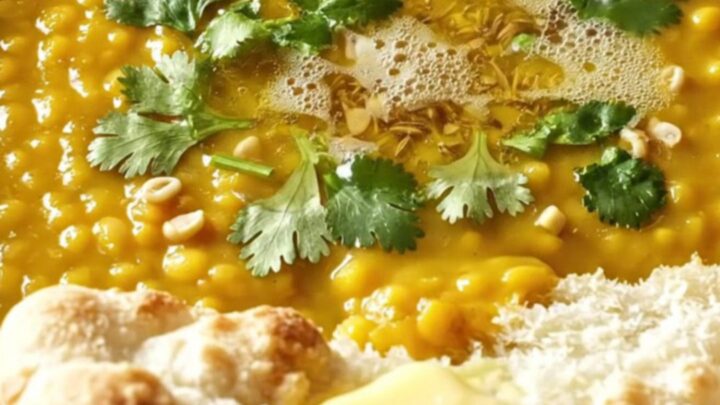
- Finish and ServeOnce the lentils have reached a velvety texture, stir in the full-fat coconut milk and fresh lime juice until fully incorporated. In a small skillet, heat the ghee and sizzle the cumin seeds for 30 seconds until fragrant. Ladle the dal into bowls, top with the cumin-infused ghee and fresh cilantro, and serve warm with naan.Look for The dal is creamy and the topping is aromatic.Tip Fresh lime juice brightens the flavors of the dish significantly, so do not skip this step.
In this final phase, the addition of coconut milk and lime juice turns the golden dal into a rich, creamy, and bright dish. The sizzle of the cumin-infused ghee adds a final layer of aromatic complexity. The finished dal should be smooth, warm, and fragrant. The topping should be vibrant, with the green cilantro providing a fresh contrast to the rich yellow-orange base. It is now ready to be ladled into warm bowls.
Common mistakes
A common mistake is failing to rinse the lentils, which can lead to an unappealing texture. Another error is adding the coconut milk too early; always stir it in after the long cook time to maintain its creamy integrity.
Avoid using light coconut milk, as it lacks the necessary fat content to create the desired velvetiness. Lastly, be careful not to rush the cooking process; the low, slow heat is what allows the spices to fully bloom and the lentils to reach their peak texture.
How to tell it’s done
The dal is done when the red lentils have completely lost their shape and transformed into a thick, uniform, golden purée. The mixture should be velvety and smooth when stirred. The aromatics, such as onions and garlic, should be fully softened and integrated into the base.
If you notice any whole lentils remaining, continue to cook for an additional 30 minutes, although five hours is generally sufficient for the lentils to reach this desired state of total softness.
Up next · Part 3 of 3
2 variations · storage & make-ahead · 3 answers · printable card
Tips, FAQ & printable recipe (Part 3)← Back to the ingredients (Part 1)