Dinner · Part 2 of 3: Instructions
Upside-Down Skillet Pepperoni Pizza with Crispy Caramelized Crust Step-by-step instructions
- Prep
- Cook
- Total
- Serves
- 4
Before you start
Before starting, make sure the pizza dough is at room temperature for easier handling. Shred the provolone if it isn't already shredded, and measure out the pepperoni and sauce.
Preheat the oven to 450°F (232°C) so it's ready when the pizza is assembled. Have a cutting board or large plate ready for the flip, and keep oven mitts nearby. Lightly flour a work surface for stretching the dough.
Ingredients at a glance (5)
- 350 g pizza dough
- 200 g provolone cheese, shredded
- 100 g pepperoni slices
- 1/2 cup pizza sauce
- 2 tbsp grated Parmigiano-Reggiano
Instructions
Layer and Assemble
- Layer the toppings in the skilletPlace a 10-inch cast-iron skillet on the stovetop over low heat to warm slightly. Evenly scatter the shredded provolone cheese across the bottom of the skillet, covering it completely. Arrange the pepperoni slices in a single layer over the cheese. Spoon the pizza sauce over the pepperoni and spread it gently to the edges, leaving a small border. The sauce should not reach the sides of the skillet, as it will bubble up during baking.Look for The cheese and pepperoni form a solid, even layer with sauce spread on top.Tip Keep the sauce layer thin so the dough doesn't become soggy.
- Top with the doughOn a lightly floured surface, stretch or roll the pizza dough into a round about 10 inches in diameter. Carefully lift the dough and place it over the sauce, tucking the edges down around the filling inside the skillet. The dough should cover the entire surface, with the edges slightly overlapping the sauce. Press gently to seal the edges against the skillet wall.Look for The dough covers the filling completely, with no gaps.Tip If the dough springs back, let it rest for 5 minutes before stretching again.
The skillet is filled with a neat, even layer of provolone, pepperoni, and sauce, topped with a round of raw dough that covers the filling completely. The dough should be smooth and taut, with no tears or gaps. The edges are tucked against the skillet wall. The skillet is ready to go into the oven.
Bake to Golden Brown
- Bake the pizzaHeat the oven to 450°F (232°C). Place the skillet in the oven and bake for 20 minutes, until the top of the dough is puffed and deep golden brown. The cheese underneath will melt and caramelize, and the edges of the dough will crisp against the hot cast iron. If the top browns too quickly, tent loosely with foil during the last 5 minutes.Look for The crust is golden brown and puffed, and you can see bubbling around the edges.Tip Bake on the lowest rack for a crisper bottom crust.
After 20 minutes in the oven, the dough is puffed and deeply golden, with a slightly darker ring around the edges where it touched the cast iron.
A few bubbles of cheese may be visible along the sides. The kitchen smells of toasted bread and pepperoni, and the top crust feels firm and crisp when tapped.
Flip and Serve
- Flip and finishRemove the skillet from the oven and let it cool for 2 minutes. Place a cutting board or large plate over the skillet. Using oven mitts, carefully invert the skillet and board together, then lift the skillet away to reveal the pizza with the caramelized cheese and pepperoni on top. Sprinkle with grated Parmigiano-Reggiano while hot. Slice into wedges and serve immediately.Look for The pizza releases cleanly from the skillet, showing a golden, blistered cheese crust.Tip Use a sturdy cutting board that fully covers the skillet to avoid spills.
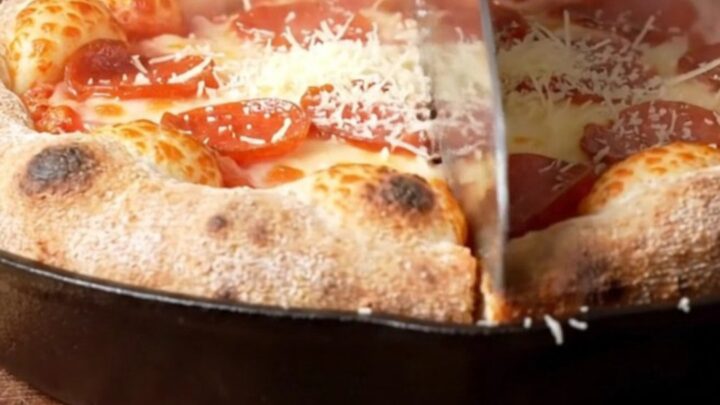
The pizza flips out onto the cutting board with the caramelized cheese and pepperoni facing up, blistered and golden. The crust is crisp and holds its shape when sliced. The Parmigiano-Reggiano melts slightly on contact, adding a nutty, salty finish. The pizza is ready to serve immediately.
Common mistakes
One common mistake is using too much sauce, which can make the dough soggy and prevent it from crisping. Keep the sauce layer thin and spread it evenly. Another issue is not sealing the dough edges properly, allowing filling to leak out during baking.
Press the dough firmly against the skillet wall. Also, avoid over-browning the top before the bottom is done—if the top is getting too dark, tent with foil and continue baking.
How to tell it’s done
The pizza is done when the top of the dough is deep golden brown and puffed, and the edges are crisp. You may see spots of cheese bubbling up around the sides.
The internal temperature of the pizza should be hot throughout—if you have a thermometer, it should read at least 165°F (74°C) in the center. Let the pizza rest for 2 minutes before flipping to allow the cheese to set slightly, which makes the flip cleaner.
Up next · Part 3 of 3
4 variations · storage & make-ahead · 5 answers · printable card
Tips, FAQ & printable recipe (Part 3)← Back to the ingredients (Part 1)