Desserts · Part 2 of 3: Instructions
Ultra-Moist Three-Layer Matilda Chocolate Fudge Cake Step-by-step instructions
- Prep
- Cook
- Total
- Serves
- 12
Before you start
Before beginning the assembly, ensure your cake layers are completely cool to the touch. If the layers are warm, they will cause the ganache to lose its viscosity and slide off the sponge.
Have your off-set spatula and pedestal stand ready on a clean workspace. Ensure the ganache is at a spreadable consistency, neither too firm nor too liquid, to ensure an even application across the entire surface of the cake.
Ingredients at a glance (2)
- 3 layers chocolate cake layers, baked ahead
- 2 cups dark chocolate ganache, prepared
Instructions
Foundation and layering
- Assemble the basePlace the first chocolate cake layer on the silver pedestal stand. Ensure the surface is level to prevent the tower from leaning. Spread a thin, even layer of the prepared dark chocolate ganache over the top of the first sponge layer using an off-set spatula to create a secure foundation for the subsequent layers.Look for The ganache should be smooth and spreadable but not runny.Tip Using a room-temperature cake layer helps the ganache set slightly faster.
At this stage, the cake layers should be securely stacked with thin layers of ganache between them. Check that the tower is level and that no ganache is leaking excessively from between the layers.
The foundation must be stable before moving on to the final exterior coating, ensuring the base is sturdy enough to support the full height of the cake.
Applying the exterior icing
- Stacking the cakeAdd the second cake layer on top of the first, pressing down gently to ensure stability. Apply another layer of ganache. Repeat this process with the final third layer. Once stacked, use the remaining ganache to cover the top and sides of the entire cake, working quickly to maintain a glossy finish.Look for The cake should look like a uniform, towering cylinder.Tip A warm off-set spatula helps achieve a perfectly smooth, glossy finish on the ganache.
The cake should now be fully covered in a smooth, thick layer of ganache. Verify that the sides and top are coated evenly without any visible gaps or crumbs showing through the icing. The finish should look uniform and glossy. If the ganache has become too stiff to spread, gently warm it before applying the final layer for a smoother finish.
Final glaze and setting
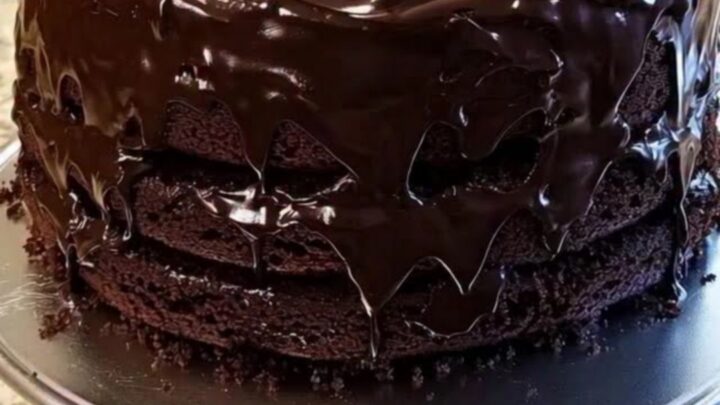
- Final glaze and setPour any remaining ganache over the very top of the cake, allowing it to drip naturally down the sides. Ensure the internal temperature of the egg-based ganache reaches 160°F (71°C) if preparing from scratch. Once fully coated, let the cake rest at room temperature for at least one hour to allow the ganache to set properly before slicing into it with a warm knife.Look for The ganache drips should stop moving and hold their shape.Safe temperature 160°F (71°C) internal temperature (egg dishes)Tip Clean the edges of the pedestal stand with a damp cloth for a professional presentation.
The final glaze should be applied to the top, creating the characteristic drips down the sides. The cake should look polished and decadent. Before serving, the entire piece must rest until the ganache is firm to the touch. Check that the edges of the pedestal are clean and that the cake has remained upright during the setting process.
Common mistakes
A common mistake is attempting to frost the cake while the layers are still warm, which leads to a messy, sliding finish. Another error is rushing the setting time; if you slice the cake too early, the ganache will not have the signature fudge-like texture.
Finally, ensure you do not over-work the ganache on the sides of the cake, as this can dull the glossy shine and create streaks.
How to tell it’s done
The cake is considered done when the ganache has set to a firm yet silky consistency that holds its shape when sliced. A warm knife should pass through the cake smoothly without dragging.
Because the cake layers are pre-baked, the main indicator of success is the visual appearance of the smooth, glossy coating and the structural stability of the three layers when displayed on the stand.
- Egg dishes: 160°F (71°C) in the thickest part
Up next · Part 3 of 3
2 variations · storage & make-ahead · 3 answers · printable card
Tips, FAQ & printable recipe (Part 3)← Back to the ingredients (Part 1)