Breakfast · Part 2 of 3: Instructions
Ultra-Crunchy Cornflake-Crusted Challah French Toast Step-by-step instructions
- Prep
- Cook
- Total
- Serves
- 3
Before you start
Before beginning the cooking process, ensure all ingredients are measured and ready on the counter. Slice the challah bread into uniform 3-centimeter thick pieces to ensure even cooking. Clear enough space on your workstation for the dipping bowl and the cornflake coating station.
Ensure the skillet is clean and dry. Having everything prepared in advance allows for a smooth transition from soaking the bread to frying, which is crucial for maintaining the texture of the cornflakes and preventing the bread from becoming overly saturated or mushy before it hits the hot butter.
Ingredients at a glance (9)
- 100 grams toasted cornflakes
- 3 large eggs
- 100 milliliters half-and-half
- 1 tsp vanilla bean paste
- 1/4 tsp ground nutmeg
- 3 slices challah bread (3 centimeters thick)
- 30 grams clarified butter
- fresh berries for serving
- warm maple syrup for serving
Instructions
Custard Preparation
- Prepare the coating and custardPlace the cornflakes in a durable plastic bag and crush them using a rolling pin until they form coarse, uniform shards. In a shallow mixing bowl, whisk together the eggs, half-and-half, vanilla bean paste, and nutmeg until the mixture is completely smooth and well-combined.Look for The cornflakes should be broken down into small, consistent pieces rather than a fine powder, and the custard should be fully emulsified.Tip Avoid over-crushing the cornflakes into fine dust to ensure the maximum crunch in the final crust.
The custard should be smooth, homogenous, and aromatic, with the vanilla bean paste and nutmeg fully incorporated into the mixture. The cornflakes should be crushed into uniform, coarse shards rather than a fine, powdery dust, which is critical for achieving the desired crunch. Check that your dipping station is organized and that the challah slices are ready for immediate coating to ensure the bread doesn't sit in the custard for too long.
Coating Process
- Coat the breadTake each thick slice of challah and dip it into the egg custard, ensuring both sides are thoroughly saturated but not falling apart. Immediately transfer the soaked slice to the bowl of crushed cornflakes, pressing it firmly into the shards so that the flakes adhere deeply to the bread surface.Look for The bread should feel heavy and fully hydrated by the custard, with a dense, even layer of cornflakes covering the entire exterior.Tip Press firmly to ensure the crust stays intact during the frying process.
At this stage, the challah slices should be fully saturated with the custard but still retain their structural shape. The cornflake coating should be firmly pressed into the surface of the bread, covering it completely with a dense, even layer of shards.
Before moving to the skillet, check that each slice is adequately coated on all sides, as any gaps in the cornflake layer will prevent the toast from achieving its signature crispy, golden-brown finish.
Sizzling and Serving
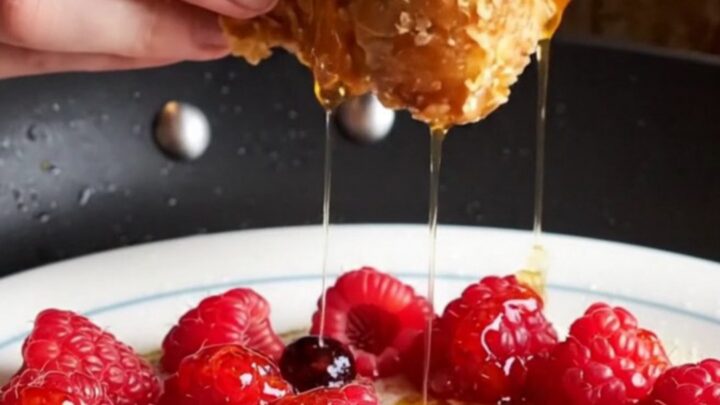
- Fry and serveHeat the clarified butter in a large skillet over medium-high heat until shimmering. Carefully place the bread slices in the skillet and fry for 2.5 minutes per side until deep golden brown and crispy. Ensure the egg custard is fully cooked to 160°F (71°C). Serve immediately topped with fresh berries and warm maple syrup.Look for The crust should be a deep, toasted golden brown, and the center should be firm to the touch, indicating the custard has set properly.Safe temperature 160°F (71°C) internal temperature (egg dishes)Tip Monitor the heat carefully to prevent the cornflakes from burning before the center is cooked through.
The French toast should emerge from the skillet with a vibrant, deep golden-brown crust that sounds crispy when tapped with a spatula. The internal temperature must be confirmed at 160°F (71°C). The aroma should be rich and buttery, with a hint of toasted corn. Ensure the slices are served immediately while the crust is at its peak crunch, topped with fresh, cold berries and warm maple syrup to provide the perfect temperature and flavor contrast.
Common mistakes
A common mistake is using bread that is too fresh or too thin, which can lead to a soggy consistency that fails to hold the coating. Another error is failing to press the cornflakes firmly into the bread, causing the crust to fall off during frying.
Additionally, using too low a heat can result in greasy, oil-soaked bread, while heat that is too high will burn the cornflakes before the custard cooks through. Monitor the skillet temperature closely to maintain a steady, medium-high heat throughout the cooking process.
How to tell it’s done
The French toast is fully cooked when the exterior is a deep, uniform golden brown and the cornflakes are crisp to the touch. The internal temperature of the custard must reach 160°F (71°C). When pressed gently with a spatula, the center should feel firm and should not release any raw liquid.
This temperature ensures the eggs are properly cooked while maintaining a luscious, custardy texture inside. Always use a food thermometer to confirm that the center is safe to eat, especially when dealing with thick, absorbent bread slices.
- Egg dishes: 160°F (71°C) in the thickest part
Up next · Part 3 of 3
2 variations · storage & make-ahead · 3 answers · printable card
Tips, FAQ & printable recipe (Part 3)← Back to the ingredients (Part 1)