Dinner · Part 2 of 3: Instructions
Ultra-Crispy Buttermilk Chicken Tenders Step-by-step instructions
- Prep
- Cook
- Total
- Serves
- 4
Before you start
Before you start, pat the chicken tenders dry with paper towels if they are wet. Whisk the marinade ingredients together in a large bowl, then add the chicken and stir to coat. Cover and refrigerate while you prepare the dredge.
Set up a dredging station with the flour mixture in a shallow dish and a plate for the coated tenders. Have your wire rack and baking sheet ready near the stove.
Finally, pour the oil into your pot and attach a deep-fry thermometer so it's ready when you are.
Ingredients at a glance (13)
- 2 lb chicken breast tenders
- 2 cups buttermilk
- 1/4 cup hot sauce
- 1/4 cup pickle juice
- 1 tbsp garlic powder
- 1 tbsp paprika
- 2 cups all-purpose flour
- 1/2 cup cornstarch
- 1 tbsp garlic powder
- 1 tsp cayenne pepper
- 1 tbsp kosher salt
- 4 cups peanut oil, for frying
- 1 cup ranch dressing, for serving
Instructions
Marinate and Dredge
- Marinate the ChickenIn a large bowl, whisk together the buttermilk, hot sauce, pickle juice, garlic powder, and paprika. Add the chicken tenders and turn to coat completely. Cover and refrigerate for at least 30 minutes, or up to 4 hours.Look for The marinade is smooth and tangy, and the chicken is fully submerged.Tip For the most tender results, marinate at least 2 hours. Do not skip the pickle juice—it adds a subtle tang and helps tenderize.
- Prepare the DredgeIn a shallow dish, combine the flour, cornstarch, garlic powder, cayenne, and salt. Whisk until well blended.Look for The dredge looks like seasoned flour with a slight orange tint from the cayenne.Tip The cornstarch is the secret to extra crunch—it absorbs moisture and fries up crispy.
The chicken is coated in a thick, shaggy layer of seasoned flour. The marinade has infused the meat with tangy, spicy flavor. The dredge is well mixed and smells of garlic and cayenne.
Fry to Golden Perfection
- Heat the OilPour the peanut oil into a large heavy-bottomed pot or Dutch oven, leaving at least 3 inches of space from the top. Heat over medium-high until the oil reaches 375°F (190°C) on a deep-fry thermometer.Look for The oil shimmers and a small piece of flour sizzles immediately when dropped in.Tip Maintain the oil temperature between 350°F and 375°F while frying to ensure even cooking.
- Dredge the ChickenWorking with a few pieces at a time, remove the chicken from the marinade, letting any excess drip off. Dredge each tender in the flour mixture, pressing firmly to coat all sides. Shake off any excess and place on a plate.Look for The chicken is completely coated with a thick, shaggy layer of flour.Tip For an extra-thick crust, dip the dredged chicken back into the marinade and dredge again.
- Fry the TendersCarefully lower a few tenders into the hot oil using tongs. Fry for about 5 minutes, turning occasionally, until deep golden brown and cooked through. The internal temperature should reach 165°F (74°C).Look for The tenders are deeply browned, crisp, and float on the oil surface.Safe temperature 165°F (74°C) internal temperature (poultry)Tip Avoid overcrowding the pot—fry in batches to keep the oil temperature steady.
- Drain and RestTransfer the fried tenders to a wire rack set over a baking sheet. Let them rest for 2 minutes before serving.Look for Excess oil drips away, and the crust stays crispy.Tip Resting on a rack, not paper towels, keeps the crust from becoming soggy.
The oil is shimmering at 375°F, and the tenders are frying with a satisfying sizzle. They turn deep golden brown and float to the surface when done. The kitchen smells amazing.
Serve and Enjoy
- Serve with RanchServe the hot tenders immediately with ranch dressing for dipping.Look for The tenders are golden, crunchy, and steaming.Tip For extra flavor, sprinkle with flaky sea salt right before serving.
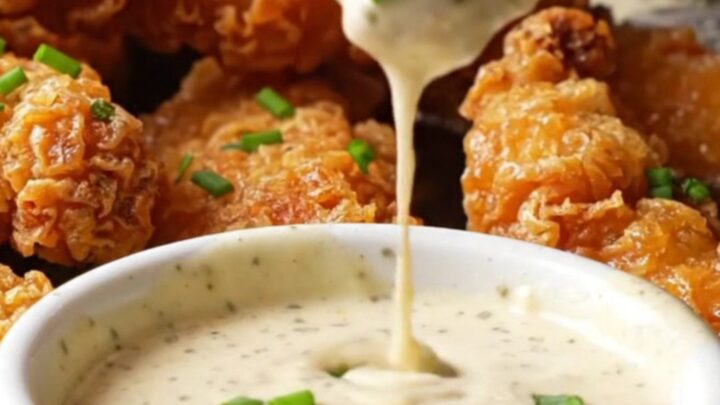
The tenders are resting on a wire rack, excess oil dripping away. The crust is crisp and crackly. Serve hot with ranch dressing for dipping. Take a moment to check the color, texture and aroma before you move on to the next step.
Common mistakes
One common mistake is overcrowding the pot, which drops the oil temperature and leads to greasy, soggy tenders. Fry in small batches and let the oil come back to temperature between batches.
Another mistake is using a wet dredge—make sure to shake off excess marinade before coating. Also, don't skip the cornstarch; it's essential for a crispy crust. Finally, always use a thermometer to avoid under- or over-cooking the chicken.
How to tell it’s done
The tenders are done when they are deep golden brown and crisp all over, and the internal temperature reaches 165°F (74°C) on an instant-read thermometer. The crust should be firm to the touch and sound hollow when tapped.
If the tenders are browning too quickly, lower the heat slightly. Let them rest for a couple of minutes before serving to allow the juices to redistribute.
- Poultry: 165°F (74°C) in the thickest part
Up next · Part 3 of 3
4 variations · storage & make-ahead · 5 answers · printable card
Tips, FAQ & printable recipe (Part 3)← Back to the ingredients (Part 1)