Dinner · Part 2 of 3: Instructions
Ultimate Cheesy Meat Sauce Spaghetti for Comfort Food Lovers Step-by-step instructions
- Prep
- Cook
- Total
- Serves
- 4
Before you start
Before you begin cooking, ensure all your ingredients are measured and ready. Bring a large pot of water to a boil and have your baking dish nearby.
If you are using pre-cooked or store-bought meat sauce, ensure it is at room temperature before heating to prevent temperature shock. Having everything prepped allows you to focus on the timing of the pasta and the final broiling step, which happens quite quickly.
Ingredients at a glance (3)
- 1 lb spaghetti
- 2 cups prepared meat sauce
- 2 cups shredded mozzarella cheese
Instructions
Boiling the pasta
- Boil the pastaBring a large pot of salted water to a rolling boil. Add the spaghetti and cook according to the package directions until al dente. Drain the pasta well in a colander, shaking off any excess water to ensure the sauce adheres properly.Look for The pasta should be tender but still firm to the bite when pressed.Tip Reserve a small splash of pasta water to loosen the meat sauce if it appears too thick before combining.
The pasta is ready when it is tender but still retains a slight bite. It should be drained thoroughly, as excess water will dilute the flavor of the meat sauce and make the final dish mushy.
Ensure the colander is ready and the pot is drained completely before proceeding to the sauce stage.
Simmering the sauce
- Simmer the sauceWhile the pasta cooks, pour the meat sauce into a saucepan over medium heat. Bring it to a gentle simmer, stirring occasionally, until the sauce is heated through and the flavors are well developed. Ensure the meat reaches an internal temperature of 160°F (71°C) to be fully cooked.Look for The sauce should be bubbling gently and fragrant.Safe temperature 160°F (71°C) internal temperature (ground meat)Tip If using a homemade sauce, ensure it is fully cooked before combining with the pasta.
The sauce is ready when it has reached a gentle, consistent simmer and is fragrant. It should be thick enough to coat the back of a spoon. Check that the meat is thoroughly cooked, ensuring it reaches the safe internal temperature of 160°F (71°C) before combining.
Melting the cheese
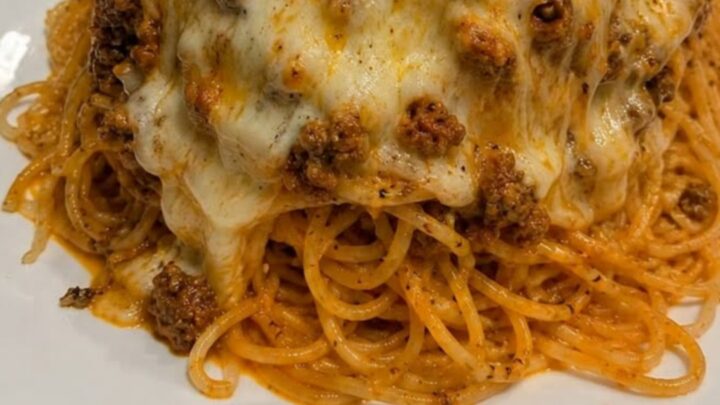
- Assemble and meltCombine the drained spaghetti with the hot meat sauce in a baking dish, tossing thoroughly to coat every strand. Top the pasta dome generously with the shredded mozzarella cheese. Place under a preheated broiler for 2 to 3 minutes until the cheese is bubbling and browned to a golden perfection.Look for The cheese should be completely melted, bubbly, and spotted with golden brown patches.Tip Watch the broiler closely, as the cheese can burn in just a few seconds.
The final stage is complete when the mozzarella cheese is completely melted and shows a beautiful, golden-brown crust. The sauce should be bubbling around the edges of the baking dish, and the pasta should be hot throughout. Watch the broiler constantly to avoid burning the cheese.
Common mistakes
A common mistake is overcooking the pasta before it hits the baking dish. Remember that the pasta will continue to cook slightly when it is tossed with the hot sauce and placed under the broiler, so aim for a true al dente finish.
Another frequent error is using too much liquid in the sauce; if your sauce is too thin, it will pool at the bottom of the baking dish, making the pasta soggy rather than deliciously coated.
How to tell it’s done
The dish is considered done when the meat sauce is piping hot throughout and the mozzarella cheese is fully melted, bubbling, and golden brown on top.
Because the meat is cooked during the simmering phase, ensure it reaches an internal temperature of 160°F (71°C) before assembly. The pasta should be firm but tender to the touch, and the entire dish should be steaming hot when removed from the oven or broiler.
- Ground meat: 160°F (71°C) in the thickest part
Up next · Part 3 of 3
2 variations · storage & make-ahead · 3 answers · printable card
Tips, FAQ & printable recipe (Part 3)← Back to the ingredients (Part 1)