Dinner · Part 2 of 3: Instructions
Tuscan Garlic Chicken with Blistered Tomatoes Step-by-step instructions
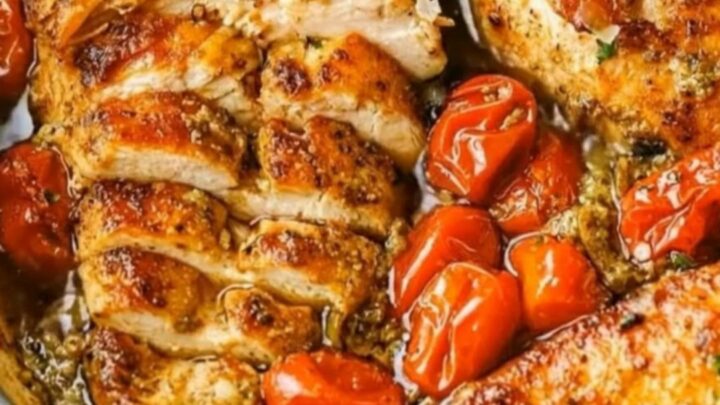
- Prep
- Cook
- Total
- Serves
- 4
Before you start
Before beginning, ensure all ingredients are prepped and ready to go. Mince the garlic finely so it distributes evenly through the sauce. Wash the cherry tomatoes thoroughly and pat them dry; moisture on the tomatoes can cause splattering when they hit the hot oil.
Keep the chicken in the refrigerator until the moment you are ready to sear it, as this maintains food safety. Have your skillet and tongs ready near the stove to keep the process moving efficiently.
Ingredients at a glance (3)
- 2 lbs chicken breast, boneless and skinless
- 4 cloves garlic, minced
- 1 pint cherry tomatoes
Instructions
Searing the chicken
- Sear the chickenPlace the chicken breasts in the hot skillet and sear until deep golden brown on both sides. Ensure the chicken is cooked through to an internal temperature of 165°F (74°C). Remove the chicken from the skillet and set aside to rest for at least 5 minutes before slicing.Look for The chicken should have a crispy, golden-brown crust and be firm to the touch.Safe temperature 165°F (74°C) internal temperature (poultry)Tip Do not crowd the pan; cook in batches if necessary to ensure a proper sear.
The chicken should be beautifully golden-brown on both sides and firm to the touch. The pan will have collected flavorful brown bits, known as fond, which are essential for the next phase. Ensure the chicken has reached an internal temperature of 165°F (74°C) before removing it from the pan. The kitchen should smell like savory, seared poultry, indicating that the Maillard reaction has occurred successfully, providing the base for your sauce.
Blistering the tomatoes
- Prepare the sauceIn the same skillet, add the minced garlic and cherry tomatoes. Sauté over medium heat, stirring occasionally, until the garlic is fragrant and the cherry tomatoes have blistered and begun to soften. The juices from the tomatoes will combine with the browned bits left in the pan to create a flavorful base.Look for The tomatoes are ready when their skins begin to burst and they release their juices.Tip Use a wooden spoon to scrape the bottom of the pan to incorporate the flavorful fond.
The garlic should be soft and fragrant, and the cherry tomatoes should look shriveled and blistered, having released their vibrant red juices into the skillet. The sauce will begin to look glossy and smell intensely aromatic as the garlic mellows in the tomato juices. Check that the garlic hasn't turned dark brown; it should be light golden, ensuring a sweet, savory flavor profile rather than a harsh or bitter one.
Final assembly
- Assemble and serveReturn the cooked, sliced chicken to the skillet, nestling it into the garlic and tomato mixture. Let everything simmer together for a minute to allow the flavors to marry. Serve immediately, ensuring each plate gets a generous portion of the blistered tomatoes and pan sauce.Look for The sauce should be slightly thickened and the chicken heated through.Tip Serve this dish alongside crusty bread to soak up the delicious garlic tomato sauce.
The chicken should be nestled comfortably in the pan with the tomato and garlic sauce coating it. Everything should be steaming and aromatic. The sauce will have thickened slightly from the tomato juices, creating a cohesive, rustic appearance.
The dish is ready when the chicken is thoroughly warmed through and the flavors are well-integrated. It should look like a professional, restaurant-style meal that is ready to be plated and enjoyed immediately.
Common mistakes
A common mistake is overcrowding the skillet, which lowers the pan temperature and prevents the chicken from developing a proper sear, leading to steamed rather than browned meat. Another error is failing to let the chicken rest after cooking; cutting into it immediately allows the juices to escape, resulting in dry chicken.
Additionally, do not rush the searing process; patience is key to achieving that golden, flavorful crust. Finally, ensure the heat is not so high that the garlic burns, as burnt garlic will introduce a bitter flavor to the sauce.
How to tell it’s done
To check for doneness, use a meat thermometer inserted into the thickest part of the chicken breast. The internal temperature must reach 165°F (74°C) to be safe for consumption. The meat should be opaque throughout with no signs of pink.
When pressed with a fork, the chicken should feel firm yet springy. Because the chicken is seared at a high temperature, ensure you do not overcook it, as it can become dry. The resting period is crucial for allowing the juices to redistribute throughout the meat.
- Poultry: 165°F (74°C) in the thickest part
Up next · Part 3 of 3
2 variations · storage & make-ahead · 3 answers · printable card
Tips, FAQ & printable recipe (Part 3)← Back to the ingredients (Part 1)