Dinner · Part 2 of 3: Instructions
Turkish Water Borek with Feta and Clarified Butter Step-by-step instructions
- Prep
- Cook
- Total
- Serves
- 8
Before you start
Before starting, gather all ingredients and equipment. Make the clarified butter if you don't have it on hand—simply melt unsalted butter and skim off the foam, or use store-bought.
Have a large pot of salted water ready to boil, and prepare a large bowl of ice water. Clear a large work surface for rolling the dough, and keep a clean kitchen towel nearby to cover the rolled sheets. Preheat the oven to 400°F (200°C) when you begin layering.
Ingredients at a glance (9)
- 4 cups all-purpose flour
- 4 large eggs
- 1 tsp salt
- 1/2 cup water
- 350 g Turkish white cheese (beyaz peynir) or feta, crumbled
- 1 bunch flat-leaf parsley, chopped
- 200 g clarified butter (sade yağ), melted
- Boiling salted water, for boiling the sheets, to taste
- Ice water, for shocking the sheets, to taste
Instructions
Making and Rolling the Dough
- Make the DoughIn a large bowl, combine the flour, eggs, salt, and water. Mix until a shaggy dough forms, then turn out onto a floured surface and knead for about 8 minutes until smooth and elastic. Cover with a damp towel and let rest for 30 minutes.Look for The dough is smooth, not sticky, and springs back when pressed.Tip If the dough feels dry, add water a teaspoon at a time; if sticky, add a little flour.
- Divide and Roll the SheetsDivide the dough into 10 equal pieces. On a well-floured surface, roll each piece into a very thin round sheet, about 12 inches in diameter. Keep the rolled sheets covered with a clean kitchen towel to prevent drying.Look for Each sheet is so thin you can see your hand through it.Tip Roll from the center outward, turning the dough frequently to keep it round and even.
The dough should be smooth, elastic, and rested. When rolled, the sheets are so thin that light passes through them. They should be uniform in thickness and free of tears.
If any sheet tears, patch it with a scrap of dough and roll again. Cover the rolled sheets with a towel to keep them from drying out while you roll the rest.
Boiling, Shocking, and Filling
- Boil and Shock the SheetsBring a large pot of salted water to a boil. Drop one dough sheet into the boiling water and cook for 1 minute. Using a slotted spoon, transfer the sheet to a bowl of ice water to stop the cooking. Repeat with the remaining sheets, except keep the first and last sheets raw for the crust.Look for The boiled sheets are tender and slightly translucent.Tip Work in batches and keep the boiled sheets in the ice water until ready to layer.
- Drain and Squeeze the SheetsRemove each boiled sheet from the ice water and gently squeeze out the excess water. Place the sheets on a clean kitchen towel and pat dry. They should be moist but not dripping.Look for The sheets are pliable and hold together without tearing.Tip Handle gently; the sheets are delicate but will hold up if you support them with both hands.
- Prepare the FillingIn a bowl, combine the crumbled Turkish white cheese and chopped parsley. Mix gently with a fork to distribute the parsley evenly.Look for The filling is crumbly and fragrant with parsley.Tip If using very salty cheese, you can rinse it briefly and pat dry before crumbling.
The boiled sheets are tender and slightly translucent, and they cool quickly in the ice water. After squeezing, they are moist but not wet. The filling is a crumbly mixture of cheese and parsley, ready to be layered. The kitchen smells of fresh parsley and warm dough, and the sheets are pliable and easy to handle.
Layering and Baking
- Layer the BorekPreheat the oven to 400°F (200°C). Brush the bottom and sides of a 12-inch round baking pan with clarified butter. Place one raw dough sheet in the pan, letting the edges hang over. Brush with butter. Layer 4 boiled sheets, brushing each with butter and letting them overlap slightly.Look for The pan is lined with buttery dough, ready for filling.Tip Use a generous hand with the butter; it keeps the layers distinct and crisp.
- Add the FillingSpread the cheese and parsley mixture evenly over the dough in the pan. Top with the remaining boiled sheets, brushing each with butter. Finish with the last raw dough sheet, tucking the overhang into the pan. Brush the top with more butter.Look for The filling is sandwiched between layers of buttery dough.Tip Make sure the filling is evenly distributed so every slice has cheese and herbs.
- Bake Until GoldenBake the borek for 40 minutes, until the top is deep golden brown and the edges are crisp. Let it rest for 10 minutes before slicing.Look for The top is golden amber and puffed; the edges are visibly crisp.Safe temperature 160°F (71°C) internal temperature (egg dishes)Tip If the top browns too quickly, cover loosely with foil for the last 10 minutes.
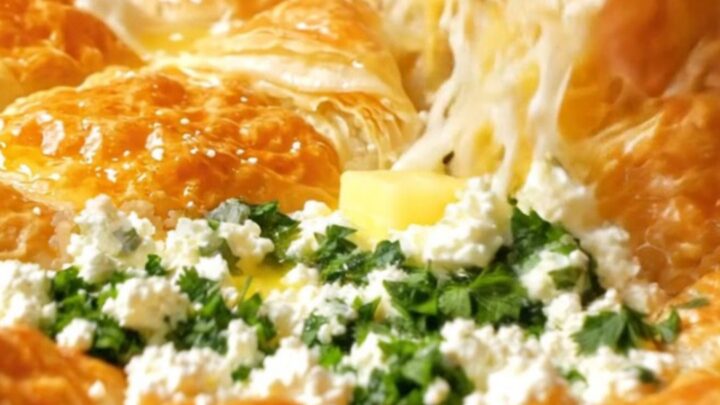
The assembled borek is a neat, buttery package with the filling hidden inside. As it bakes, the top turns golden and puffs, and the aroma of butter and toasted pastry fills the kitchen. The edges crisp and pull away from the pan. When done, the borek is deeply browned and sounds hollow when tapped.
Common mistakes
A common mistake is not rolling the dough thin enough, resulting in a thick, doughy borek. Take your time and roll each sheet to near-transparency. Another issue is over-boiling the sheets; they should be in the water for exactly 1 minute—any longer and they become too soft and tear easily.
Also, be sure to squeeze out excess water from the boiled sheets; too much moisture will make the borek soggy. Finally, don't skimp on the butter—it's essential for flavor and texture.
How to tell it’s done
The borek is done when the top is deep golden brown and the edges are visibly crisp and pulling away from the pan. A knife inserted into the center should come out hot, and the internal temperature should reach at least 160°F (71°C) for the eggs.
The layers should be tender and moist, not dry. Let it rest for 10 minutes before slicing to allow the layers to set and make clean cuts.
- Egg dishes: 160°F (71°C) in the thickest part
Up next · Part 3 of 3
4 variations · storage & make-ahead · 5 answers · printable card
Tips, FAQ & printable recipe (Part 3)← Back to the ingredients (Part 1)