Desserts · Part 2 of 3: Instructions
Turkish Revani: Moist Semolina Cake in Lemon Syrup Step-by-step instructions
- Prep
- Cook
- Total
- Serves
- 12
Before you start
Before starting, make sure all ingredients are at room temperature. This helps the batter emulsify properly. Prepare the lemon syrup first so it has time to cool completely.
Preheat the oven to 350°F (175°C) and lightly oil a 9x13-inch baking dish. Zest the lemon and measure out all ingredients. Have a saucepan ready for the syrup, and set up a cooling rack for later. This prep ensures a smooth workflow.
Ingredients at a glance (13)
- 3 large eggs
- 1/2 cup granulated sugar
- 1/2 cup plain yogurt (full-fat or Greek)
- 1/2 cup vegetable oil or neutral oil
- 1 cup semolina (irmik)
- 1 cup all-purpose flour
- 1 packet baking powder (about 2 tsp)
- 1 lemon, zested
- 2 cups water
- 2 cups granulated sugar
- 1 tbsp fresh lemon juice
- 1/2 cup shredded coconut (sweetened or unsweetened)
- 1/4 cup shelled pistachios, crushed
Instructions
Prep and Syrup
- Make the Lemon SyrupIn a small saucepan, combine 2 cups water, 2 cups sugar, and 1 tablespoon lemon juice. Bring to a boil over medium-high heat, stirring occasionally until the sugar dissolves. Reduce the heat to low and simmer for about 10 minutes, until the syrup thickens slightly. Remove from heat and let cool completely. The syrup should be cool when poured over the hot cake.Look for The syrup should be slightly thickened and clear, not watery.Tip Cooling the syrup is essential—pouring hot syrup on a hot cake can make it overly soggy.
- Prep the Oven and PanPreheat the oven to 350°F (175°C). Lightly oil a 9x13-inch rectangular baking dish or coat it with nonstick spray. Set aside.Look for The pan should be evenly coated but not pooling with oil.Tip Use a glass or ceramic dish for even baking and easy cleanup.
The syrup should be simmered until slightly thickened and then cooled completely. The oven should be preheated, and the baking dish oiled.
The eggs and sugar should be whisked until pale and fluffy, and the wet ingredients added smoothly. At this point, the batter should be thick and golden, ready for the dry ingredients.
Bake the Cake
- Whisk Eggs and SugarIn a large bowl, whisk the eggs and 1/2 cup sugar together until pale, fluffy, and slightly thickened. This should take about 2–3 minutes of vigorous whisking. The mixture should fall in a thick ribbon when lifted.Look for The mixture will be light yellow and hold a ribbon for a few seconds.Tip Whisking thoroughly aerates the batter and helps the cake rise.
- Add Wet IngredientsBeat in the yogurt and oil until fully combined. The mixture should be smooth and glossy. Scrape down the sides of the bowl as needed.Look for The batter will look homogenous and slightly shiny.Tip Use room-temperature yogurt to avoid seizing the batter.
- Fold in Dry IngredientsAdd the semolina, all-purpose flour, baking powder, and lemon zest. Fold gently with a spatula or whisk just until no dry streaks remain. Do not overmix—the batter should be smooth but not overworked.Look for The batter will be thick, golden, and free of lumps.Tip Overmixing can make the cake tough; fold until just combined.
- Bake the CakePour the batter into the prepared baking dish and spread it evenly. Bake at 350°F (175°C) for 30 minutes, or until the top is puffed, golden amber, and springs back when lightly pressed. A toothpick inserted in the center should come out clean.Look for The cake will be golden, slightly domed, and fragrant.Safe temperature 160°F (71°C) internal temperature (egg dishes)Tip Rotate the pan halfway through baking for even browning.
The cake should be baked until golden amber, puffed, and springy to the touch. A toothpick inserted in the center should come out clean. The kitchen will smell of lemon and toasted semolina. The cake should be slightly pulling from the pan edges. Let it cool for a few minutes before slicing.
Soak and Finish
- Slice the Warm CakeWhile the cake is still warm, use a sharp knife to cut it into diamond shapes: first cut diagonal lines one way, then diagonal lines the other way. Make sure the cuts go all the way through the cake.Look for The cake will be tender and easy to slice.Tip Cutting while warm helps the syrup absorb evenly.
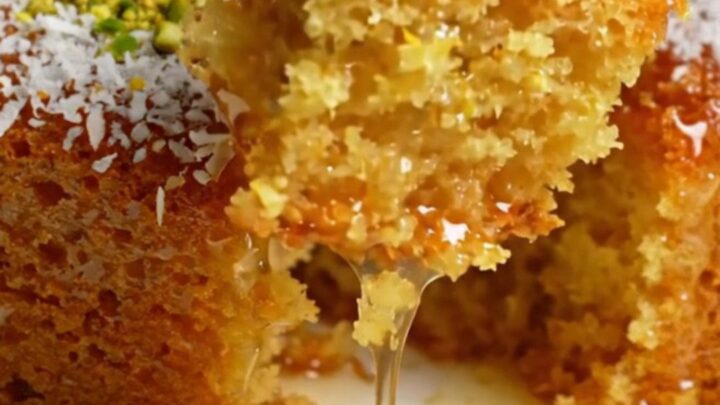
- Pour the Syrup OverSlowly ladle the cooled lemon syrup over the entire cake, making sure every piece is covered. Pour it evenly—the cake will absorb the syrup like a sponge. Let the cake rest for at least 30 minutes to allow the syrup to soak in completely.Look for The cake will look glossy and plump as it drinks the syrup.Tip Pour the syrup in batches to avoid overflow.
- Garnish and ServeShower the top of the cake with shredded coconut and crushed pistachios. Let it cool completely before serving. Lift a diamond piece with a fork and enjoy the melt-in-your-mouth texture.Look for The topping will stick to the moist surface.Tip For a prettier presentation, add the garnish just before serving.
After pouring the cooled syrup, the cake will visibly absorb it, becoming glossy and plump. It should rest for at least 30 minutes. The topping of coconut and pistachios adds a final crunch and fragrance. The cake should be moist, tender, and every piece saturated with syrup.
Common mistakes
One common mistake is pouring hot syrup over a cold cake or cold syrup over a hot cake—both can affect absorption. Always use cool syrup on a warm cake. Another issue is overmixing the batter, which can make the cake tough and dense. Whisk the eggs and sugar until fluffy, but fold the dry ingredients gently.
Also, be sure to slice the cake all the way through before pouring syrup; otherwise, the syrup won't penetrate evenly. Finally, don't skip the resting time after pouring the syrup—it's essential for the cake to absorb the syrup properly.
How to tell it’s done
The cake is done when the top is puffed, golden amber, and springs back when lightly pressed. A toothpick inserted into the center should come out clean or with just a few moist crumbs. The internal temperature should reach at least 160°F (71°C) for eggs.
Once baked, the cake should be slightly pulling away from the edges of the pan. The syrup absorption will continue after pouring, so don't worry if the cake looks dry initially—it will become moist and glossy as it soaks.
- Egg dishes: 160°F (71°C) in the thickest part
Up next · Part 3 of 3
4 variations · storage & make-ahead · 5 answers · printable card
Tips, FAQ & printable recipe (Part 3)← Back to the ingredients (Part 1)