Dinner · Part 2 of 3: Instructions
Turkish Pan-Toasted Cheesy Potato Flatbreads Step-by-step instructions
- Prep
- Cook
- Total
- Serves
- 4
Before you start
Before starting, boil the potatoes until fork-tender and let them cool slightly. Gather all ingredients and equipment. Have a clean, floured surface ready for rolling.
Preheat a dry skillet over medium-high heat. Melt the butter in a small bowl for brushing. The dough comes together quickly, so having everything in place ensures a smooth process.
Ingredients at a glance (8)
- 4 medium boiled potatoes
- 1 1/2 cups shredded kaşar cheese
- 1 large egg
- 1/4 cup fresh chopped dill
- 1/2 tsp salt
- 1/4 tsp black pepper
- 1 1/2 cups all-purpose flour
- 3 tbsp unsalted butter, melted
Instructions
Dough Preparation
- Make the DoughIn a large bowl, mash the boiled potatoes until smooth. Add the shredded kaşar cheese, egg, fresh dill, salt, and black pepper. Mix until well combined. Gradually add the flour, stirring until a soft, pliable dough forms. If the dough is too sticky, add a little more flour.Look for The dough should be soft but not sticky, pulling away from the sides of the bowl.Safe temperature 160°F (71°C) internal temperature (egg dishes)Tip Mash the potatoes while they are still warm for a smoother texture.
- Divide and ShapeTurn the dough out onto a lightly floured surface. Divide it into 8 equal portions and roll each into a smooth ball. Cover with a clean kitchen towel and let rest for 5 minutes.Look for The dough balls should be uniform in size and smooth on the surface.Tip Keeping the dough covered prevents it from drying out.
The dough should be soft, pliable, and slightly sticky but not wet. When pressed, it should hold together without cracking. The dough balls should be smooth and uniform, and the atmosphere will smell of potatoes and dill. Before rolling, ensure the surface is well-floured to prevent sticking.
Rolling and Cooking
- Roll Out FlatbreadsOn a floured surface, roll one dough ball into a thin round, about 8 inches in diameter. Repeat with the remaining balls. Keep the rolled flatbreads separated with parchment or a floured cloth.Look for The flatbreads should be thin and even, about 1/8 inch thick.Tip Roll from the center outward, turning the dough as you go, for a round shape.
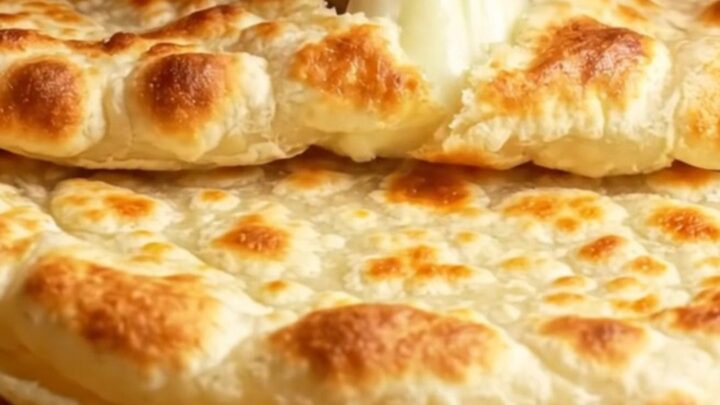
- Cook on Hot SkilletHeat a dry skillet over medium-high heat. Place one flatbread in the skillet and cook for 3 minutes, until golden spots appear on the bottom. Flip and cook for another 3 minutes, until the second side is speckled and the flatbread puffs slightly.Look for The flatbread should have golden brown spots and puff up slightly.Tip Do not overcrowd the skillet; cook one at a time for even browning.
The rolled flatbreads should be thin and even, about 1/8 inch thick. As they cook, they will puff and develop golden spots on the surface. The aroma of toasting bread and melting cheese fills the air. The flatbreads should be cooked until they are speckled on both sides but still soft to the touch.
Buttering and Serving
- Butter and StackWhile the flatbread is still hot, brush generously with melted butter on both sides. Stack the cooked flatbreads on a plate, covering with a towel to keep warm. Repeat with the remaining dough and butter.Look for The butter melts into the warm bread, making it glossy and fragrant.Tip Brushing the butter while hot helps it absorb into the bread.
- Serve WarmServe the flatbreads warm, folded or torn. They are best enjoyed immediately while soft and buttery.Look for The flatbreads are soft, buttery, and the cheese is melted and stretchy.Tip If not serving right away, keep them covered to retain moisture.
After brushing with butter, the flatbreads appear glossy and fragrant, with the butter melting into the warm surface. They should be soft and pliable, with the cheese visibly melted and stretchy.
Stack them and cover with a towel to keep warm. The final result is a beautiful pile of golden, buttery flatbreads ready to be torn and shared.
Common mistakes
One common mistake is rolling the dough too thick, which results in a doughy, undercooked center. Another is using a skillet that is not hot enough, causing the flatbreads to dry out before they brown.
Also, avoid overcrowding the pan; cook one at a time to ensure even cooking. Finally, do not skip the butter brush—it adds essential flavor and keeps the flatbreads moist.
How to tell it’s done
The flatbreads are done when they are golden brown on both sides with darker spots, and they have puffed slightly. The interior should be cooked through and the cheese melted.
To check, press gently on the surface; it should feel firm but give slightly. If using an instant-read thermometer, the center should reach at least 160°F (71°C) to ensure the egg is fully set.
- Egg dishes: 160°F (71°C) in the thickest part
Up next · Part 3 of 3
4 variations · storage & make-ahead · 5 answers · printable card
Tips, FAQ & printable recipe (Part 3)← Back to the ingredients (Part 1)