Dinner · Part 2 of 3: Instructions
Turkish Meatball and Roasted Vegetable Casserole: One-Pan Comfort Step-by-step instructions
- Prep
- Cook
- Total
- Serves
- 4
Before you start
Before starting, set the oven to 390°F (200°C) and gather all ingredients. Grate the onion and mince the garlic for the meatballs. Dice the eggplant, zucchini, and bell peppers into even, bite-sized pieces.
Measure out the breadcrumbs, spices, and tomato paste. Have the earthenware baking dish ready. If using a metal baking dish, no need to adjust the temperature. The meatballs can be rolled ahead and refrigerated for up to a day.
Ingredients at a glance (16)
- 400 g ground beef
- 1 medium onion, grated
- 1/2 cup breadcrumbs
- 1 large egg, lightly beaten
- 3 cloves garlic, minced
- 1 tsp ground cumin
- 1/2 tsp black pepper
- 1 tsp salt
- 2 tbsp olive oil
- 1 medium eggplant, diced
- 1 medium zucchini, diced
- 2 bell peppers, diced
- 4 cloves garlic, smashed
- 3 tbsp tomato paste
- 1 cup water
- 1/4 cup fresh parsley, chopped
Instructions
Prepare the Meatballs
- Make the MeatballsIn a large bowl, combine the ground beef, grated onion, breadcrumbs, beaten egg, minced garlic, cumin, black pepper, and salt. Mix gently with your hands until just combined—do not overwork. Roll the mixture into bite-sized meatballs, about 1 inch in diameter.Look for The mixture should be moist but hold together when rolled.Tip Wet your hands slightly to prevent sticking while rolling.
- Sear the MeatballsHeat 1 tablespoon of olive oil in a large skillet over medium-high heat. Add the meatballs in a single layer and sear until browned on all sides, about 4–5 minutes total. Remove the meatballs from the skillet and set aside. The meatballs will finish cooking in the oven.Look for The meatballs should be deeply browned but not cooked through.Tip Do not overcrowd the pan; sear in batches if needed.
The meatballs should be evenly sized and hold together without cracking. After searing, they should be browned on all sides but still raw in the center. The skillet will have browned bits that will flavor the vegetable mixture.
Sauté and Assemble
- Sauté the VegetablesIn the same skillet, add the remaining 1 tablespoon olive oil. Add the diced eggplant, zucchini, bell peppers, and smashed garlic cloves. Sauté over medium-high heat until the vegetables are fragrant and just starting to soften, about 5–6 minutes. Stir occasionally to prevent burning.Look for The vegetables should be glossy and lightly browned at the edges.Tip Cut the vegetables into uniform dice for even cooking.
- Make the Tomato GravyAdd the tomato paste to the skillet with the vegetables. Stir and cook for 1 minute until the paste darkens slightly. Pour in the water and stir, scraping up any browned bits from the bottom of the pan. Bring to a simmer.Look for The sauce should be thick and aromatic, with no lumps of tomato paste.Tip Scraping the pan adds flavor to the gravy.
- Assemble the CasseroleTransfer the vegetable and tomato mixture to an earthenware baking dish. Nestle the seared meatballs into the sauce, making sure they are partially submerged. The dish should be crowded but not overflowing.Look for The meatballs should sit snugly among the vegetables.Tip Use a dish that holds about 2 quarts for the right depth.
The vegetables should be fragrant and just tender, with some browning at the edges. The tomato paste will darken and become aromatic.
The assembled casserole should look colorful, with meatballs nestled among the vegetables and a thick sauce coating everything.
Bake and Finish
- Bake the CasserolePreheat the oven to 390°F (200°C). Cover the baking dish with a lid or foil and bake for 20 minutes. Then remove the cover and bake for an additional 5–10 minutes, until the sauce is bubbling and the vegetables are tender. The meatballs should reach an internal temperature of 160°F (71°C).Look for The sauce should be bubbly and thickened, and the meatballs should feel firm.Safe temperature 160°F (71°C) internal temperature (ground meat)Tip Let the casserole rest for 5 minutes before serving to set the sauce.
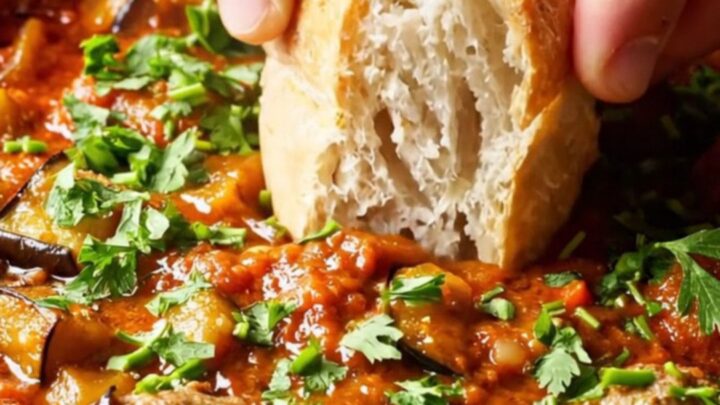
- Garnish and ServeSprinkle the chopped fresh parsley over the hot casserole. Serve directly from the baking dish with warm crusty bread for dipping into the rich sauce.Look for The parsley adds a fresh, bright finish.Tip Warm the bread in the oven for a few minutes for the best dipping experience.
The casserole should be bubbling at the edges and the sauce should have thickened. The meatballs should be cooked through, and the vegetables should be soft and caramelized. The parsley adds a fresh green contrast to the deep red sauce.
Common mistakes
Avoid overmixing the meatball mixture, which can make the meatballs tough. When searing, do not overcrowd the skillet; cook in batches if necessary to get a good brown crust.
Sauté the vegetables just until they begin to soften; they will continue cooking in the oven. If the sauce seems too thick after baking, stir in a splash of water or broth. Do not skip the resting time, as it helps the casserole hold together when served.
How to tell it’s done
The casserole is done when the sauce is bubbling and has thickened slightly, and the vegetables are fork-tender. The meatballs should feel firm to the touch and reach an internal temperature of 160°F (71°C) on an instant-read thermometer.
The top may have some browned spots from the caramelizing sauce. Let the dish rest for 5 minutes before serving to allow the sauce to settle.
- Ground meat: 160°F (71°C) in the thickest part
- Egg dishes: 160°F (71°C) in the thickest part
Up next · Part 3 of 3
4 variations · storage & make-ahead · 5 answers · printable card
Tips, FAQ & printable recipe (Part 3)← Back to the ingredients (Part 1)