Dinner · Part 2 of 3: Instructions
Turkish Manti Dumplings with Garlic Yogurt and Sizzling Paprika Butter Step-by-step instructions
- Prep
- Cook
- Total
- Serves
- 4
Before you start
Before starting, clear a large work surface and have a rolling pin, pasta wheel, and a floured baking sheet ready. Make the dough and let it rest while preparing the filling and the garlic yogurt.
Set out all ingredients: the flour, egg, water, salt, ground beef, onion, black pepper, yogurt, garlic, butter, paprika, tomato paste, and dried mint. Fill a large pot with salted water and bring it to a boil just before you begin shaping the manti, so it's ready when the dumplings are formed.
Ingredients at a glance (13)
- 2 cups all-purpose flour
- 1 large egg
- 1/2 cup water, plus more as needed
- 1/2 tsp salt, plus more for the filling and cooking water
- 1/2 lb ground beef
- 1/4 cup finely grated onion
- 1/4 tsp black pepper
- 1 cup plain whole-milk yogurt
- 2 cloves garlic, minced
- 4 tbsp unsalted butter
- 1 tbsp sweet red paprika
- 1 tsp tomato paste
- 1 tsp dried mint
Instructions
Prepare the dough and filling
- Make the dough and fillingIn a large bowl, combine the flour and 1/2 tsp salt. Make a well in the center and add the egg and 1/2 cup water. Mix with a fork, then bring together with your hands. Knead on a floured surface for about 8 minutes, until smooth and elastic. Wrap in plastic and let rest at room temperature for 30 minutes. Meanwhile, mix the ground beef, grated onion, 1/2 tsp salt, and black pepper in a small bowl. Cover and refrigerate until needed.Look for The dough should be smooth, not sticky, and spring back when pressed.Tip If the dough feels dry, add water a teaspoon at a time. If too sticky, dust with flour.
- Roll the dough paper-thinDivide the dough into two portions. On a lightly floured surface, roll one portion as thin as possible, aiming for about 1/16-inch thickness. The dough should be almost translucent. Use a pasta wheel or a sharp knife to cut the dough into 1/2-inch squares. Repeat with the second portion. Keep the cut squares covered with a clean kitchen towel to prevent drying.Look for The dough is thin enough that you can see your hand through it.Tip Rolling in small batches helps maintain the thinness. Dust with flour to prevent sticking.
- Fill and shape the mantiPlace a tiny pinch (about 1/4 teaspoon) of the beef filling in the center of each dough square. Fold the dough over the filling to form a triangle, pressing the edges to seal. Then bring the two opposite corners together, overlapping them slightly and pinching to create the classic manti shape. Set the finished dumplings on a floured baking sheet, not touching. Repeat with all the dough and filling.Look for The dumplings are small, about 1/2-inch wide, with a sealed center and two pointed ends.Tip Keep the filling cold. If the dough dries out, cover with a damp towel.
At the end of this phase, the dough should be smooth, elastic, and rested, and the filling should be well chilled.
The dough should roll out to a thin, almost translucent sheet without tearing. The filling should be firm and not watery. Everything is ready for the tedious but rewarding shaping step.
Shape and boil the manti
- Boil the mantiBring a large pot of salted water to a rolling boil. Carefully drop the manti into the water in batches, about 20 at a time, to avoid crowding. Stir gently once to prevent sticking. Boil for 8 to 10 minutes, until the dumplings float to the surface and the dough is tender but still holds its shape. Remove with a slotted spoon and transfer to a serving platter or individual bowls.Look for The manti will float and look slightly translucent; the filling should be cooked through.Safe temperature 160°F (71°C) internal temperature (ground meat)Tip Reserve a cup of the cooking water to thin the yogurt if needed.
- Make the garlic yogurtIn a small bowl, stir together the plain yogurt and minced garlic. If the yogurt is too thick to pour, whisk in a tablespoon or two of the reserved pasta water until it reaches a thick but pourable consistency. Set aside at room temperature.Look for The yogurt is smooth, creamy, and fragrant with garlic.Tip Use full-fat yogurt for the best texture; low-fat can be watery.
The manti are now formed: small, crescent-shaped parcels with sealed edges. When boiled, they should float and look slightly translucent, with the dough tender and the filling cooked through. The garlic yogurt should be smooth and fragrant, ready to be spooned over the hot dumplings.
Finish with butter and serve
- Make the paprika butterIn a small skillet over medium heat, melt the butter until it foams. Add the sweet paprika, tomato paste, and dried mint. Stir constantly for 1 to 2 minutes, until the butter is deep crimson and very fragrant. Remove from heat immediately to prevent burning.Look for The butter is sizzling, foamy, and a rich red color with a heady aroma.Tip Watch carefully—paprika burns quickly and turns bitter.
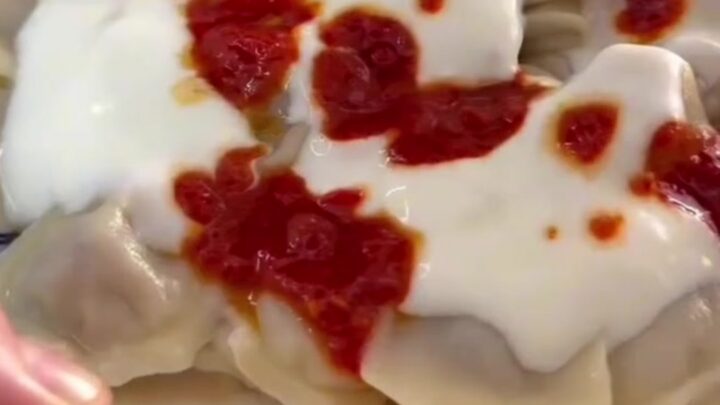
- Assemble and serveSpoon the garlic yogurt generously over the hot manti, covering them completely. Immediately pour the sizzling paprika butter over the yogurt, letting it pool and glaze the dumplings. Serve at once, while the butter is still bubbling and the yogurt is cool.Look for The sizzling butter contrasts with the cool yogurt, and the manti are fully coated.Tip For a dramatic presentation, pour the butter at the table.
The butter should be a vibrant crimson, foaming and fragrant with paprika and mint. When poured over the yogurt-covered manti, it should sizzle and create a beautiful marbled effect. The dish is ready to serve immediately, with the butter still hot and the yogurt cool.
Common mistakes
A common mistake is rolling the dough too thick, which results in chewy, doughy manti. Be patient and roll until the dough is almost translucent. Another is overfilling the squares; the filling should be tiny, about the size of a pea, or the dumplings will be difficult to seal.
Also, avoid boiling too many at once, as they can stick together. Finally, do not let the paprika butter overcook—it will turn bitter. Remove it from heat as soon as it becomes fragrant.
How to tell it’s done
The manti are done when they float to the surface and the dough is tender but still slightly al dente. To check the filling, cut one dumpling open—the beef should be cooked through and no longer pink.
The internal temperature of the filling should reach 160°F (71°C). The yogurt sauce should be smooth and pourable, and the paprika butter should be deep crimson and fragrant. The final dish should be served immediately, with the butter still sizzling.
- Ground meat: 160°F (71°C) in the thickest part
- Egg dishes: 160°F (71°C) in the thickest part
Up next · Part 3 of 3
4 variations · storage & make-ahead · 5 answers · printable card
Tips, FAQ & printable recipe (Part 3)← Back to the ingredients (Part 1)