Dinner · Part 2 of 3: Instructions
Turkish Lamb Dürüm with Sumac Onion & Grilled Tomato Step-by-step instructions
- Prep
- Cook
- Total
- Serves
- 4
Before you start
Before starting, make sure the grill is preheated to high heat. If using a charcoal grill, light the coals and wait until they are covered with white ash. Have all ingredients measured and ready.
Marinate the lamb for at least 30 minutes, but ideally longer, to allow the flavors to develop. Thread the meat onto skewers just before grilling to keep it cold.
Ingredients at a glance (13)
- 1 1/4 lb lamb leg meat, cut into 1-inch cubes
- 2 tbsp Turkish yogurt
- 1 tbsp olive oil
- 1 tsp ground cumin
- 1 tsp dried oregano
- 1 tsp salt
- 1/2 tsp black pepper
- 4 metal skewers
- 2 warm lavash flatbreads
- 1 red onion, thinly sliced
- 1 tbsp sumac
- 2 grilled tomatoes
- 2 grilled green peppers
Instructions
Marinate and Skewer
- Marinate the LambIn a large bowl, combine the lamb cubes with Turkish yogurt, olive oil, ground cumin, dried oregano, salt, and black pepper. Toss well to coat every piece evenly. Cover and refrigerate for at least 30 minutes, or up to 4 hours, to let the flavors penetrate.Look for The lamb is fully coated with a thick, fragrant paste.Tip Cut the lamb into uniform 1-inch cubes for even cooking.
- Thread the SkewersThread the marinated lamb cubes onto the metal skewers, pressing them snugly together but leaving a small gap between pieces so heat can circulate. Use 4 skewers, dividing the meat evenly.Look for The skewers are filled with tightly packed cubes.Tip Soak wooden skewers if using, but metal skewers are preferred for even cooking.
The lamb cubes are coated in a thick, fragrant yogurt mixture. The spices are evenly distributed, and the meat looks glossy. The skewers are filled with tightly packed cubes, ready for the fire.
Grill to Perfection
- Grill Over Hot CoalsPreheat a charcoal or gas grill to high heat. Place the skewers over the hot coals or flames. Grill for 6 minutes, turning regularly, until the lamb is charred and caramelized on the outside and reaches an internal temperature of 145°F (63°C) for medium-rare. Let the meat rest for at least 3 minutes off the heat.Look for The lamb is deeply browned with charred edges and juicy inside.Safe temperature 145°F (63°C) internal temperature (steaks, chops and roasts)Tip Resist the urge to move the skewers too often; let them sear properly.
- Grill the VegetablesWhile the lamb grills, place the whole tomatoes and green peppers directly on the grill grates. Cook for 4-5 minutes, turning occasionally, until the skins char and blister. Remove from the grill and let cool slightly.Look for The vegetables are charred and softened.Tip Charring brings out their natural sweetness and adds smoky flavor.
The lamb sizzles over the hot coals, releasing a smoky aroma. The exterior is charred and caramelized, with deep grill marks. The tomatoes and peppers are blistered and softened. The internal temperature reads 145°F (63°C).
Wrap and Serve
- Warm the LavashWarm the lavash flatbreads on the grill or in a dry skillet for about 30 seconds per side, until pliable and lightly toasted. Keep them warm in a clean kitchen towel.Look for The lavash is soft and pliable, with light grill marks.Tip Warming makes the bread pliable and prevents tearing.
- Slide the Meat onto the BreadPlace a warm lavash on a flat surface. Hold a skewer horizontally and press the bread over the meat. Using the bread as a grip, slide the lamb pieces directly onto the flatbread, leaving the skewer empty.Look for All the meat releases easily onto the bread.Tip The bread soaks up the juices as you slide the meat off.
- Add the ToppingsTop the lamb with the sumac-rubbed red onions, charred tomato mash (squash the grilled tomatoes with a fork), and grilled green peppers. Place the toppings in a line down the center of the bread.Look for The wrap is loaded with colorful, flavorful toppings.Tip Mash the tomatoes to release their juices and create a sauce-like texture.
- Roll and ServeFold the bottom of the lavash over the filling, then fold in the sides and roll tightly into a dürüm. Slice in half if desired and serve immediately while warm.Look for The roll is tight and secure, with no filling falling out.Tip Rolling tightly ensures every bite has a bit of everything.
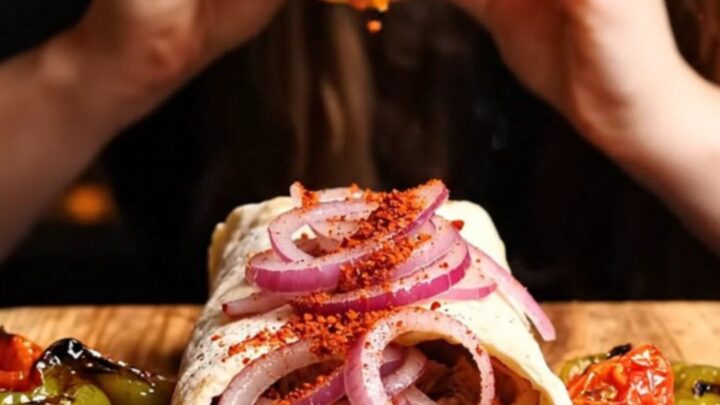
The lavash is warm and pliable. The meat slides off the skewers onto the bread, soaking up the juices. The toppings are piled in the center, and the wrap is rolled tightly, ready to be devoured.
Common mistakes
One common mistake is overcrowding the skewers, which prevents even cooking and caramelization. Leave a small gap between cubes.
Another is moving the skewers too often—let them sear undisturbed for a couple of minutes per side.
Avoid using too much marinade on the bread; the goal is to absorb juices, not make the lavash soggy. Finally, don't skip the rest time—it keeps the meat tender.
How to tell it’s done
The lamb is done when it reaches 145°F (63°C) for medium-rare, as measured with an instant-read thermometer. The exterior should be deeply charred and caramelized, while the interior remains pink and juicy.
After removing from the grill, let the meat rest for at least 3 minutes to allow the juices to redistribute. The tomatoes and peppers are done when the skins are blistered and the flesh is soft.
- Steaks, chops and roasts: 145°F (63°C) in the thickest part, then a 3-minute rest
Up next · Part 3 of 3
4 variations · storage & make-ahead · 5 answers · printable card
Tips, FAQ & printable recipe (Part 3)← Back to the ingredients (Part 1)