Dinner · Part 1 of 3: Ingredients
Turkish Baked Meatballs and Vegetables with Melted Cheese
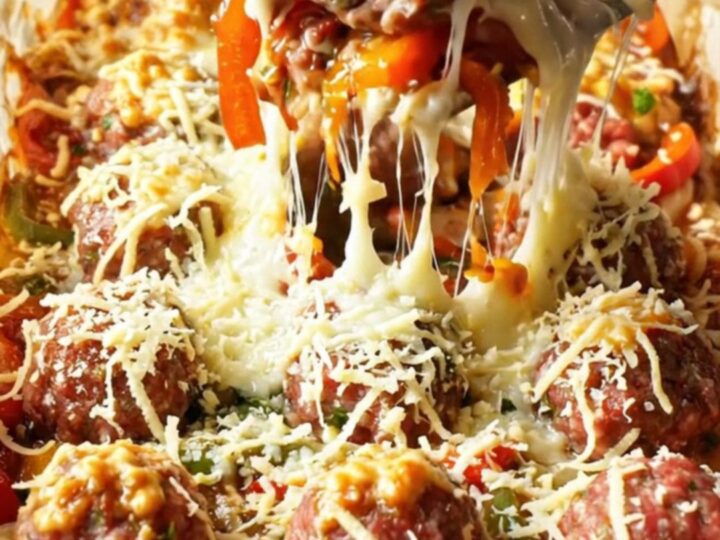
- Prep
- Cook
- Total
- Serves
- 4
This Turkish baked meatballs and vegetables dish brings together juicy, seasoned beef meatballs and sweet roasted peppers in a rich tomato sauce, all topped with a golden blanket of melted kaşar cheese.
Baked in a single glass dish, it’s a comforting, hands-off dinner that fills the kitchen with an irresistible aroma. The meatballs stay tender thanks to a splash of club soda, while the vegetables soften and sweeten as they cook.
This recipe is inspired by the classic Turkish tava, where meatballs and vegetables bake together in a shallow dish until everything is tender and caramelized. The combination of ground beef, peppers, onions, and garlic is simple, but the magic happens in the oven: the juices mingle, the sauce thickens, and the cheese melts into a bubbly, stretchy topping.
Serve it straight from the baking dish with crusty bread or rice to soak up every bit of the savory sauce. It’s a complete meal in one pan, and it’s sure to become a family favorite.
Ingredients
- 1 1/4 lb ground beef
For the meatballs
- 1 medium onion, grated
- 1 clove garlic, grated
- 4 tbsp breadcrumbs
- 1/2 small glass club soda
- 2 tbsp fresh parsley, finely chopped
- 1 tsp black pepper
- 1 tsp paprika
- 1 tsp red pepper flakes
- 1 tsp ground cumin
- 1 tsp salt
For the vegetables
- 2 medium onions, julienned
- 3 green peppers, sliced
- 2 red kapya peppers, sliced
- 4 cloves garlic, sliced
- 3 tbsp olive oil
- 1 tsp dried thyme
- 1 tsp chili flakes
- 1 tsp salt
For the sauce
- 1/2 tbsp tomato paste
- 1/2 tbsp pepper paste
- 1 1/2 cups hot water
- 1 pinch salt
For the topping
- 1 1/2 cups grated kaşar cheese
Why this recipe works
The meatballs are kept exceptionally moist by incorporating a small amount of club soda into the mixture. The carbonation adds a light texture and helps the meat retain moisture during baking, resulting in tender, juicy meatballs instead of dense, dry ones.
Additionally, grating the onion and garlic ensures they blend seamlessly into the meat, releasing their flavor without leaving chunky bits.
Baking the meatballs directly on top of the seasoned vegetables allows the meat juices to drip down and flavor the peppers and onions as they roast.
The wet parchment paper traps steam, gently cooking the dish and keeping everything moist, while the final uncovered bake with cheese creates a golden, bubbly crust. This two-stage baking method ensures perfectly cooked meatballs and vegetables with a luscious, concentrated sauce.
Notes and substitutions
Kaşar cheese is a Turkish semi-hard cheese with excellent melting properties. If you can’t find it, a combination of mozzarella and provolone is a great substitute. For a sharper flavor, try aged kaşar or a young Gouda. The cheese should be grated fresh for the best melt; pre-shredded varieties often contain anti-caking agents that affect texture.
Red kapya peppers are sweet, slightly spicy Turkish peppers. If unavailable, use red bell peppers or a mix of red and orange bell peppers. The green peppers add a fresh, slightly bitter note that balances the sweetness of the red peppers. If you prefer more heat, add extra chili flakes or a pinch of cayenne to the meatball mixture.
- kaşar cheese: Use a mix of mozzarella and provolone for a similar stretchy, melty topping. Or substitute with any mild, good-melting cheese like young Gouda or Monterey Jack.
- red kapya peppers: Substitute with red bell peppers. They are sweeter and less spicy, but the color and texture work well.
- pepper paste: Use 1 tablespoon of tomato paste mixed with a pinch of chili flakes to mimic the sweet-spicy flavor.
- club soda: Substitute with cold water or sparkling water. The soda helps keep the meatballs tender, but water works fine.
Equipment
- Large glass bowl
- Box grater
- Measuring cups and spoons
- Rectangular glass Borcam dish
- Whisk
- Small bowl
- Parchment paper
- Oven
Up next · Part 2 of 3
8 steps · 35 min of cooking · what to look for at each stage
Step-by-step instructions (Part 2)