Dinner · Part 2 of 3: Instructions
Truffle Honey Seared Venison Medallions Step-by-step instructions
- Prep
- Cook
- Total
- Serves
- 4
Before you start
Before beginning, ensure that your cast-iron skillet is clean and dry. Slice the venison backstrap into 2-inch thick medallions using a sharp chef's knife to ensure clean cuts.
Measure out the butter, ghee, and white truffle honey so they are ready to add quickly during the cooking process. Keep your fresh thyme sprigs washed and patted dry to prevent splattering when they hit the hot butter.
Ingredients at a glance (8)
- 1.5 lb venison backstrap, cut into 2-inch medallions
- 1 tsp juniper berries, crushed
- 1 tsp kosher salt
- 1/2 tsp black pepper, freshly cracked
- 2 tbsp ghee
- 3 tbsp butter
- 2 sprigs fresh thyme
- 3 tbsp white truffle honey
Instructions
Seasoning the medallions
- Prepare the venisonCut the venison backstrap into uniform 2-inch medallions. In a small bowl, combine the crushed juniper berries, kosher salt, and cracked black pepper. Rub this seasoning mixture thoroughly onto all surfaces of the venison medallions, ensuring even coverage for the best flavor development during the searing process.Look for The meat is evenly coated and seasoned.Tip Bring the venison to room temperature for about 20 minutes before searing to ensure even cooking throughout the medallions.
The venison should be sliced into uniform pieces and thoroughly coated with the juniper, salt, and pepper rub. The smell of the crushed juniper berries should be aromatic and fresh, indicating that they are ready to impart their piney, citrusy notes to the meat during the high-heat searing phase.
Searing to perfection
- Sear in cast ironHeat a cast-iron skillet over high heat until it reaches 475°F (246°C). Add the ghee to the hot pan. Carefully place the seasoned venison medallions into the skillet. Sear each side for approximately 2 minutes until the internal temperature reaches 145°F (63°C). Once cooked, remove from the pan and let the meat rest for at least 3 minutes.Look for The venison develops a deep brown, caramelized crust.Safe temperature 145°F (63°C) internal temperature (steaks, chops and roasts)Tip Do not overcrowd the skillet, as this will drop the temperature and cause the meat to steam rather than sear properly.
The medallions should develop a deep, dark brown crust on both sides. The skillet should be hot enough to sizzle immediately upon contact. Ensure the meat is not crowded in the pan so that it sears rather than steams, which is vital for achieving the desired texture and flavor profile.
Basting with truffle honey
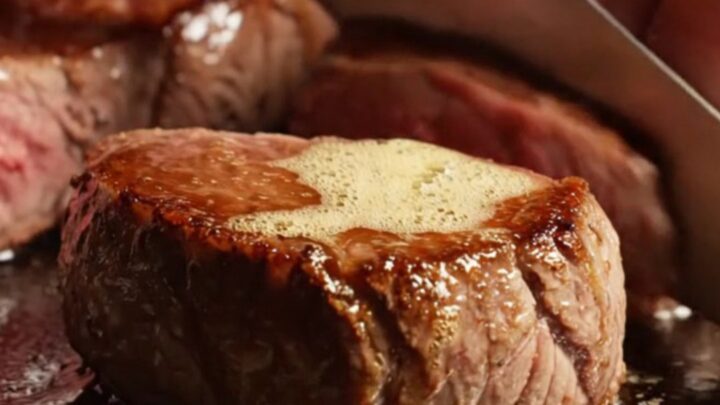
- Baste and finishRemove the skillet from the heat. Immediately add the butter, fresh thyme sprigs, and white truffle honey to the pan. Using a spoon, continuously baste the medallions with the foaming, aromatic butter mixture for one minute before serving.Look for The butter is foamy and the honey is incorporated into a glossy glaze.Tip Use high-quality white truffle honey to achieve the signature floral and earthy aroma that defines this dish.
The final phase involves a beautiful, foaming butter mixture that coats the venison. The pan juices should be glossy and thickened slightly by the honey.
The aroma should be rich, buttery, and unmistakably truffle-forward, signaling that the medallions are ready to be removed from the heat and rested.
Common mistakes
Avoid the common mistake of cooking the venison while it is cold, which can lead to uneven searing and a gray center. Another frequent error is failing to let the cast-iron skillet reach the proper temperature before adding the ghee, which prevents the crust from forming.
Finally, do not skip the resting period, as this is when the meat transitions from merely cooked to truly tender and juicy.
How to tell it’s done
The venison is perfectly done when the internal temperature reaches 145°F (63°C), resulting in a beautiful medium-rare finish. Use a meat thermometer to check the thickest part of the medallion.
The meat should feel firm yet springy to the touch. Always allow the meat to rest for at least 3 minutes; this is essential for the juices to settle and for the meat to achieve its maximum tenderness.
- Steaks, chops and roasts: 145°F (63°C) in the thickest part, then a 3-minute rest
Up next · Part 3 of 3
2 variations · storage & make-ahead · 3 answers · printable card
Tips, FAQ & printable recipe (Part 3)← Back to the ingredients (Part 1)