Dinner · Part 2 of 3: Instructions
Truffle Four Cheese Mac and Cheese with Crispy Panko Cauliflower Skillet Step-by-step instructions
- Prep
- Cook
- Total
- Serves
- 4
Before you start
Gather all the ingredients and equipment before you turn on the stove. Cut the cauliflower into bite-sized florets and set them on a plate. Slice the chives finely and keep them in a small bowl so they stay cold and bright. Grate the cheddar, Gruyère, Monterey Jack and Parmesan on a box grater, then toss them together in a bowl so the blend is evenly mixed.
Warm the milk in a small saucepan or in the microwave until it is steaming but not boiling. Preheat the oven to 400°F (200°C) and place a rack in the middle position. Measure the butter, flour and panko so you can move quickly once the sauce starts thickening. Having everything within reach keeps the sauce smooth and the pasta at the right texture.
Ingredients at a glance (12)
- 8 oz dry elbow macaroni
- 1 small head cauliflower florets
- 2 cloves whole garlic
- 1/4 cup fresh chives, finely sliced
- 4 oz cheddar cheese block, for grating
- 4 oz mixed grated cheeses: cheddar, Gruyère, Monterey Jack and Parmesan
- 3 tbsp unsalted butter
- 3 tbsp all-purpose flour
- 2 cups whole milk, warmed
- 1 tsp truffle oil or truffle butter, to taste
- 1/2 cup panko breadcrumbs
- kosher salt and black pepper, to taste
Instructions
Pasta and sauce base
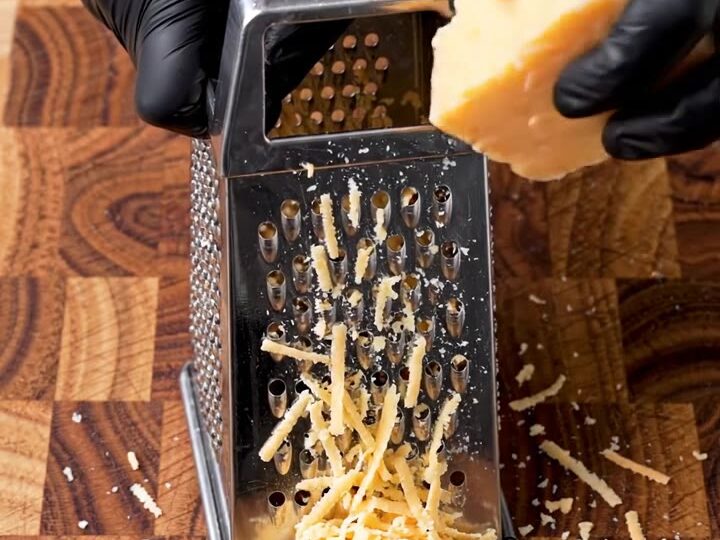
- Prep the cauliflower and chivesCut the cauliflower into bite-sized florets, then slice the chives finely. Set the chives aside for the finish. Grate the cheeses on a box grater into a bowl and toss them together to form the four cheese blend.Look for Florets are small and even, chives are thin green rings, and the cheese forms a fluffy mound of shreds.Tip Chilled cheese grates more easily, so grate it straight from the refrigerator.
- Boil the macaroni and cauliflowerBring a large pot of salted water to a boil. Add the elbow macaroni and cook until tender, about 8 minutes. Add the cauliflower florets during the last 3 minutes, then drain well in a colander.Look for Pasta is tender but still holds its shape, and the florets are just tender when pierced.Tip Reserve a small cup of pasta water in case the sauce needs loosening.
The macaroni is tender with a slight bite and the cauliflower is just tender when pierced with a knife. Drain them well, because excess water will thin the cheese sauce. The roux should smell nutty and the milk should be fully incorporated, with a smooth sauce that coats the back of a spoon.
Remove the garlic cloves before adding the cheese so the sauce tastes clean and mellow. Keep the heat low at this stage, and check that the sauce is smooth with no lumps before you move on to the cheese. A glossy, thickened base is the foundation of the whole dish, so take a moment to confirm it looks silky and well blended before adding the cheese blend.
Cheese sauce and folding
- Make the cheese sauceMelt the butter in the cast iron skillet over medium heat with the whole garlic cloves. Whisk in the flour and cook for 1 minute. Slowly pour in the warm milk, whisking constantly, until smooth and thickened, about 4 minutes.Look for The sauce coats the back of a spoon and looks smooth and glossy.Tip Warm the milk first so the sauce thickens smoothly without lumps.
- Melt in the cheeseRemove the garlic cloves. Lower the heat to low and stir in the four cheese blend a handful at a time until fully melted. Season with salt and pepper, then fold in the drained macaroni and cauliflower.Look for The cheese sauce is silky and clings to every piece of pasta.Tip Adding cheese off the heat or on low prevents the sauce from turning grainy.
- Toast the pankoIn a small dry skillet over medium heat, toast the panko breadcrumbs, stirring often, until golden and crisp, about 3 minutes. Transfer to a plate to cool slightly.Look for The crumbs turn golden brown and smell toasty.Tip Stir constantly, because panko can darken quickly once it starts to color.
The cheese should have melted fully into the sauce, leaving it smooth, glossy and thick enough to cling to the macaroni. Look for an even coating on each piece of pasta and cauliflower and no grainy patches or oily pools at the edges. Taste and adjust salt and pepper now, since the cheeses are naturally salty. The skillet should be warm but not bubbling hard. If the sauce feels too thick, loosen it with a splash of the reserved pasta water. Once the sauce is smooth and evenly coating the pasta and cauliflower, the dish is ready for the panko and the oven.
Toast, top and bake
- Top and bake the skilletScatter the toasted panko over the macaroni in the cast iron skillet. Bake in a preheated 400°F (200°C) oven until the cheese bubbles around the edges and the crumbs are golden, about 10 minutes.Look for The sauce bubbles at the edges and the top is deep golden.Tip Set the skillet on a trivet so it stays hot while you finish the dish.
- Finish with truffle and chivesRemove the skillet from the oven and let it rest for 5 minutes. Drizzle with truffle oil or dot with truffle butter, scatter the sliced chives over the top, and serve straight from the skillet.Look for The top is crisp, the sauce is glossy, and the chives are bright green.Tip Add the truffle at the end so its aroma stays strong.
The panko should be golden and crisp after toasting, with a toasty smell and no dark spots. After scattering it over the skillet and baking, the sauce should be bubbling around the edges and the top should show deep golden patches of crumb. The cheese layer underneath should be set but still creamy. Let the skillet rest for about 5 minutes so the sauce settles and does not run when served. Check the top for crispness before serving, since panko can soften quickly if it sits covered. The skillet should look hot, golden and inviting when it comes out of the oven.
Common mistakes
The most common problem is a grainy or oily cheese sauce, which usually happens when the heat is too high or the cheese is added too quickly. Keep the burner on low once the cheese goes in and add it gradually so it melts evenly. Pre-shredded cheese can also cause a gritty texture, so grate the cheese yourself whenever possible.
Another frequent mistake is draining the pasta and cauliflower poorly, which leaves extra water that thins the sauce and makes the dish watery. Shake the colander well before adding the vegetables and pasta to the skillet. Finally, do not skip toasting the panko. Raw crumbs stay pale and soft under the cheese, while toasted crumbs give the crisp contrast that makes this skillet memorable.
How to tell it’s done
The dish is done when the cheese sauce is bubbling along the edges of the skillet and the panko on top is golden brown and crisp. The center of the pasta should be hot throughout, and the sauce should look glossy and thick rather than thin. Insert a small knife into the middle; it should feel warm all the way through.
Because this recipe has no meat, poultry or eggs, there is no protein temperature to reach, so judge doneness by color, bubbling and texture. If the top is browning too quickly before the sauce bubbles, move the skillet to a lower rack for the last few minutes.
Up next · Part 3 of 3
4 variations · storage & make-ahead · 5 answers · printable card
Tips, FAQ & printable recipe (Part 3)← Back to the ingredients (Part 1)