Desserts · Part 2 of 3: Instructions
Triple Chocolate Fudge Salted Caramel Brownie Bars Step-by-step instructions
- Prep
- Cook
- Total
- Serves
- 16
Before you start
Heat the oven to 350°F (175°C) and set the rack in the middle position. Line an 8-inch or 9-inch square metal pan with parchment paper, letting the ends overhang so you can lift the slab out later. Chop the dark, milk and white chocolate, and chop the hazelnuts, pecans and almonds. Measure the flour, sugar, salt and vanilla, and bring the butter and eggs to room temperature so the batter mixes evenly. Have the caramel sauce ready at room temperature so it drizzles smoothly, and set out the offset spatula and a long knife before you start.
Ingredients at a glance (14)
- 4 oz dark chocolate, chopped
- 4 oz milk chocolate, chopped
- 3 oz white chocolate, chopped, plus 1 oz melted for drizzling
- 1/3 cup hazelnuts, toasted and chopped
- 1/3 cup pecans, chopped
- 1/3 cup almonds, chopped
- 3/4 cup (1 1/2 sticks) unsalted butter
- 1 1/2 cups granulated sugar
- 3 large eggs
- 1 tsp vanilla extract
- 3/4 cup all-purpose flour
- 1/2 tsp kosher salt
- 1/2 cup store-bought or made ahead caramel sauce
- flaky sea salt, for sprinkling, to taste
Instructions
Build the fudge base
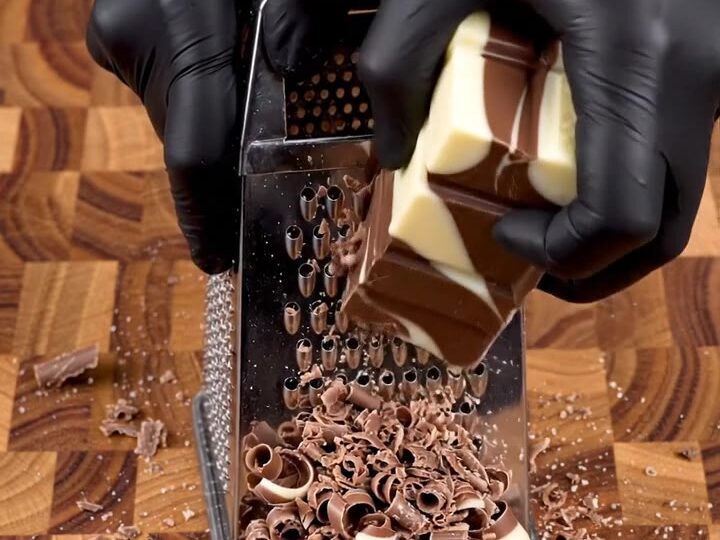
- Chop the chocolate and nutsChop the dark, milk and white chocolate bars and the hazelnuts, pecans and almonds on a cutting board with a chef's knife. Drag the chopped mix together into a pile so the pieces are evenly distributed across the board.Look for Pieces are uneven, with fine chocolate dust and nut pieces mixed through the pile.Tip Chop the nuts separately first if you want them to stay in larger, crunchy pieces.
- Make the chocolate fudge baseHeat the oven to 350°F (175°C) and line a metal baking pan with parchment. Melt the butter with the dark and milk chocolate in a heatproof bowl set over simmering water, stirring until smooth. Whisk in the sugar, then the eggs one at a time, the vanilla and the salt. Fold in the flour until no streaks remain, then stir in most of the chopped chocolate and nuts.Look for The batter is glossy, thick and smooth, pulling away from the sides of the bowl.Tip Let the melted mixture cool slightly before adding the eggs so they do not scramble.
At the end of this phase, the fudge base should be glossy, thick and smooth, with no visible streaks of flour and no grainy chocolate. The melted chocolate and butter should have combined fully with the sugar and eggs, and the mixture should pull away slowly from the sides of the bowl when you lift the spatula.
Smell the batter, which should carry a rich chocolate aroma with a faint note of vanilla. If you see lumps of flour or separated fat, whisk gently over a bowl of warm water to bring the batter back together before you pour it into the pan. Check the consistency once more before spreading, because a loose batter will bake unevenly and take longer to set.
Layer the caramel and white chocolate
- Spread and layer the toppingsPour the fudge base into the parchment-lined pan and spread it smooth with an offset spatula. Drizzle the caramel sauce over the surface. Melt the white chocolate, drizzle it across the caramel, then swirl both with a knife to create a marbled pattern.Look for The surface is level, with caramel ribbons and white streaks visible across the top.Tip Swirl gently with a few strokes only so the layers stay distinct.
- Bake until just setBake the slab on the middle rack for about 30 minutes, until the edges are set and the center is nearly firm when gently pressed. Remove the pan and let the slab cool on a rack until it is firm enough to lift out.Look for The top looks dull and set, and the edges pull away slightly from the pan.Tip Avoid overbaking, which makes the fudge dry and crumbly instead of moist.
At the end of this phase, the fudge should lie level in the parchment-lined pan, with caramel ribbons and white chocolate streaks clearly visible across the surface. The caramel should look glossy and sit in thin lines rather than pooling in one spot, and the white chocolate should be melted smooth so it drizzles in fine threads.
Run a knife through the top with two or three gentle swirls to check that the layers blend into a marbled pattern without disappearing into the fudge. If the surface looks uneven, smooth it with the spatula again before the slab goes into the oven, since an even top bakes into neater bars.
Bake, set and cut the slab
- Set, cut and finishLet the slab set in the pan at room temperature until firm, about 2 hours. Lift the parchment to remove the slab, place it on a board and cut it into 16 rectangular bars with a long knife. Sprinkle each bar lightly with flaky sea salt before serving.Look for The slab holds its shape when cut and the caramel ribbons stay in place.Tip Wipe the knife between cuts for clean, sharp edges on each bar.
At the end of this phase, the edges of the slab should be set and slightly pulled away from the pan, and the center should feel nearly firm when pressed gently. The top should look matte rather than wet, and the slab should be firm enough to lift out of the pan by the parchment without sagging.
Let it cool fully before cutting, because a warm slab will smear the caramel and crumble at the edges. A clean long knife should slice through each bar with a sharp, even edge. Sprinkle the flaky sea salt over each piece just before serving so the crystals stay crisp and visible.
Common mistakes
The most common problem is overbaking, which turns the fudge dry and crumbly instead of moist and dense. Watch the edges and the center, and take the slab out as soon as the surface looks set and the middle feels nearly firm. Cutting too early is another frequent mistake, since a warm slab smears the caramel and white chocolate into the fudge and the bars lose their ribbons.
Let the slab set fully at room temperature before lifting it out. Melting the chocolate too hot can make it seize or turn grainy, so use gentle heat and stir often. Finally, do not skip the parchment overhang, because without it the slab is hard to lift and the edges tear.
How to tell it’s done
The bars are done when the edges are set and pulled slightly away from the pan, and the center feels nearly firm when pressed gently with a fingertip. The top should look matte and dry, not wet or shiny. A thin probe or cake tester inserted into the center should come out with moist crumbs rather than wet batter. Because this recipe does not contain a raw protein, no safe internal temperature applies. After baking, let the slab set fully until it holds its shape when cut, which usually takes about 2 hours at room temperature.
Up next · Part 3 of 3
4 variations · storage & make-ahead · 5 answers · printable card
Tips, FAQ & printable recipe (Part 3)← Back to the ingredients (Part 1)