Dinner · Part 2 of 3: Instructions
Thai Red Curry Prawns in One Skillet in Under 30 Minutes Step-by-step instructions
- Prep
- Cook
- Total
- Serves
- 4
Before you start
Gather all ingredients and equipment before turning on the heat, because the dish moves quickly once the skillet is hot. Slice the red and green bell peppers into thin strips and cut the red chili into thin rounds. Trim the snap peas and pick the basil leaves from their stems.
Peel and devein the raw prawns, keeping them refrigerated until the moment you cook them, and pat them dry with paper towels. Grate the hard cheese over the board. Measure the Thai red curry paste and open the can of coconut milk, stirring it well so the cream and liquid are fully combined. Set everything within easy reach of the stove.
Ingredients at a glance (9)
- 1 lb raw prawns, shells on, peeled and deveined
- 1 red bell pepper, cut into thin strips
- 1 green bell pepper, cut into thin strips
- 1 cup snap peas
- 1 tbsp Thai red curry paste
- 1 can (13.5 oz) full-fat coconut milk
- 1 red chili, thinly sliced
- 1/2 cup fresh basil leaves
- hard cheese, for grating, optional
Instructions
Build the curry base
- Prepare the vegetables and prawnsSlice the red and green bell peppers into thin strips on a wooden board with a chef's knife. Trim the snap peas and pick the basil leaves. Keep the prawns refrigerated until you are ready to cook, and peel and devein them, leaving the tails on if you prefer.Look for Pepper strips are thin and even, and the prawns are cold, peeled and dry.Tip Pat the prawns dry with paper towels so the curry sauce clings to them.
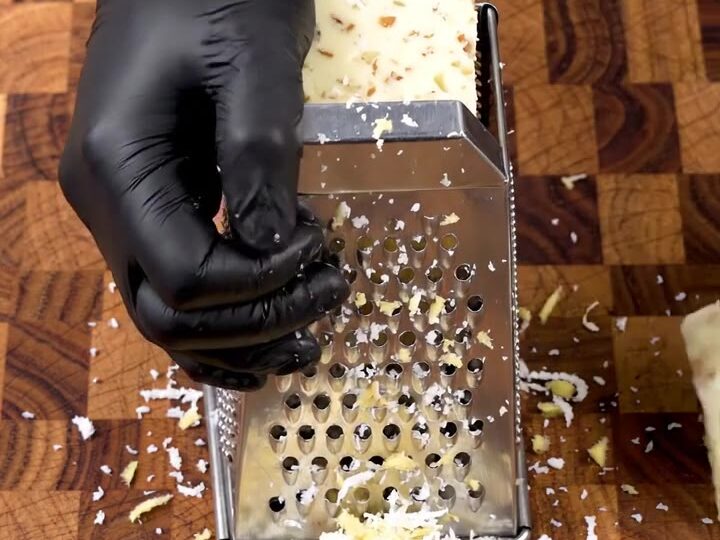
- Grate the hard cheeseGrate the hard cheese on a box grater over the board so the shavings fall onto the board. Set them aside for serving.Look for Fine, fluffy shavings collect on the board.Tip Grate the cheese just before serving so it stays dry and fragrant.
After the first phase, the peppers and snap peas are beginning to soften at their edges, and the red curry paste smells warm and fragrant as it blooms in the pan. The vegetables should be coated in a thin, deep red layer with no dry patches.
Check that the paste has not scorched on the bottom of the skillet, and lower the heat slightly if it looks dark. The vegetables should still have some bite, because they will continue to cook in the sauce. When the base smells rich and the peppers are bright, you are ready to add the prawns and coconut milk.
Simmer prawns in coconut sauce
- Start the red curry baseHeat a black cast-iron skillet over medium heat. Add the red and green pepper strips, the snap peas and a spoonful of Thai red curry paste, and stir to coat the vegetables.Look for The paste smells fragrant and the peppers begin to soften at the edges.Tip Stir the paste into the vegetables so it toasts lightly before the coconut milk goes in.
- Add the prawns and coconut milkAdd the peeled prawns to the skillet and toss them with the vegetables and curry paste. Pour in the coconut milk and stir gently with a wooden spoon as the sauce comes to a simmer.Look for The sauce bubbles gently and turns a reddish-orange color.Tip Stir gently so the prawns stay whole and tender in the sauce.
- Simmer until the prawns are cookedKeep the sauce at a steady simmer and cook until it thickens slightly and the prawns turn pink and opaque all the way through. Cook the prawns until the thickest part reaches 145°F (63°C), then remove the skillet from the heat.Look for The prawns turn pink and opaque, and the sauce coats a spoon.Safe temperature 145°F (63°C) internal temperature (shellfish)Tip Cut the largest prawn in half to check that the center is opaque.
At the end of the second phase, the sauce should be simmering steadily, with small bubbles breaking across the surface and a reddish-orange color that looks glossy. The sauce should coat the back of a spoon and thicken slightly. The prawns should be turning pink and opaque, and the thickest part of the largest prawn should reach 145°F (63°C). Lift one prawn and cut it open to check that the center is no longer translucent. If the prawns are still grey in the middle, let them simmer for another minute or two before taking the skillet off the heat.
Finish and toss with herbs
- Finish with chili, basil and cheeseScatter the sliced red chili and most of the fresh basil leaves over the prawns. Use tongs to turn the prawns so they are fully coated in the glossy sauce. Garnish with the remaining basil and the grated cheese.Look for The prawns are glossy and evenly coated, with basil leaves wilting into the sauce.Tip Add the basil at the end so it stays bright green and fragrant.
- Serve straight from the skilletBring the skillet to the table and serve the curry while it is hot, with the chili slices and basil on top. Spoon the sauce over each portion.Look for The sauce is glossy and steam rises from the skillet.Tip Serve with steamed jasmine rice to soak up the sauce.
In the final phase, the basil leaves should look bright green and slightly wilted into the sauce, and the sliced red chili should be spread evenly across the prawns. The prawns should be glossy and fully coated with sauce, with no pale spots on their shells or flesh.
Give the skillet one more gentle turn with tongs and taste the sauce. If it needs a little more heat, add a pinch more chili. The dish should smell aromatic and fresh, with the sweetness of coconut balanced by the heat of the curry paste. Serve it straight from the pan while the sauce is still hot.
Common mistakes
The most common mistake is overcooking the prawns. Because they cook in only a few minutes, they can turn firm and rubbery if they stay in the simmering sauce too long, so watch them closely once they turn pink. Another mistake is boiling the coconut milk hard, which can make it separate and leave the sauce grainy rather than silky.
Keep the heat at a steady simmer after the coconut milk goes in. Adding the basil too early is also a problem, because it darkens and loses its fragrance. Finally, do not crowd the skillet with too much liquid; if the sauce looks thin, let it simmer uncovered for a few minutes to thicken before adding the prawns.
How to tell it’s done
The prawns are done when they turn pink and opaque all the way through and curl gently into a C-shape. The flesh should look firm and springy, not translucent or grey at the center. For food safety, cook the prawns until the thickest part reaches 145°F (63°C); at that point they are safe to eat and still tender. The sauce is ready when it is reddish-orange, glossy and thick enough to coat a spoon. If you have a thermometer, check the largest prawn, and cut one open as a visual check before serving.
- Shellfish: 145°F (63°C) in the thickest part
Up next · Part 3 of 3
2 variations · storage & make-ahead · 5 answers · printable card
Tips, FAQ & printable recipe (Part 3)← Back to the ingredients (Part 1)