Dinner · Part 2 of 3: Instructions
Tender Sticky Sweet BBQ Ribs with a Caramelized Honey Glaze Step-by-step instructions
- Prep
- Cook
- Total
- Serves
- 4
Before you start
Before beginning, ensure the oven rack is positioned in the center for baking, and the top rack is ready for broiling later. Line a large rimmed baking sheet with aluminum foil for easy cleanup.
If the membrane on the back of the rib rack is still intact, slide a butter knife under the skin at one end, grip it with a paper towel, and pull it off firmly. Pat the ribs completely dry with paper towels.
Ingredients at a glance (3)
- 1 rack pork baby back ribs (about 3 pounds), membrane removed
- 1 cup barbecue sauce
- 1/4 cup honey
Instructions
Slow Baking
- Prep and Wrap the RibsPreheat the oven to 300°F (150°C). Lay out a large double layer of aluminum foil on the prepared baking sheet. Place the pork baby back ribs in the center of the foil. Wrap the ribs tightly, crimping the edges securely to seal in all the steam and juices during the long baking process.Look for The foil packet should be completely airtight to prevent steam from escaping.Tip Double-wrapping helps prevent any bones from puncturing the foil during baking.
- Bake the Ribs Low and SlowPlace the foil-wrapped ribs in the preheated oven and bake for 2 to 2.5 hours. The long, slow bake allows the collagen to break down, resulting in incredibly tender meat that easily pulls away from the bone once fully cooked.Look for The meat should be tender and slightly retracted from the bone ends.Tip Avoid opening the oven door frequently to maintain a consistent cooking temperature.
At the end of the baking phase, the ribs should feel soft and pliable when gently pressed through the foil.
Upon carefully opening a corner of the foil packet, a burst of fragrant, savory steam should escape, and the meat should be visibly shrinking away from the tips of the bones, indicating that the connective tissues have successfully broken down.
Glazing and Broiling
- Prepare and Apply the GlazeIn a small mixing bowl, combine the barbecue sauce and honey, stirring until completely smooth. Carefully unwrap the baked ribs, letting the steam escape safely. Brush a generous, thick layer of the honey barbecue glaze over the top and sides of the ribs using a pastry brush.Look for The ribs should be completely coated in a glossy, thick layer of sauce.Tip Save a small portion of the glaze to brush on fresh right before serving.
- Broil to CaramelizeSet the oven to broil on high. Place the glazed ribs back into the oven on the top rack, about 4 to 6 inches from the heat source. Broil for 3 to 5 minutes until the glaze is bubbling, sticky, and slightly charred at the edges. Ensure the pork reaches a safe internal temperature of 145°F (63°C), then remove from the oven and let the ribs rest for at least 3 minutes before slicing.Look for Look for charred edges and a deeply caramelized, bubbling glaze.Safe temperature 145°F (63°C) internal temperature (steaks, chops and roasts)Tip Watch the ribs closely under the broiler as the sugars in the honey can burn quickly.
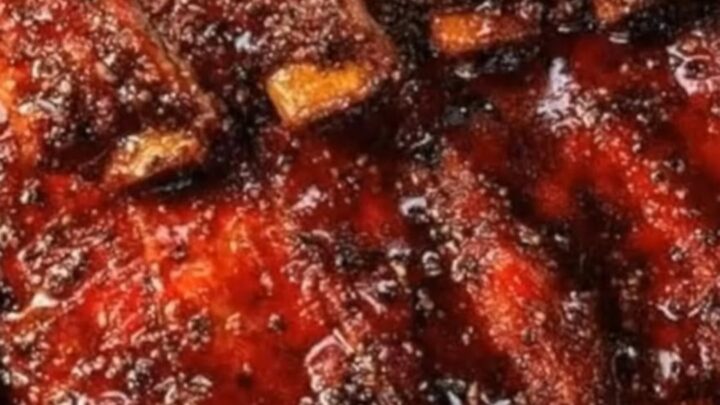
After broiling, the glaze should be transformed from a wet sauce into a sticky, caramelized lacquer. It will bubble rapidly and show dark, charred spots along the edges of the ribs. The aroma will be intensely sweet and smoky, and the meat must reach an internal temperature of at least 145°F (63°C) before resting.
Resting and Slicing
- Slice and ServeTransfer the rested ribs to a cutting board lined with parchment paper. Use a sharp chef's knife to slice cleanly between the bones. Arrange the sliced ribs on a serving tray and brush with any remaining glaze if desired.Look for The knife should glide easily through the meat with a clean cut.Tip Slicing the ribs bone-side up makes it much easier to see where to cut.
Once sliced, the ribs should reveal a juicy, tender interior that holds its shape but pulls away cleanly when bitten. The caramelized glaze should be tacky to the touch and cling perfectly to the sliced pieces without running off, presenting a beautiful contrast between the charred bark and the succulent meat inside.
Common mistakes
One common mistake is rushing the baking process by raising the oven temperature. High heat cooks the meat too quickly, tightening the muscle fibers and making the ribs tough and dry instead of tender.
Another frequent error is leaving the ribs unattended under the broiler; the sugar content in both the barbecue sauce and the honey can burn from perfectly caramelized to completely blackened in a matter of seconds.
How to tell it’s done
To determine perfect doneness, use a meat thermometer inserted into the thickest part of the meat between the bones, ensuring it reads at least 145°F (63°C). For the ultimate fall-off-the-bone texture, many cooks prefer to let the internal temperature reach 190°F to 203°F (88°C to 95°C).
Additionally, the 'bend test' is highly reliable: lift the rack from one end with tongs, and if the meat cracks slightly in the center, they are ready.
- Steaks, chops and roasts: 145°F (63°C) in the thickest part, then a 3-minute rest
Up next · Part 3 of 3
2 variations · storage & make-ahead · 4 answers · printable card
Tips, FAQ & printable recipe (Part 3)← Back to the ingredients (Part 1)