Dinner · Part 1 of 3: Ingredients
Tender Slow Cooker Beef Stew with Hearty Vegetables
- Prep
- Cook
- Total
- Serves
- 6
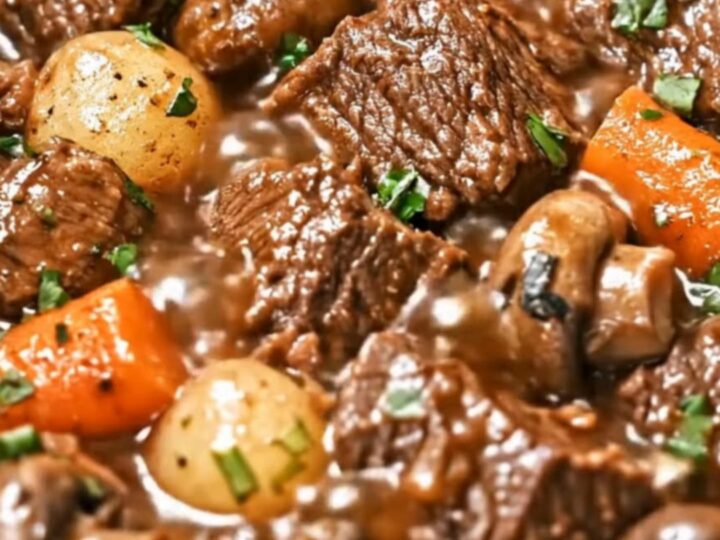
When the temperature drops, nothing comforts the soul quite like a bowl of slow-cooked beef stew. This classic recipe delivers meltingly tender beef chunks smothered in a rich, bubbling gravy, alongside perfectly cooked root vegetables. By searing the seasoned beef first and letting the slow cooker do the heavy lifting, you achieve deep, complex flavors with minimal hands-on effort.
This slow cooker beef stew is the ultimate set-it-and-forget-it comfort food. It starts with seasoned stew meat seared to caramelized perfection, creating a savory foundation. Combined with hearty carrots, earthy mushrooms, and tender potatoes, everything simmers slowly in a rich, savory broth.
Over several hours, the collagen in the beef breaks down, transforming tough cuts into succulent, fork-tender bites while infusing the vegetables with incredible depth. It is a foolproof recipe that fills your home with an irresistible aroma, ready to greet you at the end of a long day.
Ingredients
- 2 lb beef stew meat, cut into 1 1/2-inch cubes
- 3 carrots, sliced into thick rounds
- 3 potatoes, peeled and cubed
- 8 oz mushrooms, halved
- 3 cups savory broth
- 2 tbsp parsley, finely chopped
Why this recipe works
The magic of this recipe lies in the low-and-slow cooking method, which is perfectly suited for tough cuts of beef like chuck roast. These cuts contain high amounts of connective tissue and collagen.
When cooked quickly, they become tough and chewy, but when subjected to gentle, low heat over several hours, the collagen melts into gelatin. This process not only tenderizes the meat until it practically falls apart at the touch of a fork, but it also naturally thickens and enriches the surrounding broth into a glossy, savory gravy.
Searing the beef in a hot skillet before transferring it to the slow cooker is a crucial step that cannot be skipped. This high-heat cooking triggers the Maillard reaction, a chemical process between amino acids and reducing sugars that creates complex flavor compounds and a beautiful brown crust.
This caramelized exterior dissolves into the cooking liquid during the slow simmer, imparting a deep, roasted savoriness to the entire stew that raw simmering simply cannot replicate.
Notes and substitutions
For the best results, select a well-marbled cut of beef, such as boneless beef chuck eye roast, and cut it into uniform cubes yourself. Pre-cut stew meat from the supermarket often contains a mix of different cuts that cook at uneven rates, leading to dry or tough pieces.
The heavy marbling of chuck roast ensures the beef remains incredibly juicy and flavorful throughout the long cooking process. Russet or Yukon Gold potatoes are excellent choices as they hold their shape well while absorbing the savory broth.
When preparing the vegetables, cut the carrots and potatoes into thick, uniform pieces. If they are chopped too small, they will turn mushy during the long cooking cycle. Cremini mushrooms, also known as baby bellas, add a wonderful earthy flavor and robust texture that pairs beautifully with the beef. Ensure your slow cooker is large enough—at least a 6-quart model—to allow heat to circulate evenly around the ingredients, ensuring a perfectly balanced cook.
Equipment
- 12-inch skillet
- 6-quart slow cooker
- tongs
- chef's knife
- cutting board
- wooden spoon
Up next · Part 2 of 3
5 steps · 8 h of cooking · what to look for at each stage
Step-by-step instructions (Part 2)