Dinner · Part 2 of 3: Instructions
Tender French Onion Mushroom Pot Roast for a Cozy Dinner Step-by-step instructions
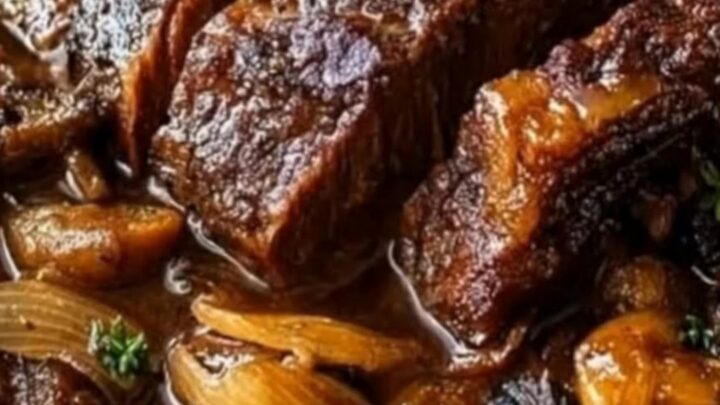
- Prep
- Cook
- Total
- Serves
- 6
Before you start
Before beginning, ensure the beef chuck is patted dry with paper towels to facilitate a better sear. Slice the onions thinly and the mushrooms evenly to ensure they cook at the same rate.
Preheat the oven to 325°F (165°C) once the stove-top searing is complete to ensure it is ready for the braising phase. Having all ingredients prepped and ready to go will make the cooking process much smoother and more enjoyable, allowing you to focus on the development of flavors at each stage.
Ingredients at a glance (4)
- 3 lb beef chuck roast, cut into large pieces
- 3 large yellow onions, thinly sliced
- 1 lb cremini mushrooms, sliced
- 2 cups beef broth
Instructions
Searing the Meat
- Sear the beefHeat a Dutch oven over medium-high heat. Season the beef chuck roast generously with salt and pepper. Sear the meat in the hot pot on all sides until a deep brown crust forms. Remove the beef from the pot and set it aside on a plate.Look for The beef should have a deep, mahogany-brown crust on all sides.Tip Ensure the pot is hot enough before adding the beef to get a proper sear.
The meat should be dark brown on all sides. This browning, known as the Maillard reaction, is critical for developing the rich flavor profile of the final gravy. Ensure the bottom of the pot has some browned bits, which will later be deglazed by the broth. This step is foundational for the depth of flavor that characterizes the final dish, so take your time to achieve a deep, mahogany color on every side of the beef pieces.
Developing the Base
- Caramelize aromaticsIn the same Dutch oven, add the sliced onions and mushrooms. Sauté over medium heat, stirring occasionally, until the onions are soft and golden brown and the mushrooms have released their moisture and browned nicely.Look for The onions should be translucent and caramelized to a deep golden color.Tip Do not rush the caramelization process; it builds the base flavor for the gravy.
The onions should be soft, sweet, and deep golden brown. The mushrooms should have shrunk in size and deepened in color. This stage ensures that the vegetable base is fully developed and ready to support the long braising process that follows, providing a sweet and savory foundation.
The kitchen should be filled with the rich, savory aroma of caramelizing vegetables, signaling that the base is ready for the addition of the beef and the braising liquid.
The Slow Braise
- Braise the roastReturn the seared beef to the Dutch oven, tucking it into the onion and mushroom mixture. Pour in the beef broth. Cover the pot with a tight-fitting lid and transfer to a preheated oven at 325°F. Cook for 3 to 4 hours, or until the beef reaches an internal temperature of 145°F (63°C). Remove from the oven and let the roast rest for at least 3 minutes before slicing and serving with the pan gravy.Look for The meat should be fork-tender and easily pull apart when tested.Safe temperature 145°F (63°C) internal temperature (steaks, chops and roasts)Tip Keep the lid tightly closed to ensure the moisture stays in the pot.
The beef should be fork-tender and the gravy should have reduced slightly, becoming rich and glossy. If the gravy is too thin, it can be reduced further on the stove-top after removing the beef. The kitchen should be filled with the deep, savory aroma of slow-cooked beef and onions. Check that the meat is easily pierced with a fork, indicating that the connective tissues have broken down into a tender, succulent texture that is ready for serving.
Common mistakes
Avoid overcrowding the Dutch oven during the searing phase, as this will cause the beef to steam rather than brown. Also, ensure the liquid level is sufficient to partially submerge the beef without completely covering it, which maintains the ideal balance between braising and roasting.
Never skip the resting period, as it is crucial for juices to redistribute. Additionally, keep the lid tightly closed during the braising process to prevent moisture loss, which is essential for maintaining the tender quality of the meat.
How to tell it’s done
The roast is finished when the meat is extremely tender and reaches an internal temperature of 145°F (63°C). Use a meat thermometer inserted into the thickest part of the beef to verify. The beef should offer no resistance when pierced with a fork, indicating the connective tissue has fully broken down.
Always allow the meat to rest for at least three minutes after removing it from the oven to ensure the juices redistribute properly, resulting in the most tender and flavorful slices possible.
- Steaks, chops and roasts: 145°F (63°C) in the thickest part, then a 3-minute rest
Up next · Part 3 of 3
2 variations · storage & make-ahead · 3 answers · printable card
Tips, FAQ & printable recipe (Part 3)← Back to the ingredients (Part 1)