Dinner · Part 2 of 3: Instructions
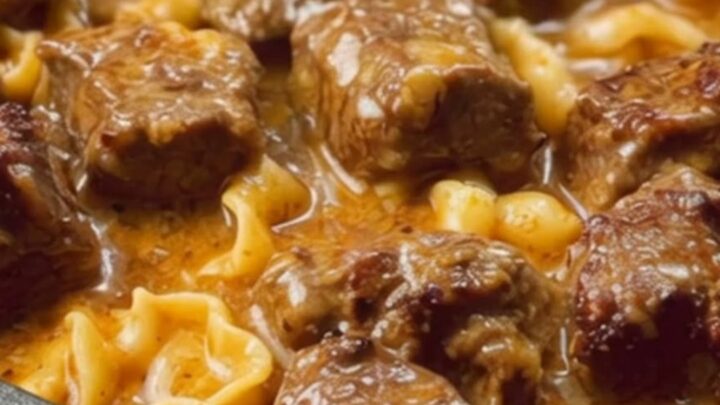
Tender Braised Beef and Spiral Egg Noodles Step-by-step instructions
- Prep
- Cook
- Total
- Serves
- 4
Before you start
Before beginning, ensure the beef is cut into uniform, bite-sized pieces to promote even cooking. Pat the beef cubes dry with paper towels to ensure a superior sear; excess moisture on the surface can cause the meat to steam rather than brown.
Have all ingredients measured and ready, as the searing process moves quickly and requires your full attention at the stove.
Ingredients at a glance (3)
- 1.5 lb beef chuck roast, cut into 1-inch cubes
- 12 oz spiral egg noodles
- 2 cups beef broth
Instructions
Searing for depth
- Sear the beefHeat a large skillet over medium-high heat. Add the beef cubes in batches, ensuring they do not crowd the pan, and sear until a deep brown crust forms on all sides. Remove the beef and set aside.Look for The beef should be deeply browned and caramelized on the outside with a fragrant, savory aroma filling the kitchen.Tip Do not skip the browning process, as this creates the foundation for the rich, complex flavor of the final gravy.
The beef should be deeply browned on all sides, releasing a rich, savory aroma. The bottom of the skillet should have a layer of dark, flavorful bits that will form the base of the gravy.
Ensure the heat is high enough to achieve this color quickly without cooking the meat through entirely, as the braising phase will handle the final tenderizing.
Braising to tenderness
- Braise the meatReturn the seared beef to the skillet or transfer to a casserole dish. Pour in the beef broth, scraping any browned bits from the bottom. Cover and simmer on low heat until the meat is fork-tender and reaches an internal temperature of 145°F (63°C). Let the beef rest for 5 minutes before serving.Look for The liquid should be bubbling gently and reducing into a thick, glossy, and deeply colored gravy that coats the back of a spoon.Safe temperature 145°F (63°C) internal temperature (steaks, chops and roasts)Tip Maintain a low, steady simmer to ensure the connective tissues in the beef break down slowly for maximum tenderness.
The braise is complete when the beef is exceptionally soft and the liquid has reduced into a thick, concentrated gravy. The sauce should smell deeply savory and look dark and glossy. Before moving to the final step, check that the meat is tender enough to break apart with a fork and that the gravy is thick enough to coat a spoon.
Final assembly
- Cook noodles and assembleWhile the beef braises, cook the spiral egg noodles in a large pot of boiling salted water according to the package instructions until al dente. Drain the noodles and toss them directly into the casserole dish with the finished beef and gravy, ensuring every spiral is thoroughly coated.Look for The noodles should be perfectly al dente and glistening as they absorb the savory sauce, creating a cohesive and visually appealing dish.Tip Reserve a small splash of the pasta cooking water to thin the gravy if it becomes too thick during the tossing stage.
The dish is ready when the noodles are fully incorporated and glistening with the rich, reduced gravy. The pasta should be tender yet firm to the bite, and the beef should be distributed evenly throughout. Ensure the final mixture is hot and well-combined, with the noodles having absorbed just enough of the sauce to be flavorful throughout.
Common mistakes
A common mistake is overcrowding the skillet during the searing process, which lowers the pan temperature and prevents proper browning. Always sear in batches to keep the heat high.
Another error is using too much liquid, which prevents the gravy from thickening properly. Start with the suggested amount and allow it to reduce naturally to achieve that signature glossy, rich, and flavorful coating on the noodles.
How to tell it’s done
The beef is perfectly done when it is fork-tender and reaches an internal temperature of 145°F (63°C). At this stage, the meat should yield easily to pressure, and the sauce should be reduced to a thick, glossy consistency that clings beautifully to the noodles.
Always allow the meat to rest for at least 5 minutes before serving to ensure the juices redistribute for maximum tenderness.
- Steaks, chops and roasts: 145°F (63°C) in the thickest part, then a 3-minute rest
Up next · Part 3 of 3
2 variations · storage & make-ahead · 3 answers · printable card
Tips, FAQ & printable recipe (Part 3)← Back to the ingredients (Part 1)