Dinner · Part 2 of 3: Instructions
Tender Beef Pot Roast with Roasted Vegetables Step-by-step instructions
- Prep
- Cook
- Total
- Serves
- 6
Before you start
Before beginning, ensure that the beef chuck roast is removed from the refrigerator at least 30 minutes prior to cooking to allow it to come closer to room temperature. Peel and chop the potatoes and carrots into uniform, bite-sized pieces to ensure they finish cooking at the same time as the beef.
Preheat the oven to a moderate temperature of 325°F (163°C) to facilitate a slow, even roast. Have the roasting dish and all ingredients ready on the counter to streamline the assembly process.
Ingredients at a glance (4)
- 3 lb beef chuck roast
- 1.5 lb potatoes, peeled and halved
- 4 large carrots, peeled and sliced
- 2 cups beef gravy
Instructions
Preparation and Assembly
- Prepare the Roast and VegetablesArrange the beef chuck roast in the center of a large roasting dish. Surround the meat with the prepared potatoes and sliced carrots, ensuring they are evenly distributed around the beef for uniform cooking.Look for Vegetables are arranged around the roast in the dish.Tip Cut the potatoes and carrots into uniform pieces to ensure they cook at the same rate as the beef.
The beef is centrally placed in the roasting dish with the potatoes and carrots arranged neatly around the edges. Everything looks organized and ready for the gravy. The oven is preheated, and the workspace is clean, ensuring a smooth transition to the roasting phase.
Roasting
- Add Gravy and RoastPour the beef gravy over the roast and vegetables, coating them thoroughly to infuse flavor and moisture during the cooking process. Cover the dish and roast in a preheated oven until the beef is tender.Look for Gravy covers the base of the dish completely.Tip Ensure the roasting dish is tightly covered to trap steam, which helps the beef become exceptionally tender.
The dish is covered and placed in the oven. The kitchen begins to fill with a savory aroma as the beef and vegetables slowly cook. The gravy is bubbling slightly, and the moisture is trapped inside the dish, creating the perfect environment for the beef to soften.
Resting and Serving
- Finish and RestContinue roasting until the internal temperature of the beef reaches 145°F (63°C). Once cooked, remove the dish from the oven and let the roast rest for at least 10 minutes before slicing or pulling apart for serving.Look for Beef is fork-tender and pulls apart easily.Safe temperature 145°F (63°C) internal temperature (steaks, chops and roasts)Tip Resting is crucial for retaining the juices in the roast.
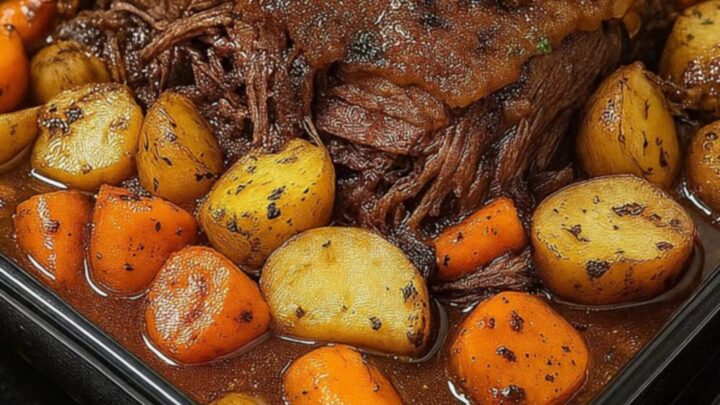
The roast is removed from the oven and is resting. The beef is glistening and tender, and the vegetables are perfectly cooked. The gravy has thickened slightly, coating the ingredients in a rich, savory glaze. Everything is ready to be portioned and served immediately.
Common mistakes
A common mistake is failing to provide enough moisture, which can lead to a dry roast. Always ensure there is enough gravy to keep the base of the dish covered.
Another frequent error is overcrowding the roasting dish, which prevents the heat from circulating properly and can result in uneven cooking of the vegetables.
Finally, neglecting to let the meat rest after cooking is a critical oversight that can cause the juices to escape, leading to a less tender and flavorful final result.
How to tell it’s done
The pot roast is done when the internal temperature reaches 145°F (63°C) at the thickest part of the meat. More importantly, the beef should be fork-tender, meaning it can be easily pulled apart with a fork without any resistance.
The vegetables should also be soft and tender when pierced with a knife. Always allow the meat to rest for at least 10 minutes after removing it from the oven to ensure the juices are redistributed throughout the roast.
- Steaks, chops and roasts: 145°F (63°C) in the thickest part, then a 3-minute rest
Up next · Part 3 of 3
2 variations · storage & make-ahead · 3 answers · printable card
Tips, FAQ & printable recipe (Part 3)← Back to the ingredients (Part 1)