Dinner · Part 2 of 3: Instructions
Tender Beef Pot Roast with Glazed Carrots and Potatoes Step-by-step instructions
- Prep
- Cook
- Total
- Serves
- 6
Before you start
Before starting, gather all your ingredients and prep the vegetables to ensure a smooth cooking process. Pat the beef brisket dry with paper towels to ensure a perfect sear, as excess moisture will cause the meat to steam instead of brown.
Measure out the beef broth and wash the baby potatoes, carrots, and mushrooms thoroughly. Keep the carrots whole and the potatoes ready to go into the pot at the right moment.
Ingredients at a glance (5)
- 3 lb beef brisket
- 3 cups beef broth
- 4 carrots, whole
- 8 oz mushrooms
- 1 lb baby potatoes
Instructions
Prep and Searing
- Sear the BrisketPlace the beef brisket in a hot Dutch oven over medium-high heat. Sear for 4 to 5 minutes per side until a deep, dark brown crust forms on the meat.Look for Look for a rich, caramelized brown color on all sides.Tip Let the crust build before turning the meat.
At the end of this initial searing phase, the beef brisket should display a rich, dark brown crust on all sides. The bottom of the cast-iron pot will have caramelized browned bits, which are essential for building the gravy. The kitchen should fill with a deeply savory, roasted meat aroma. Ensure the heat is not too high to prevent these bits from burning before the broth is added.
Braising the Brisket
- Add the BrothPour the rich beef broth into the Dutch oven around the seared brisket, scraping up any browned bits stuck to the bottom of the pot with a spoon to enrich the liquid.Look for The broth should begin to simmer gently.Tip Those browned bits contain immense flavor for the gravy.
- Slow Cook the BeefCover the Dutch oven with its tight-fitting lid. Reduce the heat to low and simmer gently for about 2 hours, allowing the beef brisket to begin softening and absorbing the savory broth.Look for The liquid should be at a very gentle simmer.Tip Keep the lid on tightly to lock in all steam.
After braising, the beef brisket will start to soften significantly, and the broth will have reduced slightly, deepening in color. The liquid should be gently bubbling, not boiling rapidly, which keeps the meat fibers tender. The aroma of rich beef broth and caramelized meat should be highly pronounced, indicating that the flavors are thoroughly melding together in the sealed Dutch oven.
Adding Vegetables and Finishing
- Add VegetablesCarefully tuck the carrots, mushrooms, and baby potatoes into the simmering broth around the beef brisket, ensuring they are partially submerged in the liquid.Look for The vegetables should be nestled snugly in the pot.Tip Keep the vegetables in large pieces so they do not mush.
- Finish and RestCover and cook for an additional 45 to 60 minutes until the vegetables are tender and the beef brisket is completely fall-apart tender. Ensure the beef reaches a safe internal temperature of 145°F (63°C) and let it rest for at least 3 minutes before slicing.Look for The beef should pull apart easily with a fork.Safe temperature 145°F (63°C) internal temperature (steaks, chops and roasts)Tip Resting the meat keeps it succulent and juicy.
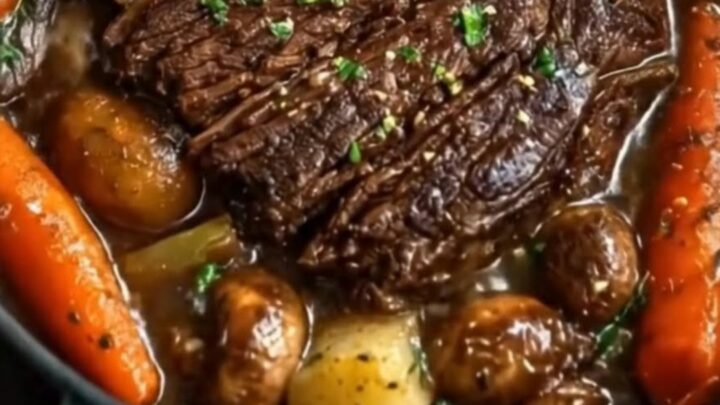
By the end of the final phase, the carrots and baby potatoes should be easily pierced with a fork, and the mushrooms should be tender and glistening with a rich glaze. The beef brisket must be completely fall-apart tender, pulling apart effortlessly when tested with a fork.
The broth should be rich, dark, and slightly thickened, coating the back of a spoon beautifully, while the entire pot radiates a comforting, deeply savory aroma of a perfectly slow-cooked roast.
Common mistakes
One common mistake is rushing the searing process or skipping it entirely. Without a deep sear, the pot roast will lack the complex caramelized flavors that define a great braise.
Another frequent error is boiling the meat rather than simmering it; high heat toughens the muscle fibers, resulting in dry, chewy beef. Lastly, adding the vegetables too early will turn them into mush. Keep them large and add them in the final stage of cooking to maintain their structure.
How to tell it’s done
The pot roast is perfectly done when the beef brisket is tender enough to be pulled apart easily with a fork. To ensure food safety, the beef must reach a minimum internal temperature of 145°F (63°C) followed by a 3-minute rest.
However, for the ultimate melt-in-your-mouth texture, cooking the brisket until it reaches an internal temperature of around 200°F (93°C) allows the collagen to fully liquefy, resulting in incredibly tender, juicy meat.
- Steaks, chops and roasts: 145°F (63°C) in the thickest part, then a 3-minute rest
Up next · Part 3 of 3
2 variations · storage & make-ahead · 3 answers · printable card
Tips, FAQ & printable recipe (Part 3)← Back to the ingredients (Part 1)