Dinner · Part 1 of 3: Ingredients
Crockpot Carolina Gold Mustard BBQ Pulled Pork
- Prep
- Cook
- Total
- Serves
- 10
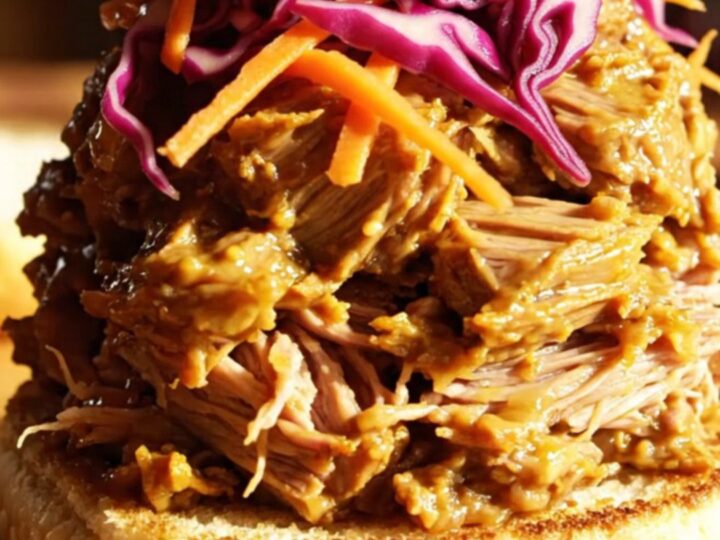
This Crockpot Carolina Gold Mustard BBQ Pulled Pork is the kind of meal that makes a weeknight feel like a backyard barbecue. A well-marbled pork shoulder simmers low and slow in a tangy, golden mustard sauce until it falls apart at the touch of a fork. The sauce is bright, slightly sweet, and a little bit spicy—exactly what Carolina-style BBQ is known for. Pile it onto soft sesame buns with crunchy slaw and pickles, and you have a sandwich that disappears fast.
Carolina Gold is a style of barbecue sauce that swaps the usual tomato base for yellow mustard, vinegar, and a touch of honey. It’s bold, tangy, and absolutely perfect with rich, slow-cooked pork. This recipe keeps things simple: season a pork shoulder, add a splash of vinegar and broth, then let the slow cooker work its magic for nine hours.
The result is meat that’s deeply savory, with a sauce that clings to every shred. Serve it on buns with a crunchy slaw and pickles for a sandwich that’s both rustic and refined. It’s a true Southern classic, made easy for any home cook.
Ingredients
- 5 lb bone-in pork shoulder (pork butt)
Dry Rub
- 1 tbsp coarsely ground black pepper
- 1 tsp cayenne pepper
- 2 tbsp light brown sugar, packed
Cooking Liquid
- 1/2 cup apple cider vinegar
- 1/2 cup smoky chicken broth
Mustard BBQ Sauce
- 1 1/2 cups tangy yellow mustard-honey barbecue sauce
For Serving
- 10 sesame hamburger buns
- Crunchy vinegar slaw, for serving
- Crinkle-cut pickles, for serving
Why this recipe works
The magic of this recipe lies in the slow, low cooking. Pork shoulder is full of connective tissue that breaks down gradually over hours of gentle heat. Cooking it on LOW for nine hours allows that collagen to melt into gelatin, which gives the meat its signature fork-tender texture and rich mouthfeel.
The bone pulls free cleanly, signaling that the meat is perfectly done. This method also lets the spices and the vinegar-based liquid penetrate deeply, so every bite is seasoned from within.
The mustard-honey sauce is the perfect counterpoint to the rich pork. Mustard brings a bright, sharp tang that cuts through the fat, while honey adds a gentle sweetness that balances the heat from the cayenne.
The vinegar in the cooking liquid further tenderizes the meat and keeps it moist. When you fold the sauce into the shredded pork, it coats each strand lightly rather than drowning it. The result is a harmonious blend of savory, tangy, and sweet that defines Carolina Gold barbecue.
Notes and substitutions
For the best flavor, choose a bone-in pork shoulder (also labeled pork butt). The bone adds depth and helps keep the meat moist during the long cook. The dry rub is simple—black pepper, cayenne, and brown sugar—but it forms a lovely crust that seasons the meat as it cooks. Smoky chicken broth adds a subtle smokiness that echoes the barbecue tradition without needing a smoker. If you can’t find smoky broth, regular broth with a pinch of smoked paprika works well.
The mustard sauce can be store-bought or homemade; look for a Carolina-style sauce that lists mustard as the first ingredient. The vinegar slaw is a classic pairing—its crisp, tangy crunch contrasts beautifully with the tender pork.
For the buns, choose sturdy ones that can hold up to the saucy meat; sesame buns are traditional, but brioche or kaiser rolls also work. Feel free to adjust the cayenne level to suit your heat preference, but don’t skip the brown sugar—it helps the rub caramelize and balances the vinegar.
- bone-in pork shoulder: boneless pork shoulder (reduce cook time slightly; check for doneness at 8 hours)
- smoky chicken broth: regular chicken broth or water with a dash of smoked paprika
- cayenne pepper: 1/2 teaspoon crushed red pepper flakes for a similar heat
- sesame hamburger buns: brioche buns or sturdy kaiser rolls
Equipment
- 6-quart slow cooker
- Small bowl
- Tongs
- Two forks
- Cutting board
- Measuring cups
- Measuring spoons
Up next · Part 2 of 3
6 steps · 9 h of cooking · what to look for at each stage
Step-by-step instructions (Part 2)