Dinner · Part 1 of 3: Ingredients
Sweet Pepper Dijon Cream Chuck Roast: Easy Crockpot Dinner
- Prep
- Cook
- Total
- Serves
- 6
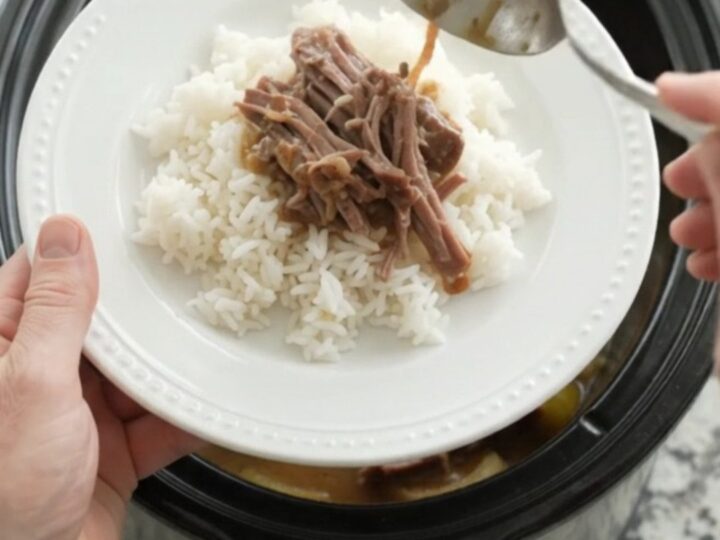
This slow cooker chuck roast is the ultimate set-it-and-forget-it dinner. A well-marbled roast simmers low and slow with sweet bell peppers, onions, and a creamy Dijon sauce until it falls apart at the touch of a fork.
The result is a rich, tangy, and utterly comforting meal that tastes like you spent hours in the kitchen—but you only spent ten minutes prepping. Perfect for busy weeknights or lazy weekends, this recipe delivers big flavor with minimal effort.
This Crockpot chuck roast brings together the deep, savory richness of beef with the bright sweetness of bell peppers and onions, all wrapped in a velvety sauce of sour cream and whole-grain Dijon mustard. The au jus adds a savory backbone that keeps every bite moist and flavorful.
After hours of gentle simmering, the beef becomes incredibly tender, shredding easily and soaking up all the delicious juices. Serve it over rice, mashed potatoes, or with crusty bread to capture every drop of the creamy gravy.
Ingredients
- 3 1/2 lb beef chuck roast
- 2 bell peppers (red and green), sliced
- 1 large yellow onion, sliced
- 1/2 cup sour cream
- 3 tbsp whole-grain Dijon mustard
- 1 cup au jus
- 1 tsp kosher salt
- 1/2 tsp black pepper
Why this recipe works
The magic of this recipe lies in the slow cooker's gentle, moist heat. Cooking the chuck roast on low for several hours breaks down the tough collagen in the meat, turning it into gelatin that makes the beef fork-tender and luscious.
The low temperature also allows the flavors of the peppers, onions, Dijon, and au jus to meld together without scorching, creating a deep, complex sauce that you just can't get from stovetop cooking.
The combination of sour cream and Dijon mustard is a classic pairing that adds both richness and brightness. The sour cream mellows the sharpness of the mustard, while the mustard cuts through the richness of the beef, balancing the dish perfectly. The au jus provides a savory, beefy depth that ties everything together, making every spoonful satisfying and full of umami.
Notes and substitutions
Choose a well-marbled chuck roast for the best results—the fat renders during cooking and keeps the meat moist. If you prefer a leaner cut, you can use a bottom round roast, but it may not be as tender.
For the peppers, use a mix of red and green for color and sweetness, but any color works. The whole-grain Dijon mustard adds texture and a pleasant pop of mustard seeds; if you only have smooth Dijon, that's fine too.
Au jus is typically sold in jars or packets in the grocery store; you can also use beef broth or a combination of broth and a splash of Worcestershire sauce. To make this dairy-free, use a dairy-free sour cream substitute and check the au jus for dairy. For a gluten-free version, ensure the au jus is gluten-free and serve with rice or potatoes instead of bread.
- whole-grain Dijon mustard: smooth Dijon mustard or yellow mustard (use 2 tbsp if you prefer a milder flavor)
- au jus: beef broth or beef consommé (add 1/2 tsp Worcestershire sauce for depth, if desired)
- sour cream: plain Greek yogurt (full-fat recommended for best texture)
- bell peppers: any color bell peppers or a mix of sweet mini peppers
Equipment
- 6-quart slow cooker
- Cutting board
- Chef's knife
- Measuring cups and spoons
- Tongs
- Serving spoon
Up next · Part 2 of 3
5 steps · 8 h of cooking · what to look for at each stage
Step-by-step instructions (Part 2)