Dinner · Part 2 of 3: Instructions
Sweet and Smoky Glazed Pork Belly Step-by-step instructions
- Prep
- Cook
- Total
- Serves
- 4
Before you start
Before beginning, ensure all ingredients are measured and ready, as the searing and glazing process moves quickly once the heat is applied. Pat the pork belly dry with paper towels to ensure a crisp sear rather than a steam-based cook, and prepare your workspace by clearing any clutter.
Having the glaze ready in a small bowl with a brush nearby will allow for seamless application once the pork is ready, preventing the sugar from burning while you scramble to find ingredients.
Ingredients at a glance (2)
- 1 lb pork belly, sliced into thick strips
- 1/2 cup brown sugar
Instructions
Slicing and Preparing
- Prep the PorkUsing a sharp knife, carefully slice the pork belly into uniform, thick strips. Keep the meat chilled until just before it hits the pan to maintain the integrity of the fat layer.Look for The slices should be about an inch thick for optimal searing.Tip A very sharp knife makes slicing cold pork belly much easier and safer.
The pork belly should be cut into uniform strips of about one inch in thickness. This uniformity is critical for even cooking. The meat should be cold to the touch. Ensure your workspace is clean, and keep the raw pork separate from other ingredients to maintain proper food safety standards throughout the process.
Searing and Glazing
- Sear and GlazePlace the pork belly strips in a hot skillet over medium-high heat. Allow them to sear until the fat renders and the edges turn golden brown. Once the meat is browned, brush the brown sugar generously over each slice. Continue to cook until the glaze bubbles and thickens into a rich, dark coating around the meat.Look for The glaze will begin to bubble and cling to the meat, creating a dark, sticky appearance.Tip Watch the glaze carefully during the final minutes to prevent the sugars from burning.
The pork strips should be sizzling loudly as they hit the pan, indicating a good sear. The edges must turn a deep, golden brown before the glaze is applied. Once the brown sugar hits the hot pan, it should bubble vigorously and begin to thicken into a sticky, syrupy consistency that coats the meat thoroughly without pooling excessively at the bottom.
Resting and Finishing
- Finish and RestRemove the pork belly from the heat once it reaches an internal temperature of 145°F (63°C). Transfer the slices to a clean plate and let the meat rest for at least 3 minutes. This resting period allows the juices to redistribute throughout the pork, ensuring every bite remains tender, succulent, and perfectly coated in the caramelized glaze.Look for The pork should feel firm yet tender, with a deep mahogany color from the glaze.Safe temperature 145°F (63°C) internal temperature (steaks, chops and roasts)Tip Resting is essential for texture; do not skip this step even if the aroma is tempting.
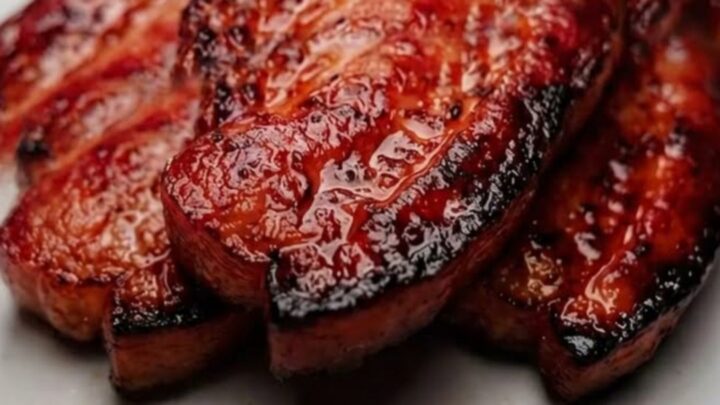
The finished pork belly must have a vibrant, glossy sheen and a deep mahogany color. The meat should feel firm yet yielding when pressed.
After removing it from the heat, the resting period of at least 3 minutes is non-negotiable; you will see the juices settle into the meat, ensuring that the final slices are incredibly tender and flavorful. Check for a safe temperature of 145°F (63°C) before serving.
Common mistakes
A common mistake is overcrowding the pan, which lowers the temperature and causes the pork to steam instead of sear. Work in batches if necessary to maintain high heat. Another error is adding the glaze too early; the sugars will burn before the meat is cooked.
Wait until the pork is browned and the fat has rendered before introducing the sugar, and keep the heat moderate during the final glazing phase to avoid acrid, burnt flavors.
How to tell it’s done
The pork belly is done when it reaches an internal temperature of 145°F (63°C). At this point, the fat will be rendered and translucent, and the meat will be tender. The glaze should be dark, glossy, and thick enough to coat the back of a spoon.
Always use a meat thermometer in the thickest part of the strip to ensure accuracy, as the high sugar content can make the exterior look darker than the interior actually is.
- Steaks, chops and roasts: 145°F (63°C) in the thickest part, then a 3-minute rest
Up next · Part 3 of 3
2 variations · storage & make-ahead · 3 answers · printable card
Tips, FAQ & printable recipe (Part 3)← Back to the ingredients (Part 1)