Dinner · Part 2 of 3: Instructions
Sultan’s Delight: Smoky Eggplant Puree with Braised Beef Step-by-step instructions
- Prep
- Cook
- Total
- Serves
- 4
Before you start
Before starting, set out all ingredients. Cut the beef into 1-inch cubes and pat dry with paper towels. Chop the onion and green pepper. Grate the cheese if not already shredded. Warm the milk in a small saucepan or in the microwave until just steaming.
Prepare the eggplants by washing and drying them; have a bowl and plastic wrap ready for steaming after charring. If using a gas stove, turn on the burner; if using a grill, preheat it to high. Have a large pot or Dutch oven ready for the beef, and a saucepan for the béchamel.
Ingredients at a glance (17)
- 1 1/2 lb beef chuck, cut into 1-inch cubes
- 3 large eggplants (about 1 lb each)
- 2 tbsp fresh lemon juice
- 2 tbsp unsalted butter
- 2 tbsp all-purpose flour
- 1 1/2 cups whole milk, warm
- 1 cup grated kaşar cheese (or mozzarella)
- 1/4 tsp freshly grated nutmeg
- 1 medium onion, finely chopped
- 1 medium green bell pepper, chopped
- 2 tbsp tomato paste
- 1 tbsp red pepper paste (or additional tomato paste)
- 1 cup beef broth
- 1 tsp salt, plus more to taste
- 1/2 tsp black pepper
- fresh flat-leaf parsley, chopped, for serving
- 2 tbsp unsalted butter, melted, for serving
Instructions
Char and Puree the Eggplants
- Char the EggplantsPlace the eggplants directly over an open flame (gas burner or grill) and roast, turning frequently with tongs, until the skins are completely blackened and blistered and the flesh feels soft and collapsed. This takes about 10 to 15 minutes. Transfer the charred eggplants to a bowl, cover with plastic wrap, and let steam for 10 minutes to loosen the skins.Look for The skins are black and the flesh is tender; the eggplants look deflated.Tip Do not skip the steaming step—it makes peeling effortless.
- Peel and Mash the EggplantWhen cool enough to handle, peel off the charred skins and discard. Place the flesh in a colander and press gently to release excess liquid. Transfer the flesh to a bowl and mash with a fork or potato masher until almost smooth. Stir in the lemon juice and set aside.Look for The mash is smooth with a few small chunks; no large pieces remain.Tip Leave a few small bits of eggplant for a pleasant texture.
- Make the Béchamel BaseIn a saucepan over medium heat, melt the butter. Add the flour and whisk constantly for 1 to 2 minutes until the mixture turns lightly golden and smells nutty. Slowly pour in the warm milk while whisking continuously to prevent lumps. Cook, whisking, until the sauce thickens and comes to a gentle simmer, about 3 to 4 minutes.Look for The sauce is smooth, thick, and coats the back of a spoon.Tip Keep the milk warm to avoid shocking the roux and creating lumps.
- Finish the Eggplant PureeReduce the heat to low. Add the mashed eggplant to the béchamel and stir until fully incorporated. Add the grated kaşar cheese and nutmeg, stirring gently until the cheese melts and the puree is silky and smooth. Season with salt to taste. Keep warm over very low heat, covered, while preparing the beef.Look for The puree is thick, creamy, and slightly ivory in color.Tip Stir gently to keep the puree velvety; avoid boiling.
The eggplants are blackened and collapsed, and the flesh is easily scooped out. The béchamel is smooth and thick, and after adding the cheese, the puree is silky, ivory, and smells wonderfully smoky.
It should be thick enough to hold a spoon upright. The flavor should be mildly smoky, creamy, and lightly tangy from the lemon. Adjust salt if needed, but keep in mind the beef will add more seasoning.
Sear and Braise the Beef
- Brown the BeefPat the beef cubes dry with paper towels. Heat a large heavy-bottomed pot over medium-high heat. Add the beef in a single layer (work in batches if needed) and sear, turning occasionally, until deeply browned on all sides, about 6 to 8 minutes. Season with salt and black pepper.Look for The beef has a deep brown crust on all sides.Tip Do not crowd the pan; browning builds the flavor of the sauce.
- Sauté the AromaticsReduce the heat to medium. Add the onion and green pepper to the pot with the beef. Cook, stirring occasionally, until the vegetables soften and begin to turn translucent, about 5 minutes. Add the tomato paste and red pepper paste and cook, stirring, for 1 to 2 minutes until the paste darkens slightly and becomes fragrant.Look for The onions are soft and the paste has turned a deeper red.Tip Cooking the paste removes its raw taste and deepens the sauce.
- Braise the BeefPour in the beef broth, scraping up any browned bits from the bottom of the pot. Bring to a simmer, then reduce the heat to low, cover, and cook gently until the beef is fork-tender, about 1 to 1 1/2 hours. Check occasionally and add a splash of water if the sauce becomes too thick. Let it rest for 3 minutes before slicing.Look for The sauce is thick, glossy, and ruby red; the beef shreds easily with a fork.Safe temperature 145°F (63°C) internal temperature (steaks, chops and roasts)Tip A gentle simmer keeps the beef tender, not tough.
- Rest the BeefOnce the beef is fork-tender, remove the pot from the heat and let the beef rest in the sauce for at least 3 minutes. This allows the juices to redistribute and ensures the meat stays moist. Taste the sauce and adjust seasoning with salt and pepper if needed.Look for The beef is tender and the sauce is rich; no pink remains.Safe temperature 145°F (63°C) internal temperature (steaks, chops and roasts)Tip Resting is essential for the most succulent beef.
The beef is deeply browned on all sides, and the aromatics are soft and fragrant. The sauce has reduced to a thick, glossy, ruby-red consistency that coats the meat. The beef is fork-tender and shreds easily. The sauce tastes rich, slightly sweet from the peppers, and deeply savory. The kitchen smells of toasted tomato paste and simmering beef.
Plate and Serve
- Plate the PureeSpread the warm eggplant puree evenly across a serving platter or individual plates, creating a smooth, thick bed. Use the back of a spoon to make a slight well in the center to hold the beef and sauce.Look for The puree is smooth and holds its shape on the plate.Tip Warm the plates for a more elegant presentation.
- Ladle the Beef OverSpoon the braised beef and its rich tomato sauce over the center of the eggplant puree. Drizzle with the melted butter and sprinkle with chopped parsley. Serve immediately with crusty bread for scooping.Look for The beef is piled high, the sauce glistens, and the parsley adds a fresh contrast.Tip Use a wide spoon to get both meat and sauce in each serving.
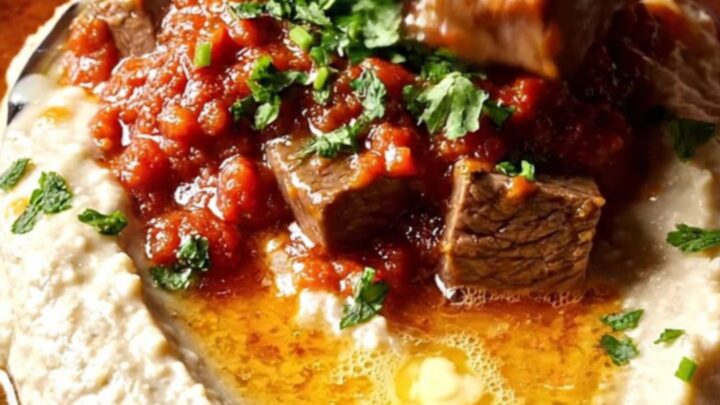
The eggplant puree is spread into a smooth bed, and the braised beef is ladled over the center, with the sauce pooling around the meat. The melted butter and parsley add a fresh, glossy finish. The dish looks inviting and smells of smoke, tomatoes, and butter. Serve immediately while hot, with crusty bread on the side.
Common mistakes
One common mistake is not charring the eggplants enough; the skins must be completely blackened to impart that smoky flavor. Another is skipping the steaming step, which makes peeling difficult and leaves some skin behind.
When making the béchamel, adding cold milk to the roux causes lumps—always use warm milk and whisk continuously. Overcooking the beef at too high a temperature can make it tough; maintain a gentle simmer. Finally, do not overseason the puree before adding the cheese, as the cheese adds salt.
How to tell it’s done
The beef is done when it is fork-tender: a fork inserted into a cube meets no resistance and the meat pulls apart easily. The internal temperature should reach at least 145°F (63°C) for whole-cut beef, but the long braise will take it well beyond that, ensuring safety and tenderness.
After resting for at least 3 minutes, the beef should be moist and juicy. The eggplant puree is ready when it is thick enough to hold its shape on a plate, yet smooth and creamy. The sauce should be glossy, deep red, and coat the back of a spoon.
- Steaks, chops and roasts: 145°F (63°C) in the thickest part, then a 3-minute rest
Up next · Part 3 of 3
4 variations · storage & make-ahead · 5 answers · printable card
Tips, FAQ & printable recipe (Part 3)← Back to the ingredients (Part 1)